
Southern corn rootworm beetles are one of the most destructive pests in cornfields across the United States, particularly in the southern regions. These tiny insects may be small, but their impact on crop yield and revenue can be significant. As a farmer or agricultural expert, you’re likely aware that managing these beetles is crucial to maintaining healthy crops and preventing economic losses. But do you know how to identify the signs of damage caused by southern corn rootworms? Or where they typically thrive in your region? Understanding the life cycle, habitats, and management strategies for southern corn rootworm beetles is key to protecting your yields. This article will provide a comprehensive overview of these pests, covering their habits, damage potential, and effective management techniques to help you safeguard your crops.
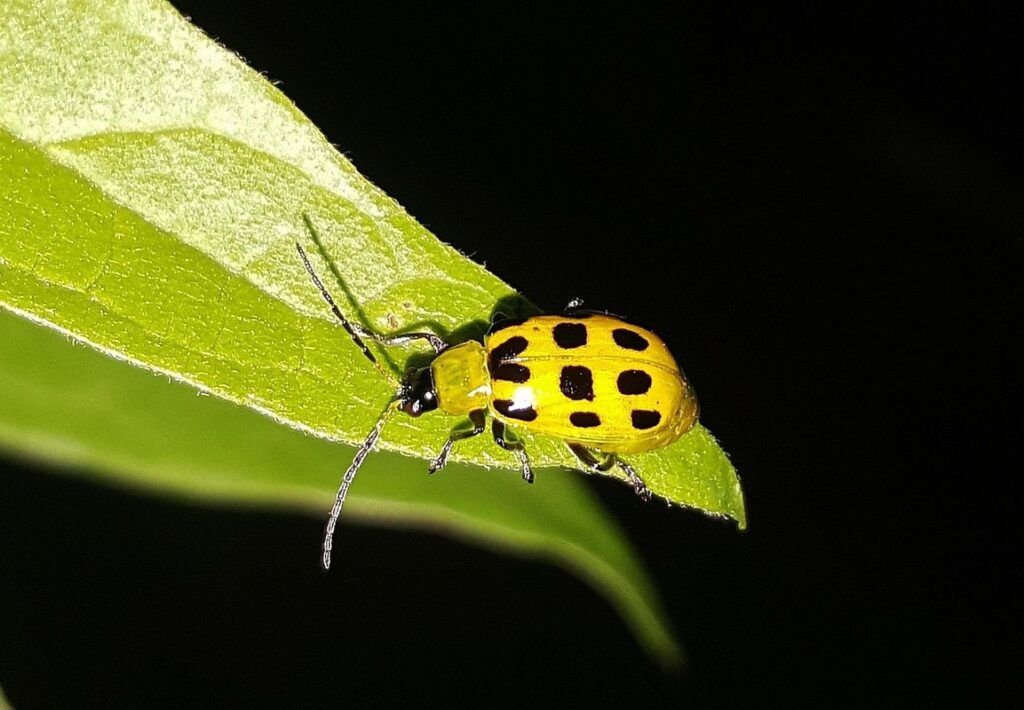
What is the Southern Corn Rootworm Beetle?
The southern corn rootworm beetle is a significant pest that can cause substantial damage to your corn crop, and understanding its identity is crucial to managing infestations. Here’s what makes this beetle so distinctive.
Life Cycle and Identification
The southern corn rootworm beetle undergoes a complete metamorphosis, consisting of four distinct stages: egg, larva, pupa, and adult. Female beetles typically lay eggs near the base of corn plants, which hatch into larvae within 7-10 days. The larvae feed on plant roots, causing damage that can lead to stunted or yellowed stalks. After several weeks, the larvae enter a pupal stage before emerging as adult beetles.
Adult southern corn rootworm beetles are typically between 1/4 and 1/2 inch in length, with an oval-shaped body and a distinctive black-and-yellow color pattern. The elytra (wing covers) of these beetles often have a yellow or orange tint, helping to distinguish them from other similar species. One way to identify the southern corn rootworm beetle is by its habit of feeding on corn roots during the day, making it active during daylight hours. This behavior sets it apart from other nocturnal beetles.
Be aware that adult beetles often congregate near lights at night, which can be a challenge for monitoring and control efforts. Accurate identification of the southern corn rootworm beetle is crucial for effective management strategies, as it allows farmers to target specific control methods and minimize unnecessary pesticide use.
Habitats and Distribution
Southern corn rootworm beetles are commonly found in the southern United States, particularly in states like Alabama, Arkansas, Florida, Georgia, and Louisiana. They thrive in warm and humid climates with average temperatures ranging from 64°F to 90°F (18°C to 32°C). These beetles prefer habitats with rich soil that is high in organic matter, often found near cornfields or other agricultural areas.
Their preferred habitats can be broken down into three main categories: cornfields, soybean fields, and vegetable gardens. Within these habitats, southern corn rootworm beetles are most likely to infest areas with dense vegetation, such as weeds or wildflowers. They tend to disperse through flight, with adults traveling short distances in search of food and mates.
The dispersal process typically begins in late spring when adult beetles emerge from hibernation. During this time, they can travel up to 10 miles (16 kilometers) in a single day. Farmers should be aware that the southern corn rootworm beetle’s ability to disperse quickly can make it challenging to detect infestations early on. Regular monitoring and scouting are essential for identifying areas of high risk and implementing control measures before damage occurs.
Damage to Corn Crops: Understanding the Impact
When a southern corn rootworm beetle infestation occurs, damaged corn crops can lead to significant yield losses and reduced profitability for farmers. The impact of this damage is particularly devastating when it comes to crop quality and overall harvest value.
Root Damage and Yield Loss
Southern corn rootworm beetle larvae feed on corn roots, causing significant damage and impacting crop yields. As they tunnel through the roots, they disrupt water and nutrient absorption, leading to stunted growth and reduced yields. The damage is often most pronounced near the soil surface, where the larvae are most active.
The extent of the damage depends on factors such as rootworm density, larval stage, and timing of feeding. Heavily infested fields may experience significant yield losses, while lighter infestations can still result in decreased yields due to reduced water absorption.
Water stress is a common consequence of southern corn rootworm beetle damage. When roots are damaged, the plant’s ability to absorb water is compromised, making it more susceptible to drought stress. This can lead to further crop decline and increased risk of disease.
It’s essential for farmers to monitor their fields closely, particularly during periods of high rootworm activity. Early detection and management strategies can help mitigate damage and prevent long-term yield losses.
Economic Impact on Farmers
Southern corn rootworm beetle infestations exact a significant economic toll on farmers. The costs of control measures can be substantial, with farmers spending money on insecticides, crop rotation, and other management strategies. According to estimates, the average cost of controlling southern corn rootworm beetles per acre is around $50 to $100.
In addition to these control costs, farmers also face lost revenue due to reduced yields and lower grain quality. A study in Iowa found that southern corn rootworm beetle infestations resulted in an average yield loss of 15% for affected fields. This translates to a significant financial hit, especially considering the high cost of crop production.
To put these numbers into perspective, consider this example: if a farmer grows corn on 1,000 acres and experiences a 10% yield loss due to southern corn rootworm beetles, they could lose around $20 per acre in revenue. Over 1,000 acres, that adds up to a substantial financial burden – over $20 million in lost revenue alone.
Identification and Monitoring Methods
To effectively manage southern corn rootworm beetle populations, it’s crucial to identify early signs of infestation and monitor your crops regularly for any changes in growth patterns.
Visual Inspection and Trapping
When visually inspecting fields for signs of southern corn rootworm beetles, look for adult beetles on the plants’ stems and leaves during the day. The beetles are typically dark brown or black with a distinctive yellow or orange stripe running along their sides. In the evening, they congregate on plant stems, making them easier to spot.
To monitor populations, use sticky traps coated with a sweet-smelling substance that attracts adult beetles. Place these traps near the field’s edges and in areas where beetles are most likely to be present. Yellow or blue traps can also be used as some species of southern corn rootworm beetle have a preference for certain colors.
Beetles are typically more active during warm weather, so it’s best to conduct inspections when temperatures are above 60°F (15°C). Keep in mind that visual inspection alone may not detect all beetles present in the field. Consider combining this method with soil sampling and analysis to get a more comprehensive picture of the beetle population.
Use multiple traps per field to ensure accurate population monitoring, ideally setting up at least one trap every 10-20 acres.
Soil Sampling and Analysis
Soil sampling is a crucial step in detecting the presence of southern corn rootworm beetle larvae. This method involves collecting soil samples from areas where the beetles are suspected to be present. By analyzing these samples, you can determine if the soil contains the characteristic feeding damage caused by the larvae. The process typically begins with selecting sites that are prone to infestation, such as areas near fields where the beetles have been detected in previous years.
Samples should be collected at a depth of 6-8 inches, as this is where the larvae tend to feed on corn roots. A minimum of three samples per field is recommended to ensure accurate results. It’s also essential to use proper sampling techniques and equipment to avoid contamination or damage to the soil.
In addition to visual inspection for feeding damage, soil analysis can help identify the presence of southern corn rootworm beetle larvae even when they are not readily visible. This can provide valuable insights into the severity of the infestation and inform management decisions. By incorporating soil sampling into your monitoring program, you can stay one step ahead of this destructive pest and protect your crop from significant damage.
Management Strategies: Prevention and Control
To effectively manage southern corn rootworm beetles, prevention and control strategies are crucial to minimize crop damage. Effective management begins with understanding these key approaches.
Crop Rotation and Tillage
Crop rotation and tillage can be effective methods for reducing southern corn rootworm beetle populations. By changing the crop type and soil disturbance, you can break the beetle’s life cycle and make the environment less conducive to their survival. For example, rotating from corn to soybeans or wheat can reduce the availability of food resources for the beetles’ larvae.
When implementing tillage, it’s essential to consider the timing and depth of soil disturbance. Shallow tillage, typically 8-10 inches deep, can help to kill eggs and larvae in the topsoil layer. However, excessive tillage can push the surviving larvae deeper into the soil, making them harder to control. A study found that a combination of crop rotation and shallow tillage reduced southern corn rootworm beetle populations by an average of 30% over three years.
To maximize the effectiveness of these methods, consider the following factors:
- Rotate crops every 2-3 years to break the life cycle.
- Choose non-host crops like soybeans or wheat for rotation.
- Use shallow tillage (8-10 inches deep) to target eggs and larvae in the topsoil layer.
- Avoid excessive tillage that can push surviving larvae deeper into the soil.
Chemical Controls and Bt Corn
Chemical controls and genetically modified Bt corn are two methods used to control southern corn rootworm beetle populations. Insecticides can be applied as a foliar spray or soil treatment, but their effectiveness is often short-lived due to the beetle’s ability to develop resistance. Pyrethroids and organophosphates are commonly used, but they also pose risks to non-target organisms.
Bt corn, on the other hand, produces a toxin that kills rootworm larvae before they can cause significant damage. This genetically modified crop has shown promise in reducing yield loss and minimizing the need for insecticides. However, Bt corn is not foolproof, and beetles may still infest fields if the population is large enough.
When using chemical controls or Bt corn, it’s essential to follow integrated pest management (IPM) principles to minimize environmental impact and prevent resistance development. This includes rotating between different chemical active ingredients, maintaining good crop rotation practices, and monitoring for signs of beetle activity. By combining these methods with other control strategies, farmers can reduce the threat posed by southern corn rootworm beetles and protect their crops more effectively.
Biological Control Methods: Natural Enemies and Semiochemicals
To control southern corn rootworm beetle populations, consider using natural enemies that prey on the beetles, such as beneficial nematodes or parasitic wasps. These biological control methods can also be enhanced with semiochemicals that attract these predators.
Parasites and Predators
Parasitic wasps and ground beetles are among the natural enemies of southern corn rootworm beetles. These beneficial insects play a crucial role in regulating the population of the pest. For example, Trichogramma wasps lay their eggs inside the eggs of southern corn rootworm beetles, preventing them from hatching and reducing the number of emerging adults.
Ground beetles, such as the ground beetle (Carabus spp.), feed on adult southern corn rootworm beetles, further controlling their numbers. Some species of parasitic flies, like the Tachinidae family, also attack and kill southern corn rootworm beetles.
While these natural enemies can help manage southern corn rootworm beetle populations, it’s essential to create a welcoming environment for them in your fields. This includes avoiding broad-spectrum pesticides that can harm or eliminate beneficial insects. Instead, opt for targeted control methods or adopt integrated pest management (IPM) strategies that prioritize the use of beneficial organisms.
To encourage the presence of natural enemies on your farm, consider introducing native plants and flowers that provide shelter and food sources for these beneficial insects. By fostering a diverse ecosystem, you can create a more balanced environment where natural enemies can thrive and help control southern corn rootworm beetle populations.
Semiochemical-Based Control
Semiochemical-based control methods disrupt beetle communication by exploiting their reliance on chemical signals. Pheromone traps, for example, use synthetic pheromones to mimic the sex attractants released by female beetles. These lures can be particularly effective for monitoring adult populations and predicting when they will begin to cause damage. However, it’s essential to choose a trap type that aligns with local beetle behavior and population trends.
Lure systems are another tool used in semiochemical-based control. These systems often involve a combination of pheromones and visual cues to attract beetles away from the crop. Some lure systems even incorporate repellents or attractants specifically designed for southern corn rootworm beetles. When selecting a lure system, consider factors such as beetle density, trap placement, and bait duration.
When implementing semiochemical-based control methods, it’s crucial to integrate multiple approaches. This might include deploying pheromone traps in combination with lure systems or using different types of lures at various stages of the beetle life cycle. By understanding how beetles communicate and using targeted control methods, farmers can reduce damage and optimize management strategies.
Resistant Crop Development: A New Frontier in Management
As you look for ways to protect your crops from southern corn rootworm beetles, developing resistant crop varieties is a promising strategy that’s gaining attention. We’ll explore this emerging approach further down the line.
Genetic Resistance and Bt Corn Varieties
Breeding corn varieties with genetic resistance to southern corn rootworm beetles is a promising approach to integrated pest management. This involves selecting and breeding corn lines that possess traits conferring resistance to the beetle’s feeding damage, such as modified plant defense compounds or altered growth patterns.
One key strategy for developing resistant crops is to incorporate genetic material from wild relatives of maize, which have naturally evolved resistance mechanisms against various pests, including the southern corn rootworm. This process, known as introgression breeding, allows researchers to tap into the genetic diversity of these wild relatives and transfer beneficial traits into cultivated corn varieties.
Bt corn varieties also play a crucial role in integrated pest management for southern corn rootworm beetles. Bt (Bacillus thuringiensis) toxins are naturally occurring proteins that kill certain insect pests, including the beetle larvae. By inserting genes encoding these toxins into corn plants, farmers can reduce larval populations and mitigate damage to their crops.
Some popular Bt corn varieties include MON 810, which expresses a Cry1Ab toxin, and MON 87419, which produces a Cry3Bb1 toxin. These varieties have shown promise in reducing southern corn rootworm beetle infestations and associated yield losses.
Future Directions for Research
Further research is needed to develop southern corn rootworm-resistant crops with improved genetic diversity. One promising approach is to explore the use of wild relatives of maize, such as teosinte and toesin, which have been shown to possess resistance genes against the beetle. Scientists can also investigate the potential of introgressing these resistance traits into modern crop varieties using advanced breeding techniques.
Another area of focus should be on understanding the mechanisms underlying genetic resistance in southern corn rootworm-resistant crops. This knowledge will enable researchers to design more effective screening protocols and accelerate the development process. For instance, studying the interactions between resistant plants and beetles at the molecular level can help identify key targets for pest management strategies.
Researchers should also investigate the use of new technologies, such as CRISPR-Cas9 gene editing, to introduce resistance traits into crops. This approach has shown great promise in other areas of crop improvement and could potentially be used to develop southern corn rootworm-resistant varieties with enhanced genetic stability and expression levels. By combining these approaches, scientists can accelerate the development of resistant crops that minimize the need for chemical pesticides.
Conclusion: Taking a Holistic Approach to Southern Corn Rootworm Beetle Management
Now that we’ve explored the impact and management of southern corn rootworm beetles, let’s consider how to integrate multiple strategies for optimal control. This approach requires a thoughtful combination of techniques.
Summary of Key Points
Key points from our discussion on southern corn rootworm beetle management can be distilled into several key takeaways. First, it’s essential to understand the life cycle and habits of these beetles to implement effective management strategies. We’ve explored various methods for identification and monitoring, including visual inspection, trapping, soil sampling, and analysis.
Crop rotation and tillage are critical components of prevention, as they disrupt beetle habitats and reduce root damage. Chemical controls, such as insecticides, can also be effective when used judiciously. However, we’ve also discussed the importance of biological control methods, including parasites and predators, which can provide a more sustainable solution.
Semiochemical-based control has shown promise in managing southern corn rootworm beetles by mimicking natural attractants or repellents. Additionally, researchers are making progress in developing resistant crop varieties, such as Bt corn, which exhibit genetic resistance to these pests.
To take a holistic approach to management, farmers should consider combining multiple strategies, including rotation and tillage, chemical controls, and biological control methods. By understanding the key points outlined above and applying them in their management practices, farmers can reduce root damage and protect their crops from the southern corn rootworm beetle threat.
Next Steps for Farmers and Researchers
To take a holistic approach to southern corn rootworm beetle management, farmers and researchers must continue to collaborate and share knowledge. One crucial step is to establish and maintain robust monitoring programs on-farm, incorporating both visual inspection and soil sampling techniques. This will enable more accurate assessments of beetle populations and damage levels, allowing for targeted control strategies.
For instance, researchers can develop and refine semiochemical-based lures that attract natural enemies or disrupt beetle communication. Meanwhile, farmers can explore the benefits of crop rotation, tillage, and Bt corn varieties in their local contexts. By combining these approaches, they can create more effective management systems.
In addition to on-farm research and development, there is a pressing need for further investigation into resistant crop breeding programs. This includes identifying key genetic traits that confer resistance to the beetle and developing new Bt corn varieties with improved efficacy. Collaboration between public and private sectors will be essential in driving these efforts forward. By investing time and resources in this area, we can ultimately create more resilient crops and reduce the economic burden of southern corn rootworm beetle infestations.
Frequently Asked Questions
How often should I monitor my fields for southern corn rootworm beetles during peak season?
Monitoring your fields regularly is crucial to detect any signs of infestation early on. We recommend checking your fields every 7-10 days during the peak season (June-August) and after any heavy rainfall events that can trigger beetle activity.
Can I use Bt corn in rotation with non-Bt corn to control southern corn rootworm beetles?
Yes, rotating between Bt and non-Bt corn can be an effective strategy to manage southern corn rootworm beetles. However, it’s essential to consider factors like pest resistance development and the cost of switching between different crop types.
What if I have a small-scale farm or only grow one crop per season? Can I still implement some form of integrated pest management?
While large-scale farms may benefit from complex IPM strategies, smaller operations can also adopt simpler methods. Consider implementing crop rotation, using physical barriers to prevent beetle migration, or adopting conservation tillage practices.
How do I know if my soil sampling results indicate a significant southern corn rootworm beetle population?
Soil sampling can help detect the presence of beetle larvae, but it’s not always conclusive. Look for other signs like damaged roots, stunted plant growth, and reduced yield to confirm the presence of a significant infestation.
Can I use semiochemical-based control methods in combination with chemical controls or Bt corn?
Yes, combining different control methods can be an effective strategy to manage southern corn rootworm beetles. However, be aware that using multiple approaches simultaneously may increase costs and environmental impact, so carefully weigh the benefits and drawbacks before implementing a multi-pronged approach.
