
Fruit flies are one of the most common household pests, and understanding their biology is key to effective control. These tiny insects go through several distinct stages in their life cycle, from egg to larva to pupa and finally adult, all within a remarkably short period. A critical factor in managing fruit fly populations is recognizing that their behavior is largely influenced by temperature, food availability, and breeding cycles. If you’re struggling to get rid of these pests or prevent them from taking over your kitchen, it’s essential to grasp the inner workings of their life cycle. In this article, we’ll break down each stage of the fruit fly life cycle and examine the crucial factors that determine their behavior, allowing you to develop targeted control strategies. By the end, you’ll be able to identify the signs of a fruit fly infestation and take proactive steps to prevent them from becoming a nuisance in your home.
The Basics of Fruit Fly Biology
To grasp the fruit fly life cycle, let’s start by understanding their biology and what drives their behavior. Understanding their basic needs will help us better comprehend their habits.
What are Fruit Flies?
Fruit flies are a type of fly that belongs to the family Drosophilidae. This family is comprised of over 1,500 species, but only about 70 are considered pests due to their attraction to fermenting substances and ability to cause decay. Fruit flies are small, typically ranging in size from 2-5 mm. Their tiny stature allows them to navigate through even the smallest openings, making them a formidable nuisance in households and facilities with food preparation areas.
One of the most distinctive characteristics of fruit flies is their rapid reproduction rate. Females can lay up to 500 eggs at once, which hatch into larvae within 24-30 hours. This swift breeding cycle allows fruit fly populations to grow exponentially under optimal conditions. Understanding the basic biology of these insects is crucial for effective management and control strategies. Knowing that fruit flies are small, nimble pests that reproduce quickly can help individuals take preventative measures to prevent infestations in their homes or businesses.
Fruit Fly Characteristics
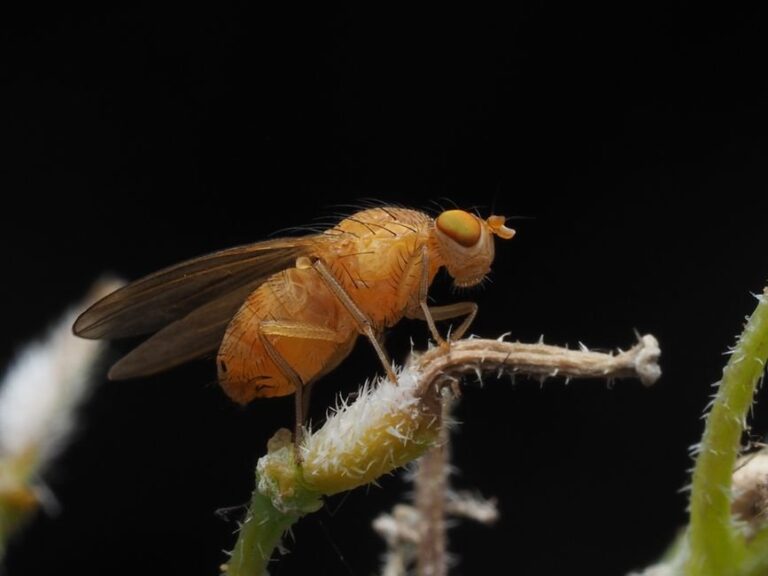
Fruit flies are typically around 4-5 millimeters long, with a slender body that’s usually yellowish-brown in color. Their wings are transparent and have distinctive venation patterns, giving them a delicate appearance. One of the most notable characteristics of fruit flies is their large compound eyes, which cover much of their head and provide exceptional vision.
Their antennae are relatively short and thin, compared to other fly species. Fruit flies also have a distinctively shaped abdomen, with a rounded base and a tapering tip. This body structure allows them to move efficiently through the air and navigate complex spaces. Their legs are long and slender, adapted for perching and walking on smooth surfaces.
In addition to these visual characteristics, fruit flies can often be identified by their behavior. They tend to cluster around sweet-smelling substances and are frequently found near fermenting or decaying matter. This attraction is a key factor in their ability to thrive in a wide range of environments, from household trash to commercial food processing facilities.
Life Cycle Stages
A fruit fly’s life cycle consists of four distinct stages: egg, larva, pupa, and adult. The duration of each stage varies depending on factors like temperature, humidity, and food availability.
The egg stage typically lasts between 24 to 48 hours, during which the female fruit fly lays her eggs in a suitable location. The eggs hatch into larvae within this timeframe.
In the larval stage, also known as the maggot stage, the larvae feed on nearby organic matter until they’re fully grown, usually around 3-4 days. They then drop to the ground and burrow into the soil to pupate.
The pupal stage is a resting period where the larva transforms into an adult fruit fly. This stage usually lasts around 2-5 days, depending on environmental conditions. Once emerged, the adult fruit fly will begin its reproductive cycle anew.
A key point to note: proper waste management and regular cleaning can help prevent fruit fly infestations by removing their breeding sites.
The Life Cycle of Fruit Flies
The life cycle of fruit flies is a fascinating process that involves several distinct stages, each playing a crucial role in their survival and proliferation. Let’s take a closer look at how these tiny insects develop from egg to adult.
Egg Stage
After mating, a female fruit fly can lay several hundred eggs at once, typically within 24 to 48 hours. These eggs are usually white, elongated, and about 0.5 millimeters long. They have a characteristic pointed end that helps the egg adhere to the surface of the substrate where it will hatch.
The female chooses a suitable location for laying her eggs based on factors like temperature, humidity, and food availability. Often, she selects an area with a high concentration of fermenting or rotting organic matter, such as fruit or vegetable scraps. Once laid, the eggs remain in place until they’re ready to hatch into larvae.
The female’s reproductive habits can be influenced by various environmental factors, including the presence of males, food availability, and temperature. For example, females may lay more eggs when there’s an abundance of food sources available, increasing their chances of successful reproduction.
Larval Stage (Maggot)
During the larval stage, also known as the maggot stage, fruit fly larvae feed on organic matter and grow in size. They are voracious eaters, consuming a significant amount of food to sustain their rapid growth. The maggots go through three instars, or developmental stages, within 3-5 days, depending on factors such as temperature and food availability.
As they feed, the maggots secrete enzymes that break down complex nutrients in the surrounding environment, making it easier for them to absorb essential resources. They can be found in a variety of substrates, including decaying fruit and vegetables, compost piles, or even animal waste. It’s not uncommon to see large groups of maggots congregating around a rich food source.
The larval stage is a critical period for the development of fruit flies, as it sets the foundation for their future growth and reproductive potential. The size and nutritional status of the larvae can impact the adult fly’s body size, fertility, and overall fitness. Understanding the maggot stage is essential for effective management strategies, such as targeting high-risk areas or using targeted traps to capture adults that emerged from infested substrates.
Pupal Stage (Pupa)
During the pupal stage, also known as the pupa, significant physical transformations take place. The maggot, now fully grown and ready to become an adult fruit fly, undergoes a process called apolysis where its body begins to break down and reorganize into its final form. This period typically lasts around 3-5 days at room temperature.
The pupa is often attached to the surface of food or debris by silk threads produced by the maggot. It’s a relatively inactive stage, but some movement may be visible as the fly begins to emerge from its pupal casing. The new adult fruit fly will eventually push out of the pupa and pump fluid through its wings, expanding them for the first time.
When preparing to collect or observe fruit flies, it’s essential to note that the pupae are usually hidden from view. Look for signs of emergence, such as torn or empty pupal casings, or wait patiently for a few days after seeing a large number of adults in an area. This allows enough time for the newly emerged adults to leave their pupae behind.
Environmental Factors Affecting Fruit Fly Life Cycle
Fruit fly life cycles are heavily influenced by environmental factors, such as temperature and humidity levels, which play a crucial role in their development. Understanding these influences can help you better manage fruit fly populations.
Temperature and Humidity
Temperature extremes can significantly impact fruit fly life cycle stages. For egg development, temperatures between 64°F (18°C) and 90°F (32°C) are optimal, with most eggs hatching within 24 hours at around 75°F (24°C). Temperatures above 95°F (35°C) can slow or even halt oviposition. In contrast, larvae thrive in warmer temperatures: 70-80°F (21-27°C) is ideal for larval development.
Relative humidity also plays a crucial role. Larvae require humid conditions to grow and pupate successfully; typically, this means maintaining a relative humidity above 60%. Conversely, if the environment becomes too dry, larvae may not develop properly or may die prematurely. Pupal stage fruit flies are generally more tolerant of temperature fluctuations but still require adequate humidity.
To manage temperature and humidity levels for effective control, it’s essential to understand that different stages require varying conditions. Maintaining a consistent environment with temperatures between 68-78°F (20-25°C) and relative humidity above 50% can help regulate fruit fly life cycles.
Food Availability and Quality
The availability and quality of food sources significantly impact fruit fly populations. Fruit flies are attracted to sweet, fermented, or decaying substances, which serve as their primary source of nutrients. The presence of these food sources can trigger a rapid increase in population, as females lay eggs within 24-48 hours of feeding on the substance.
Food sources with high sugar content, such as ripe fruits and vegetables, are particularly appealing to fruit flies. These insects feed on the surface bacteria and yeasts that break down the sugars, making them essential for the fly’s growth and development.
However, not all food sources support fruit fly populations equally. Fermented substances like beer, wine, and soda, as well as decaying organic matter, can sustain large populations due to their high sugar content and lack of antibacterial properties.
To minimize fruit fly infestations, it is essential to maintain a clean environment with limited access to potential food sources. Regularly cleaning and sanitizing surfaces, storing fruits and vegetables properly, and disposing of waste in sealed containers can all contribute to reducing the availability of attractants for these pests.
Breeding Cycles and Generation Time
In fruit fly populations, breeding cycles and generation time are crucial factors influencing population growth. Fruit flies typically have a short generation time, usually around 7-10 days under ideal conditions. However, temperature and humidity play significant roles in determining the speed of their breeding cycle.
Temperature affects the rate at which eggs hatch and larvae develop. At optimal temperatures between 20-25°C (68-77°F), fruit fly females can lay up to three batches of eggs every week. In contrast, lower temperatures slow down development, and higher temperatures above 30°C (86°F) can be detrimental to breeding.
Humidity also impacts breeding cycles, with high humidity levels promoting egg hatching and larval growth. Conversely, low humidity can cause eggs to desiccate and larvae to struggle for food. To manage fruit fly populations effectively, it’s essential to consider these environmental factors when implementing control measures. For example, maintaining a consistent temperature between 20-25°C (68-77°F) and ensuring adequate humidity levels can help slow down breeding cycles and give you an upper hand in population management.
Fruit Fly Habits and Behavior
Understanding fruit fly habits is crucial for effective control, so let’s examine their behavior and daily routines to get a better grasp on these tiny pests. We’ll explore what makes them tick in this environment.
Attraction to Sweet Odors and Food Sources
Fruit flies are drawn to sweet odors and food sources with remarkable specificity. This attraction is not a result of random chance but rather an evolutionary adaptation honed over millions of years to optimize their survival chances. As fruit fly larvae, they feed on decaying plant matter, breaking down complex organic compounds into simpler nutrients that support their growth.
In adult form, fruit flies continue this behavior, feeding on sweet-tasting substances like ripe fruits and sugary drinks. This diet not only provides them with essential energy but also helps them attract mates through pheromones released by males. The attraction to sweet odors is a key aspect of pollination and seed dispersal in many plant species. By visiting flowers and consuming nectar, fruit flies inadvertently transfer pollen between plants, facilitating the reproduction process.
However, their role extends beyond mere pollination. Fruit flies also contribute significantly to seed dispersal by consuming and then depositing seeds far away from their parent plants. This behavior allows for the spread of plant species across different habitats, promoting genetic diversity and adaptation over time. Understanding this attraction to sweet odors and food sources highlights a crucial aspect of fruit fly biology that underscores their importance in ecosystems worldwide.
Reproductive Habits and Mating Behaviors
Fruit flies exhibit complex reproductive habits and mating behaviors that are essential for their survival. The male fruit fly’s primary goal during courtship is to locate a receptive female and initiate mating. This process begins with visual recognition, as males use their compound eyes to identify potential mates. Once a suitable female has been found, the male performs a complex dance, vibrating his wings and performing specific movements to stimulate the female’s receptivity.
During this ritual, the male also transfers a pheromone package, known as “spermatophores,” to the female, which helps her recognize him as a mate. If the female is receptive, she will then accept the spermatophores, allowing the male to deposit his sperm. Fruit flies typically mate multiple times in their lives, with some females able to store sperm from previous matings for future use.
In terms of mate selection, fruit flies tend to choose mates based on factors such as size and vigor. Larger males are often more competitive during courtship and have an advantage when competing for mates. Female fruit flies, meanwhile, can influence their reproductive success by controlling the timing and frequency of mating with multiple males.
Control and Management Strategies
To effectively manage fruit fly populations, it’s crucial to understand the control measures that can be implemented at various stages of their life cycle. We’ll explore some effective strategies to help you regain control over these pesky insects.
Preventative Measures
Proper waste disposal is a crucial preventative measure to control fruit fly populations. When organic waste, such as fruit and vegetable scraps, is not disposed of promptly and properly, it can attract fruit flies and provide an ideal breeding ground for them. Regularly emptying trash cans and recycling bins, especially those with high-organic content, can help reduce the risk of infestation.
Sanitation practices also play a significant role in preventing fruit fly populations from growing. Regular cleaning of surfaces, floors, and equipment, particularly in areas where food is prepared or stored, can help eliminate potential breeding sites. This includes wiping down countertops, sinks, and refrigerators with soap and water, as well as mopping floors with disinfectant.
It’s also essential to store waste and recyclables in sealed containers or bins with tight-fitting lids to prevent fruit flies from accessing the contents. Additionally, keeping your home clean and clutter-free can help reduce the number of hiding spots for adult fruit flies, making it easier to detect and manage any existing infestations.
Trapping Methods and Techniques
Fruit fly trapping methods can be effective for managing infestations, particularly when used as part of a comprehensive control strategy. Sticky traps are simple and inexpensive, coated with a non-toxic adhesive that captures flies upon contact. These traps work best near areas where fruit flies are most active.
Bait traps use a sweet-smelling liquid or gel to lure fruit flies, which then get trapped in the container. The bait’s strength and type – such as apple cider vinegar or fermented fruit extract – can significantly impact effectiveness.
UV light traps exploit fruit flies’ attraction to ultraviolet radiation. These traps usually feature a UV-emitting bulb that draws flies into an enclosed area where they are trapped using a fan or other mechanism. Some UV light traps also incorporate other attractants, like CO2 or heat sources.
When selecting trapping methods and techniques, consider the specific situation: for example, sticky traps might be more suitable for smaller areas with moderate infestations, while UV light traps could be used in larger spaces or where high fly activity is present.
Conclusion
Understanding the life cycle and habits of fruit flies is crucial for effective management and prevention. By recognizing the stages of development and common behaviors, individuals can take steps to prevent infestations in their homes and gardens. Fruit flies complete their life cycle in as little as seven days under optimal conditions, producing multiple generations in a short period. This rapid reproduction makes them challenging to eradicate once they’ve established themselves.
To minimize fruit fly populations, it’s essential to eliminate breeding sites and remove potential food sources. Regularly cleaning and sanitizing surfaces, storing fruit and vegetables properly, and removing standing water can help prevent infestations. In addition, sealing entry points around windows and doors can prevent new flies from entering a home or building.
Frequently Asked Questions
Can Fruit Flies Adapt to Different Environments?
Yes, fruit flies can adapt to various environments, but their ability to thrive depends on factors like temperature, humidity, and food availability. While they can survive in different conditions, their growth rate and life cycle stages may be affected.
What If I Have a Small Fruit Fly Infestation at Home? Should I Use Trapping Methods or Take Preventative Measures?
It’s best to start with preventative measures, such as proper waste disposal, cleaning up organic matter, and eliminating standing water. Only if the infestation persists should you consider using trapping methods like sticky traps or bait traps.
How Do Fruit Flies Affect Crops and Food Stores in Terms of Economic Impact?
Fruit flies can cause significant economic losses by contaminating food products and reducing crop yields. They can also transmit diseases, making them a concern for public health. Effective control strategies are crucial to mitigate these impacts.
Can Fruit Flies Survive in Freezing Temperatures or Prolonged Cold Spells?
No, fruit flies typically cannot survive freezing temperatures. However, they may enter a state of dormancy and recover when the temperature rises again. The exact survival threshold can vary depending on factors like humidity and the duration of cold exposure.
What If I Notice Fruit Flies in My Greenhouse or Indoor Garden? How Can I Prevent Them from Spreading?
To prevent fruit flies from spreading, ensure good ventilation, use physical barriers to keep them out, and regularly inspect for signs of infestation. Also, maintain optimal temperature and humidity levels, and eliminate any standing water or organic matter that might attract them.

