
Scotch thistles are one of Scotland’s most infamous invasive species, wreaking havoc on the country’s environment and economy. These prickly plants have been causing problems for centuries, but their history is also deeply intertwined with Scotland’s own heritage. You may be able to identify a Scotch thistle by its towering spikes of purple flowers or its characteristic spiny leaves, but did you know that this plant was once considered a valuable crop? Despite its benefits, the Scotch thistle has become a costly burden on Scottish landowners and wildlife alike. In this article, we’ll explore the history of Scotch thistles, how to identify them, and the impact they have on Scotland’s environment and economy. By the end of it, you’ll be equipped with effective management strategies to help control this invasive species.
What is a Scotch Thistle?
The scotch thistle is a prickly yet fascinating plant, and understanding its unique characteristics starts with knowing what it looks like. Let’s take a closer look at its distinctive features.
Definition and Classification
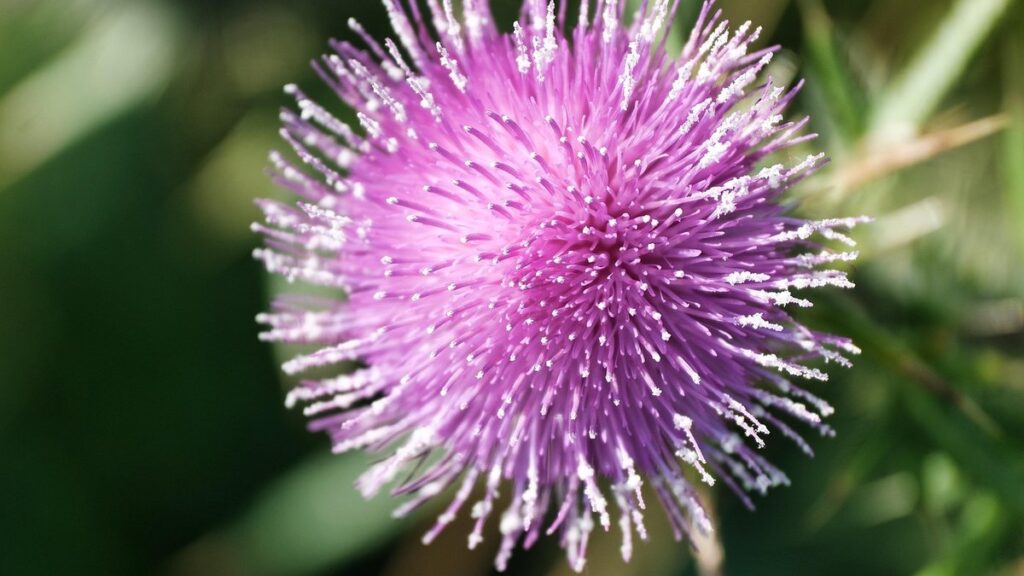
The Scotch thistle is classified as a biennial plant, meaning it completes its life cycle within two years. This characteristic distinguishes it from annual plants that complete their life cycle in one year and perennial plants that live for multiple years. As a member of the Asteraceae family, the Scotch thistle shares this classification with other daisy-like plants such as sunflowers and artichokes. Its spiny stems are also a defining feature, providing protection against herbivores. The purple flowers produced by the plant are a key identifying characteristic, often appearing in late spring or early summer. They grow from leaf axils and can be up to 4 inches in diameter, attracting pollinators such as bees and butterflies.
The Scotch thistle’s classification within the Asteraceae family is significant for several reasons. It suggests that the plant has evolved from a common ancestor with other related species. This shared ancestry is reflected in the plant’s morphology and physiology, including its growth habits and flowering patterns. Understanding the Scotch thistle’s classification can also inform management strategies and control methods, particularly when considering the use of herbicides or manual removal techniques.
Appearance and Growth Habits
When examining a Scotch thistle up close, one of the first things you’ll notice is its impressive size. The plant can grow to be quite tall, reaching heights of 6 feet or more. This can make it a dominant presence in an area, casting long shadows and blocking out sunlight for other plants. In addition to its height, the Scotch thistle also spreads outwards, with a spread of around 3-4 feet.
The leaves of the Scotch thistle are another distinctive feature. They’re large and oval-shaped, with fine hairs covering their surface. This gives them a soft, velvety texture that’s easy to recognize. The leaves are also quite thick, which helps the plant conserve water in dry conditions.
As the summer months approach, the Scotch thistle begins to produce small yellow-centered flowers surrounded by purple petals. These flowers are an important food source for pollinators like bees and butterflies, but they can also make the plant more visible and noticeable to landowners who want to control its spread.
History and Spread of the Scotch Thistle
The scotch thistle has a rich history that spans centuries, and its spread is a fascinating story of adaptation and resilience in the face of changing environments. Originating from Europe, it’s now found on several continents.
Introduction to Scotland
Scotland’s rugged landscape and mild climate made it an ideal environment for the Scotch thistle to take root. The plant is believed to have been introduced as an ornamental species in the 16th century, where it was initially cultivated for its unique shape and vibrant purple flowers. However, its beauty was short-lived, as the thistle quickly spread beyond control, becoming a common sight along roadsides and in fields.
Its rapid proliferation can be attributed to the plant’s ability to thrive in poor soil conditions and its tendency to produce an abundance of seeds, allowing it to easily disperse throughout Scotland. The lack of effective management strategies during this time also contributed to its widespread establishment, as local authorities struggled to keep up with its invasive growth.
Despite its status as a non-native species, the Scotch thistle has become deeply ingrained in Scottish culture and ecology, with many considering it an iconic symbol of the country’s untamed wilderness. Understanding its introduction and initial spread is crucial for developing effective control methods and mitigating its impact on native ecosystems.
Economic Impact
The economic impact of the scotch thistle on Scotland’s agricultural industry has been substantial. Its spiny stems make it difficult for livestock to graze, leading to reduced productivity and increased costs for farmers. This is particularly evident in areas where the thistle has become dominant, causing a significant decrease in grazing quality. Farmers often have to devote extra resources to clearing the thistle, which can be time-consuming and costly.
One of the most notable effects of the scotch thistle is its impact on livestock health. The spines can cause injury to animals, particularly those with skin conditions or weakened immune systems. This not only affects individual animal welfare but also has broader implications for farm productivity and profitability. For example, a study in the Scottish Borders found that areas dominated by the scotch thistle had significantly lower sheep weights than areas where the thistle was less prevalent.
To mitigate these effects, farmers can implement integrated pest management (IPM) strategies, which combine physical removal of the thistle with cultural practices like rotation and grazing management. By adopting such approaches, farmers can reduce the economic burden imposed by the scotch thistle while also promoting a more sustainable agricultural practice.
Identification and Control Methods
Identifying scotch thistle can be a challenge, but understanding its characteristics is crucial for effective control methods to prevent further spread. Knowing what to look for will help you tackle this invasive species more efficiently.
Visual Identification
When identifying the Scotch thistle, it’s essential to examine its characteristic features. Start by looking at the plant’s height and shape: the Scotch thistle can grow up to 6 feet tall, with a distinctive rosette of leaves at its base that gradually give way to a tall, single stem. This stem is typically purple or pinkish in color, often with a distinctive spiny coating.
Notice the leaves themselves, which are usually deeply lobed and have a wavy edge. These features can help distinguish the Scotch thistle from other plants like Canada thistle (Cirsium arvense) and bull thistle (Cirsium vulgare), both of which have similar growth habits but differ in leaf shape.
A closer look at the plant’s flowers is also crucial: the Scotch thistle produces small, yellow or purple florets that form a dense, globular head. This flowering pattern is unique among the Asteraceae family and can help you pinpoint the species. When examining a suspect plant, pay attention to these distinctive features and use them to make an informed identification.
Chemical and Mechanical Control
Chemical control methods involve applying herbicides directly to the scotch thistle plants or using systemic herbicides that are absorbed through the leaves. This approach can be effective for large-scale infestations, but it requires careful consideration and proper application to avoid harming other vegetation or wildlife.
Non-selective herbicides, such as glyphosate, can kill the plant quickly, but may also harm desirable species nearby if not applied carefully. Systemic herbicides, like imazapyr, are absorbed through the leaves and can provide longer-lasting control. However, these chemicals can persist in the environment and potentially contaminate waterways.
Mechanical control involves physically removing the scotch thistle plants or cutting them down at the base. This method is often more time-consuming but provides a more immediate and local solution. It’s essential to wear protective gear when handling the plants to avoid exposure to any potential allergens or irritants.
Effective mechanical removal requires thorough digging of roots, as regrowth can occur if some roots remain intact. Cutting the plant down at the base can also be effective, but may require repeat applications over several years to achieve complete control.
Environmental Impact of the Scotch Thistle
The scotch thistle’s environmental impact is a critical concern, as its aggressive spread can outcompete native species and alter ecosystems. We’ll explore the effects of this invasive plant on local wildlife and habitats.
Competition with Native Species
The Scotch thistle’s ability to outcompete native species for water and nutrients is a significant concern. This process, known as displacement, occurs when invasive species like the Scotch thistle spread rapidly and dominate an area, forcing native plants to recede or disappear. As a result, biodiversity declines, leading to a loss of ecosystem resilience.
One example of this can be seen in Scotland’s grasslands. Studies have shown that areas overrun by the Scotch thistle experience a 50% reduction in native plant species. This not only impacts local wildlife but also affects the long-term health of the soil. Native plants play a crucial role in maintaining soil quality, and their absence can lead to erosion and decreased fertility.
The Scotch thistle’s influence doesn’t stop at displacing native vegetation; it also provides habitat for pests that damage crops. The plant’s tall stature and dense foliage create an ideal shelter for insects like the cabbage stem weevil. These pests feed on valuable crop plants, causing significant economic losses for farmers.
Fire Risk
The dry, spiny stems of the scotch thistle create a significant fire risk. These stems are highly susceptible to ignition, particularly during periods of drought or high winds. Once ignited, the plant’s flammable material can fuel intense fires that spread rapidly. This is concerning not only for its potential impact on local ecosystems but also for the safety of nearby communities.
In areas where scotch thistle has become established, land managers and authorities often implement fire restrictions to mitigate this risk. This may include prohibiting campfires or other open flames during periods of high fire danger. It’s essential for individuals who live or work in these regions to be aware of these restrictions and take necessary precautions to prevent accidental ignition.
Some areas have also implemented controlled burns as a means of managing scotch thistle populations while minimizing the risk of uncontrolled fires. This approach requires careful planning, monitoring, and execution by trained professionals.
Cultural Significance of the Scotch Thistle
The scotch thistle holds a special place in Scottish culture and history, often symbolizing resilience and strength. We’ll take a closer look at its cultural significance and what it represents to the people of Scotland.
Symbolism and Folklore
In Scotland, the Scotch thistle holds a significant place in folklore and symbolism. According to legend, it’s said to have inspired bravery and defense against invaders. This reputation likely stems from its ability to thrive in challenging environments, symbolizing resilience and adaptability. The plant’s prickly appearance may also have contributed to its association with protection.
One notable example of the Scotch thistle’s connection to folklore is its alleged role in King James V’s defeat in 1542. While this account is often disputed among historians, it highlights the thistle’s presence in Scotland’s collective memory and cultural heritage. Today, the plant remains an important symbol in Scottish culture, featuring on national emblems and representing the country’s rich history.
Some Scots even consider it a harbinger of good fortune, believing that spotting a Scotch thistle can signal a prosperous future. This enduring connection to the natural world speaks to the importance of preserving Scotland’s unique cultural identity.
Artistic Representation
The Scotch thistle has been a subject of fascination for artists across various mediums. Its distinctive purple flowers and spiny leaves have made it an iconic symbol in Scottish art. In paintings, the scotch thistle is often depicted as a solitary bloom, standing tall against the rugged Scottish landscape. For example, the Scottish artist David Wilkie used the thistle as a motif in his 1819 painting “The Scotch Thistle”. Similarly, in sculptures, the thistle is often carved into intricate designs, showcasing its unique shape and texture.
In textiles, the scotch thistle has been woven into patterns on tartans and kilts. The thistle’s purple color is particularly prized for its rich tones, which complement the earthy hues of Scottish wool. For instance, the famous Black Watch tartan features a subtle pattern of thistles on a dark blue background. These artistic representations not only celebrate the scotch thistle’s beauty but also highlight its significance in Scottish culture and heritage.
Managing the Scotch Thistle in Modern Times
Managing scotch thistles effectively requires a multi-faceted approach that incorporates prevention, early detection, and targeted control methods to minimize their impact on ecosystems. We’ll explore these strategies in more detail below.
Integrated Pest Management (IPM)
Integrated Pest Management (IPM) involves a holistic approach to controlling scotch thistle populations. This method combines multiple control methods, including biological, chemical, and cultural controls. Biological controls involve introducing natural predators or competitors of the thistle, such as insects that feed on its seeds or flowers.
Chemical controls are typically used as a last resort, due to their potential environmental impact. However, applying herbicides can be an effective way to kill mature thistles and prevent seed production. Cultural controls focus on altering the environment to make it less conducive to thistle growth. This might involve modifying soil pH, mowing or grazing the area regularly, or introducing native species that compete with the thistle for resources.
For example, some farmers have had success with using a combination of mechanical removal and biological control methods. They use machinery to remove mature thistles, creating an environment where natural predators can thrive. This approach not only reduces chemical use but also promotes biodiversity in the affected area. By adopting IPM strategies, land managers can reduce their reliance on single-method solutions and create more sustainable outcomes for scotch thistle management.
Community Engagement and Education
Effective community engagement and education are crucial for developing a comprehensive plan to manage Scotch thistle infestations. This involves collaborating with local stakeholders, including landowners, farmers, and conservationists. For instance, organizing workshops or field days can provide hands-on training on identifying and controlling the plant’s spread. Additionally, partnering with local schools can help educate children about the environmental impact of invasive species.
A key aspect of community engagement is building relationships between affected parties. This can be achieved by establishing a Scotch thistle management group, where members can share knowledge, resources, and best practices for control methods. Regular meetings and updates can help foster a sense of ownership and encourage collective action. Furthermore, involving local media outlets in promoting awareness campaigns can amplify the message and reach a broader audience.
To ensure the effectiveness of community engagement efforts, it’s essential to tailor approaches to specific regional needs and circumstances. This may involve collaborating with local authorities or organizations that specialize in invasive species management. By working together, landowners, farmers, and conservationists can develop targeted strategies for mitigating the Scotch thistle’s impact on Scotland’s environment and economy.
Frequently Asked Questions
What If I Have Already Introduced Scotch Thistle to My Land? Is It Too Late for Control?
Yes, it’s never too late to control the spread of Scotch thistle. Even if the plant has already been present on your land for some time, you can still take steps to prevent its further spread and reduce its impact on your environment and economy. This may involve removing existing plants, implementing measures to prevent seed dispersal, and adopting integrated pest management strategies.
Can I Use Chemical Control Methods Alone to Manage Scotch Thistle?
Chemical control methods can be effective in managing Scotch thistle, but they should not be used alone. A combination of chemical, mechanical, and cultural controls is often the most effective approach. This is because chemical control may not address the root causes of the problem or prevent re-growth from remaining roots.
How Do I Know If My Local Authorities Will Help with Scotch Thistle Control?
Contact your local authorities to ask about their policies and procedures for managing invasive species like Scotch thistle. They may offer guidance on control methods, provide funding or resources for management efforts, or have established programs for community engagement and education.
What Happens If I Fail to Manage Scotch Thistle Effectively? Are There Any Long-Term Consequences?
If you fail to manage Scotch thistle effectively, it can lead to a range of long-term consequences, including reduced biodiversity, decreased agricultural productivity, increased fire risk, and damage to local ecosystems. Effective management requires ongoing effort and vigilance.
Can I Use Biological Control Methods to Manage Scotch Thistle? Are There Any Natural Enemies?
Biological control methods can be an effective way to manage Scotch thistle, particularly when used in combination with other control methods. Researchers have identified several natural enemies of the plant, including certain insects and diseases that can help to reduce its spread and impact.

