
Leafcutter bees are one of the most fascinating and underappreciated pollinators out there. You might not have given them much thought, but these tiny creatures play a crucial role in maintaining ecosystem balance and pollination. What sets leafcutter bees apart is their unique behavior of cutting leaves to build their nests, which can be up to 5 inches deep in the ground. But their importance doesn’t stop there – they’re also key players in pest control, preying on aphids and other garden pests that can cause damage to plants. By understanding more about leafcutter bees’ life cycle, habits, and habitats, you’ll be better equipped to attract them to your garden, creating a beneficial relationship between these valuable pollinators and your green space.
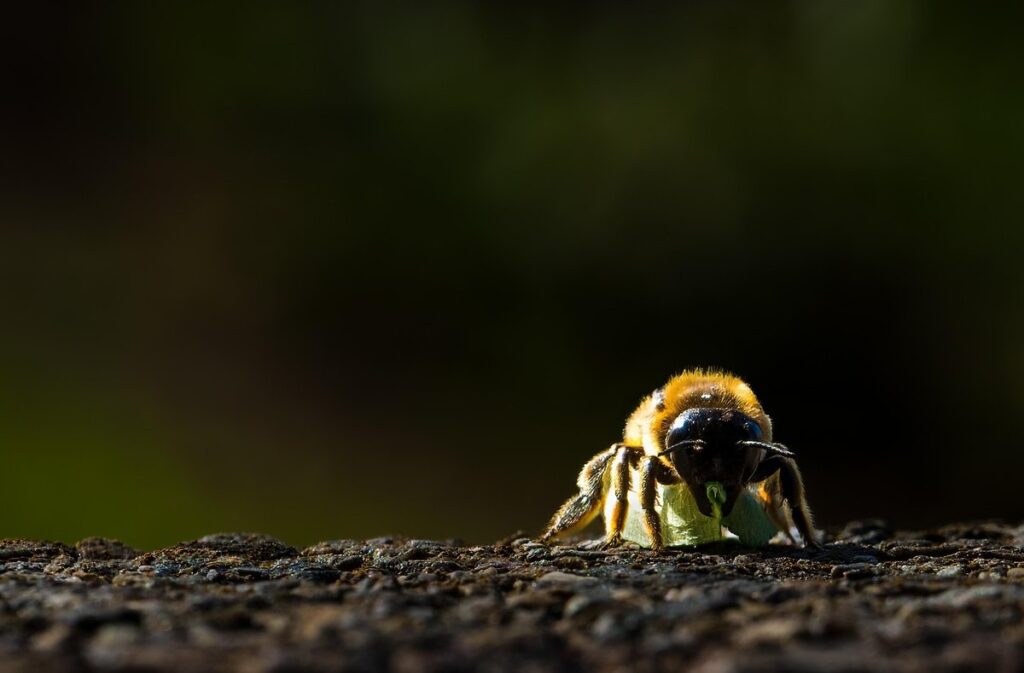
What are Leafcutter Bees?
These remarkable creatures are actually solitary bees that get their name from a unique behavior: cutting and collecting leaves for their nests. We’ll explore what makes them so fascinating.
Characteristics and Identification
Leafcutter bees can be identified by their distinctive physical characteristics. There are approximately 600 species of leafcutter bees, but most are from the genera Megachile and Halictidae. They have a compact, stout body with a metallic sheen, typically ranging in color from green to blue to yellow. Some species have a distinctive pattern of hair or markings on their thorax.
To identify leafcutter bees in the wild or in gardens, look for them near flowers, particularly those that are rich in pollen and nectar. They tend to visit flowers early in the morning or late in the afternoon when temperatures are cooler. Leafcutter bees often hover around flowers before landing on them, using their large eyes to scan for potential threats.
When observing leafcutters in gardens, note that they can be seen flying between flowers, carrying pollen baskets on their legs. They may also visit garden plants that are rich in nectar, such as lavender or sunflowers. If you’re trying to attract leafcutter bees to your garden, consider planting a diverse range of flowers that provide a constant source of nectar and pollen throughout the growing season.
Unique Features and Adaptations
Leafcutter bees possess a range of distinctive features that set them apart from other bee species. One notable adaptation is their specialized mandibles, which are designed for cutting and manipulating leaves rather than collecting nectar or pollen like most other bees. These modified jaws allow leafcutter bees to gather the specific plant material they need for their nests.
In addition to their unique mandibles, leafcutter bees have hairy bodies that help them collect and transport leaves. The hairs on their bodies also aid in carrying pollen back to their nests. This specialized adaptation is crucial for their survival, as it enables them to create a nutrient-rich environment for their larvae.
Another distinctive feature of leafcutter bees is their size. They are generally smaller than other bee species, which may help them navigate through dense vegetation with ease. Their compact size also allows them to access areas that larger bees might find difficult to reach.
Overall, the unique features and adaptations of leafcutter bees have allowed them to thrive in a variety of environments. By understanding these characteristics, we can appreciate the remarkable diversity within the bee world.
Life Cycle and Development
From egg to adult, leafcutter bees undergo a remarkable transformation, with distinct stages that ensure their survival and success. Let’s take a closer look at these developmental milestones.
Egg-Laying and Larval Stages
After the female leafcutter bee collects leaves and prepares them for her nest, she will lay her eggs inside the cells. Each egg is carefully placed within a small chamber, typically at the center of a leaf fragment or a piece of fungus. The number of eggs laid can vary depending on factors such as food availability and environmental conditions.
Female bees usually lay 10-20 eggs per day, with some species capable of laying up to 40 eggs in a single day. These eggs will hatch into larvae after about three to five days, depending on the temperature and humidity levels within the nest. The larvae feed on the fungus-infused leaves, which are rich in nutrients.
As the larvae grow, they molt several times, increasing their size significantly. They can take anywhere from 10-14 days to develop fully before entering the pupal stage. During this time, they will consume a significant portion of the leaf material and contribute to breaking it down further with their saliva.
Pupal Stage and Emergence
Inside the nest cells, a remarkable transformation takes place as the larvae spin silk cocoons around themselves. As they prepare for pupation, their bodies begin to break down and reorganize, eventually forming a pupa. The pupae are typically white or pale yellow, with a soft, almost translucent appearance. They remain in this state for several weeks, during which time they undergo a radical metamorphosis, as their adult features start to take shape.
The developing wings, eyes, and other organs become visible beneath the surface of the pupal skin. As the emergence date approaches, the pupae begin to stir, eventually bursting forth from their cocoons in a process known as “eclosion.” The adult leafcutter bee emerges, its wings still soft and folded, but it will pump blood into them within minutes, expanding them to their full size.
In a matter of hours, the new adult is ready to fly, taking its first flight and joining the colony. This emergence process typically occurs in late spring or early summer, depending on the species and location. As you observe these remarkable creatures, keep in mind that this brief window of emergence is an essential step in the life cycle of leafcutter bees, marking their transition from vulnerable larvae to capable pollinators.
Foraging Behavior and Nesting Habits
Leafcutter bees are highly specialized, and their foraging behavior is a crucial aspect of their biology. Let’s take a closer look at how they find food and prepare it for their nests.
Leaf Collection and Preparation
Leafcutter bees gather leaves with remarkable precision, using their large mandibles to snip off sections of foliage. They typically target plants with high nitrogen content, such as grasses and legumes, which are essential for the development of their young. Once a suitable leaf is selected, the bee will cut it into manageable pieces, often discarding the stem and midrib.
These fragments are then carried back to the nest, where they’re arranged in a specific pattern to facilitate the growth of fungus. Leafcutter bees aren’t interested in using leaves as food for their larvae; instead, they rely on fungi that break down the plant material. This process can take several days, during which time the bee will return to the nest multiple times to tend to the fungal fragments.
To replicate this process in a garden setting, it’s essential to provide leafcutter bees with an abundance of suitable plants. Choose species with high nitrogen content and consider incorporating native legumes or grasses into your landscape design. Avoid using pesticides, as these can harm beneficial insects like leafcutter bees and compromise the health of your ecosystem.
Nest Construction and Maintenance
Leafcutter bees construct their complex underground nests through a highly organized process. First, they prepare a site for nesting by excavating a chamber in suitable soil, often near the surface but also sometimes several feet deep. The bees then collect and transport leaves to the nest, using them as a primary building material. They cut these leaves into small pieces and arrange them in a specific pattern to create a unique internal structure.
This structure serves multiple purposes: it provides insulation for the developing brood, helps regulate humidity levels within the nest, and even aids in air circulation. To maintain this intricate system, leafcutter bees regularly repair damaged areas and replenish supplies of leaves as needed. They achieve this through a series of small excavations and repairs, often carried out with remarkable precision.
Interestingly, individual nests can expand significantly over time, sometimes reaching depths of several feet or more. The sheer complexity and longevity of these underground systems underscore the impressive social organization and engineering prowess displayed by leafcutter bees.
Importance in Ecosystems and Agriculture
Leafcutter bees play a crucial role in maintaining the balance of ecosystems through their pollination services, which also benefits agricultural industries. They contribute significantly to food production and biodiversity.
Pollination Services
Leafcutter bees play a crucial role in pollinating plants and crops, contributing significantly to agricultural productivity. These bees are responsible for transferring pollen between flowers, facilitating the reproduction of many plant species. In fact, leafcutter bees are some of the most important pollinators of tropical flowers, such as heliconia and hibiscus.
When it comes to crop pollination, leafcutter bees are particularly effective at pollinating plants with large, showy flowers like sunflowers and zinnias. This is because their long tongues allow them to reach deep into these flowers to gather nectar and pollen. In some regions, leafcutter bees are responsible for pollinating up to 70% of certain crops, including coffee and cacao.
Leafcutter bees are also important pollinators in ecosystems where other pollinators may be scarce. Their ability to adapt to different environments and flowers makes them a vital component of many ecosystems. By creating a bee-friendly environment in your garden, you can encourage leafcutter bees to visit and pollinate your plants. This involves planting a diverse range of flowers that provide nectar and pollen, as well as providing shelter and nesting sites for these busy pollinators.
Pest Control and Ecological Balance
Leafcutter bees play a crucial role in maintaining ecological balance by controlling pest populations. One of their primary functions is to prey on various garden pests, including caterpillars, aphids, and whiteflies. By targeting these pests, leafcutter bees prevent them from causing significant damage to crops and gardens.
For instance, when leafcutter bees encounter aphid colonies, they will often attack the aphids’ eggs and larvae, thereby controlling their populations. This behavior is especially beneficial in agricultural settings where aphid infestations can lead to reduced crop yields and decreased plant quality.
In addition to preying on individual pests, leafcutter bees also contribute to ecological balance by pollinating plants. However, their role as pollinators is often overshadowed by that of honey bees. Nonetheless, leafcutter bees are responsible for transferring pollen between flowers, facilitating the reproduction of various plant species.
By controlling pest populations and contributing to pollination, leafcutter bees maintain a delicate balance within ecosystems. Their activities also have a cascading effect on other organisms, such as birds and spiders, which prey on or parasitize leafcutter bees. This complex web of interactions highlights the importance of leafcutter bees in maintaining ecological equilibrium.
Conservation Status and Threats
Leafcutter bees are facing numerous threats, including habitat loss, pesticide use, and climate change, which can have devastating effects on their populations. We’ll take a closer look at these pressing issues next.
Habitat Loss and Fragmentation
Leafcutter bees rely on specific plants for their food and nesting materials, but human activities have led to widespread habitat loss and fragmentation. As forests are cleared for agriculture, urban development, or logging, leafcutter bee habitats disappear, leaving the bees without essential resources. The most pressing concern is the destruction of native plant species that provide leaves for the bees’ nests.
A study in a region with high deforestation rates found that leafcutter bee populations declined by 30% within two years after forest clearing began. Another factor contributing to habitat fragmentation is the creation of isolated patches of habitat, which can be too small to sustain viable populations. When habitats are fragmented, bees struggle to find mates and suitable nesting sites.
To mitigate this issue, conservation efforts focus on preserving native plant species and creating bee-friendly corridors within fragmented landscapes. By planting native vegetation in gardens and urban areas, individuals can help maintain connectivity between isolated patches of habitat and support the survival of leafcutter bee populations. This approach not only benefits bees but also contributes to ecosystem balance and biodiversity.
Climate Change and Other Factors
Climate change is not the only factor affecting leafcutter bee populations. Changes in land use and urbanization also play a significant role. As natural habitats are destroyed or fragmented to make way for agriculture, infrastructure development, or human settlements, leafcutter bees lose their nesting sites and food sources. This can lead to population decline and even local extinctions.
Droughts and extreme weather events linked to climate change further complicate the situation. Leafcutter bees rely on specific temperature and moisture conditions to thrive. When these conditions are disrupted, their ability to forage, nest, and reproduce is severely impacted. In some regions, leafcutter bee populations have already begun to decline due to warmer temperatures altering the availability of nectar-rich flowers.
To mitigate these effects, conservation efforts should focus on preserving natural habitats and restoring ecosystems. This can be achieved by creating pollinator-friendly gardens or green spaces within urban areas, which provide a haven for leafcutter bees and other beneficial insects. Additionally, reducing pesticide use and promoting sustainable agriculture practices can help maintain healthy populations of leafcutter bees and the ecosystem services they provide.
Attracting Leafcutter Bees to Your Garden
To attract leafcutter bees, you’ll want to create a welcoming environment that provides the perfect combination of flowers and nesting sites for these busy pollinators. We’ll explore the essential elements to make your garden bee-friendly.
Creating a Bee-Friendly Environment
To create a garden environment that attracts leafcutter bees and supports their well-being, you’ll want to focus on providing the right combination of flowers, nesting sites, and water sources. Leafcutter bees are attracted to gardens with a diverse range of flowers that bloom at different times, as this provides a constant source of nectar and pollen for them. Incorporate native plants that are rich in these resources, such as sunflowers, zinnias, and cosmos, into your garden design.
Leafcutter bees also require specific nesting sites to lay their eggs and care for their young. Provide undisturbed areas with loose soil or sand where they can excavate nests. Avoid using pesticides, which can harm leafcutter bee populations. Instead, adopt integrated pest management techniques that promote a balanced ecosystem.
Water is another essential resource for leafcutter bees. Create a shallow water source, such as a birdbath or a shallow dish filled with fresh water and rocks or sticks for perching. Avoid using chlorinated water, which can harm the bees’ digestive systems. By incorporating these elements into your garden design, you’ll be creating a bee-friendly environment that attracts leafcutter bees and supports their well-being.
Providing Sustenance and Shelter
Leafcutter bees need a reliable source of nectar-rich flowers to fuel their high-energy lifestyle. Plant a diverse selection of bee-friendly blooms, such as sunflowers, zinnias, and cosmos, that provide a constant flow of nectar throughout the growing season. Consider using a mix of annuals and perennials to ensure a steady supply of flowers from spring through fall.
In addition to nectar-rich flowers, leafcutter bees also require shelter and nesting sites. Provide a variety of materials for them to use in constructing their nests, such as sticks, twigs, and dry leaves. You can also create a bee hotel or insect house specifically designed for solitary bees like the leafcutter bee.
When choosing plants for your garden, remember that leafcutter bees are attracted to flowers with a high nectar concentration and those that bloom in the morning. Planting native species is also beneficial, as they tend to have co-evolved relationships with local pollinators. By incorporating these elements into your garden design, you can create a welcoming environment for leafcutter bees to thrive.
Frequently Asked Questions
Can I raise leafcutter bees from larvae or pupae?
Yes, it is possible to raise leafcutter bees in captivity, but it requires great care and attention. Leafcutter bee larvae are typically raised in specialized nests with a controlled environment that mimics their natural habitat. Providing them with the right food sources, temperature, and humidity levels can increase the chances of successful development.
How do I protect my garden from leafcutter bees if they’re beneficial?
While leafcutter bees are generally beneficial to gardens, they can still cause damage to plants by cutting leaves for their nests. To minimize damage, create a separate area with plants that are less appealing to leafcutter bees or use physical barriers like fine mesh to keep them out of your main garden.
Can I attract leafcutter bees to my garden if it’s located far from natural habitats?
Yes, leafcutter bees can travel long distances in search of food and shelter. To attract them to your garden, create a bee-friendly environment by planting nectar-rich flowers, providing a source of water, and minimizing pesticide use.
What are some common mistakes to avoid when trying to attract leafcutter bees to my garden?
Some common mistakes include using pesticides, which can harm or kill leafcutter bees; failing to provide a diverse range of plants that cater to their specific needs; and neglecting to create sheltered areas for them to nest in.
Can I use the same nesting material as leafcutter bees to create artificial nests in my garden?
While it’s tempting to replicate the natural nesting habits of leafcutter bees, using the same materials may not be effective. Leafcutter bees have specific preferences when it comes to nesting materials, and substituting them with alternative materials may not provide the necessary support for their colonies.

