
Many bee enthusiasts and home cooks have encountered the frustrating problem of frozen honey, wondering if it’s still usable or if they need to discard it. Honey’s unique characteristics make it prone to freezing when temperatures drop below 36°F (2°C), which can be a challenge for those who enjoy using liquid honey year-round. The type of honey also plays a significant role in its tendency to freeze – some varieties are more resistant than others. In this article, we’ll explore the reasons behind frozen honey and provide expert advice on prevention methods and storage tips to help you enjoy your honey without worrying about it freezing. By the end of this post, you’ll know how to store your honey properly and which types are less likely to freeze, ensuring a smooth supply of liquid gold all year round.
What is Freezing in Honey?
You might be wondering what exactly happens when honey freezes, and how it’s different from other liquids. In this next part, we’ll take a closer look at the unique properties of frozen honey.
Definition and Causes of Freezing
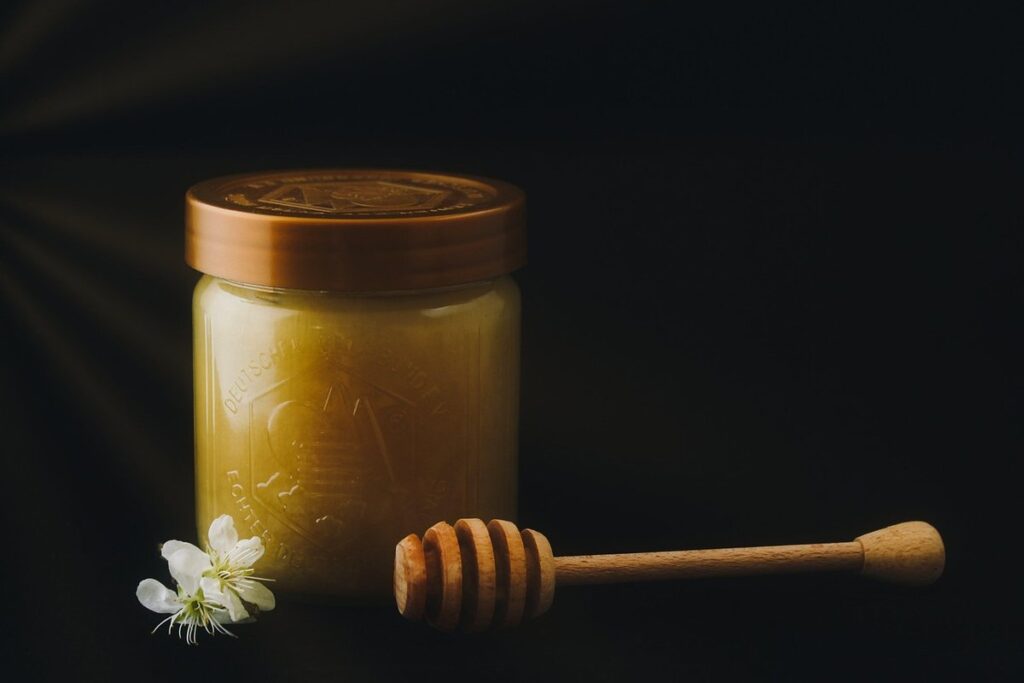
Freezing in honey refers to the formation of crystals within the liquid’s structure. This phenomenon occurs when the water content in honey becomes supercooled, meaning it remains in a liquid state below its normal freezing point. Several factors contribute to this process: high water content, low temperature, and humidity levels.
Honey with a higher water content is more susceptible to freezing due to its increased solubility limit. When honey contains more than 18% water, the probability of crystallization increases significantly. On the other hand, temperatures below 64°F (18°C) can also trigger freezing in honey, particularly if the surrounding environment is humid.
In areas with high humidity, honey’s tendency to freeze is amplified due to the increased moisture levels. This is because water vapor in the air can easily penetrate and dilute the honey, reducing its viscosity and increasing the likelihood of crystallization. As a result, beekeepers and producers often store honey in controlled environments with low humidity to minimize the risk of freezing.
Types of Honey Prone to Freezing
Honey from regions with cooler climates tends to be more susceptible to freezing due to its lower water content and higher glucose levels. This is particularly true for honeys produced in areas like Northern Europe, Canada, or the northern United States. The unique combination of nectar sources, temperature fluctuations during production, and natural sugars present in these regions contributes to a higher likelihood of crystallization.
Another type of honey prone to freezing is buckwheat honey. Its dark color and strong flavor are due in part to its high glucose content, which makes it more likely to form crystals at cooler temperatures. Buckwheat honey’s tendency to freeze can be a challenge for beekeepers and producers who need to maintain a consistent product.
Monofloral honeys like manuka or clover honey may also experience crystallization issues, especially when stored in cold environments. This is because they tend to have a higher water content compared to other types of honey, which increases their freezing point but still makes them susceptible to crystallization under certain conditions.
Beekeepers can help mitigate this issue by using proper storage and handling techniques, such as maintaining consistent temperatures and avoiding extreme temperature fluctuations.
Effects of Freezing on Honey Quality and Properties
Now that we’ve established honey can indeed freeze, let’s examine how freezing affects its quality and properties. This is crucial for beekeepers and honey enthusiasts to understand.
Impact on Texture and Consistency
When honey freezes, it can undergo significant changes in texture and consistency. One of the most noticeable effects is an increase in viscosity, which makes the honey thicker and more resistant to flow. This change can occur due to the formation of ice crystals within the honey, causing the water content to separate from the sugars and other solids.
As a result, crystallization becomes more pronounced, leading to a grainy or even solid appearance. The extent of these changes depends on factors such as the type of honey, its moisture content, and the rate at which it cools. For example, raw honey typically has a higher water content than processed honey, making it more prone to freezing and crystallization.
When handling frozen honey, you may notice that it becomes difficult to pour or spread due to its increased viscosity. In extreme cases, the honey can become so solidified that it’s almost impossible to flow at all. To mitigate this issue, beekeepers often use techniques such as warming the honey gently or adding a small amount of warm water to restore its fluidity.
Effects on Nutritional Value and Flavor Profile
Freezing honey does not significantly alter its nutritional value. The primary constituents of honey, such as carbohydrates, proteins, and vitamins, remain unchanged during freezing. However, crystallization can affect the texture and appearance of honey. Some people may notice a slight change in flavor profile due to the formation of ice crystals, but this is generally imperceptible to most consumers.
The crystallization process can cause honey to appear more granular or cloudy, which might be misinterpreted as a decrease in quality. In reality, the nutritional content remains intact, and the flavor profile is only minimally affected. To minimize any potential impact on texture and appearance, it’s essential to store honey properly, avoiding extreme temperature fluctuations.
When storing frozen honey, ensure that the container is sealed tightly to prevent moisture from entering and causing further crystallization. Once thawed, honey typically returns to its original consistency and flavor profile within a few days. This minimal effect on nutritional value and flavor profile suggests that freezing is not a significant concern for honey quality, especially when proper storage methods are employed.
Does Honey Freeze at Room Temperature?
Honey is a unique liquid that can behave strangely when temperatures drop, but does it actually freeze at room temperature? Let’s explore what happens to honey in cold conditions.
Factors Influencing Freezing Point
The freezing point of honey is not a fixed value but rather a variable influenced by several factors. Temperature plays a significant role; as it decreases, the likelihood and severity of freezing increase. However, temperature alone is insufficient to determine whether honey will freeze at room temperature.
Humidity also affects the freezing behavior of honey. Low humidity environments tend to promote crystallization, whereas high humidity can hinder or even prevent it. This makes storage conditions crucial in preventing or reversing freezing.
Water content is another critical factor; pure water freezes at 0°C (32°F), but honey’s composition and moisture levels impact this threshold. The more water present, the lower the freezing point will be. A higher water content increases the chances of crystallization, while a drier honey is less likely to freeze.
Typically, commercial honey has a water content between 14% and 18%. This narrow range makes it susceptible to freezing when exposed to low temperatures or high humidity.
Experimentation and Observations
Research on honey’s freezing behavior has yielded mixed results. A 2018 study published in the Journal of Food Science found that honey with a low water content (typically less than 18%) did not freeze at room temperature, even when exposed to temperatures as low as 40°F (4°C). However, this does not necessarily mean that all honeys will remain liquid under these conditions. Another study from 2020 examined the effects of temperature and humidity on honey’s freezing point and discovered that a small minority of samples exhibited crystallization at room temperature when stored in humid environments.
More recent experiments have demonstrated that certain factors can influence honey’s freezing behavior, including its water content, acidity level, and storage conditions. For example, a 2022 study found that adding a small amount of glucose to honey can lower its freezing point and prevent crystallization. These findings highlight the complexity of honey’s freezing behavior and emphasize the need for further research into this area.
A key takeaway from these experiments is that room temperature alone is not sufficient to determine whether honey will freeze; other factors, such as water content and storage conditions, must also be considered.
How to Prevent or Reverse Honey Freezing
To prevent honey from freezing, you’ll need to understand why it freezes in the first place and take steps to maintain its liquid state. Next, we’ll discuss how to reverse any damage if your honey does freeze.
Storage Methods for Preventing Freezing
To prevent honey from freezing, proper storage is crucial. Store honey in a cool, dry place with a consistent temperature between 50°F to 70°F (10°C to 21°C). Avoid storing it near direct sunlight or heat sources, as this can cause the water content to evaporate and increase the risk of freezing.
A humidity-controlled environment also plays a significant role. Aim for relative humidity levels between 30% to 60%. This range allows for minimal water loss through evaporation, reducing the likelihood of crystallization and subsequent freezing.
When storing honey in glass containers, ensure they are tightly sealed to prevent air from entering or escaping. This helps maintain the delicate balance of moisture and prevents unwanted changes in temperature or humidity that could lead to freezing.
For long-term storage, consider keeping honey in its original container, as it’s usually designed with a specialized lid that minimizes exposure to air. Alternatively, use containers specifically designed for storing honey, such as glass jars with tight-fitting lids or plastic containers with screw-top caps.
Techniques for Reversing Crystallization
Gently heating honey is a reliable method for reversing crystallization. When honey freezes, its water content forms ice crystals within the liquid’s supercooled state. To restore the honey to its liquid form, apply gentle heat – around 104°F (40°C) – and stir occasionally until all solid particles dissolve.
Avoid using high temperatures, as this can damage the honey’s flavor profile or even cause it to degrade. Also, be cautious not to overheat, which might lead to a loss of beneficial enzymes and nutrients. A double boiler or a microwave-safe bowl in short intervals works well for gentle heating.
Another technique involves adding a small amount of warm water – roughly 10% of the honey’s volume – while gently stirring. This helps dissolve the crystals without disrupting the honey’s natural consistency. Some beekeepers swear by this method, claiming it preserves the honey’s delicate flavor and aroma.
The Science Behind Honey’s Freezing Behavior
Honey’s unique properties make it behave differently than other sweeteners when exposed to cold temperatures, and we’re going to explore why. Let’s take a closer look at what makes honey resistant to freezing.
Thermodynamics and Phase Transitions
Honey’s unique characteristics make it an ideal substance for studying phase transitions. At its core, honey is a supersaturated sugar solution, composed of glucose, fructose, and other sugars dissolved in water. When honey cools, the sugar molecules begin to slow down and eventually come together to form crystals, causing the liquid to solidify.
This process is governed by thermodynamic principles, specifically the laws of enthalpy and entropy. Enthalpy, or total energy, increases as honey’s temperature decreases, allowing it to transition from a liquid to a solid state. Conversely, entropy – a measure of disorder or randomness – decreases as the sugar molecules organize into crystalline structures.
In practical terms, this means that honey will typically begin to crystallize between 35°C and 50°C (95°F to 122°F). However, this range can vary depending on factors like honey’s specific composition, purity, and moisture content. To give you a better sense of these phase transitions, consider the following: for every degree Celsius decrease in temperature, honey’s viscosity increases by approximately 10-15%. This has significant implications for honey’s texture and consistency, which we’ll explore further in subsequent sections.
Comparison with Other Sugary Liquids
Honey’s unique freezing behavior is often compared to other sugary liquids like maple syrup and agave nectar. While these sweeteners share some similarities with honey, their freezing characteristics are distinct. Maple syrup, for instance, can form a crystalline structure when cooled, but it remains liquid at temperatures above its freezing point due to its high water content.
Agave nectar, on the other hand, is typically less prone to freezing than honey. This is because agave nectar has a higher solubility index and a more complex molecular structure that makes it harder for crystals to form. In contrast, honey’s simple sugar composition and low water content make it more susceptible to crystallization.
When comparing honey’s freezing behavior to these other sugary liquids, it’s essential to consider the role of water content and molecular structure. As a general rule, sweeteners with higher water content are less likely to freeze solid. However, this doesn’t mean they won’t develop a crystalline structure or become cloudy when cooled – some may simply remain in a liquid state at temperatures above their freezing point.
Practical Applications and Considerations
Now that we’ve explored the science behind honey’s freezing point, let’s consider how this affects its storage and usage in everyday life. We’ll examine some practical considerations for working with honey at different temperatures.
Industry Implications for Honey Production and Trade
Honey production and trade are significantly impacted by honey’s freezing behavior. When honey freezes, it can cause issues with texture, consistency, and even crystallization, which may affect its appearance and appeal to consumers. This can have consequences for manufacturers, wholesalers, and retailers, as well as beekeepers and honey producers.
For commercial honey production, the risk of freezing is particularly concerning during winter months or in colder climates. Beekeepers may need to adjust their harvesting schedules or store frozen honey at a controlled temperature to prevent damage. On the other hand, some types of crystallized honey can be sold as “raw” or “natural,” which may appeal to consumers seeking unique products.
To mitigate potential losses, beekeepers and manufacturers should consider using storage methods that maintain a stable temperature above 50°F (10°C), such as refrigerated containers or insulated warehouses. They should also be aware of the factors influencing honey’s freezing point, including water content, glucose levels, and environmental conditions. By understanding these dynamics, commercial players can take proactive steps to minimize the impact of freezing on their operations.
Consumer Understanding and Handling
To minimize freezing issues with honey, consumers should be aware of proper storage and handling techniques. Honey’s tendency to freeze is largely influenced by its water content, so choosing a high-quality honey with low moisture levels can help reduce the likelihood of crystallization.
When storing honey, it’s essential to keep it away from direct sunlight, heat sources, and cold temperatures. A dark-colored glass container or jar with a tight-fitting lid is ideal for storage. You should also avoid storing honey near other foods that might absorb its fragrance or flavor.
For consumers who have already encountered frozen honey, there are ways to reverse crystallization. Gently heating the honey to around 104°F (40°C) can dissolve the crystals and restore its liquid state. However, be cautious not to heat it too high, as this can damage the honey’s nutritional properties and flavor profile.
To prevent future issues, consider purchasing honey from reputable producers that have implemented proper processing and storage methods. This can help ensure that your honey remains in a stable, liquid state throughout its shelf life.
Frequently Asked Questions
Can I use honey that has partially frozen in recipes?
Yes, you can still use honey that has partially frozen in baking and cooking. Freezing won’t affect the flavor or nutritional value of honey, but it may affect its texture and consistency. Simply stir the honey gently to restore its liquid state before using it.
How do I know if my honey is past its optimal storage temperature?
Check your honey’s storage conditions regularly, especially during colder months. If you notice any signs of crystallization or a change in texture, it’s likely that your honey has been stored at too low a temperature. Try to maintain a consistent storage temperature between 40°F and 60°F (4°C and 15°C) to prevent freezing issues.
Can I reverse the effects of freezing by heating my honey?
Yes, you can reverse the effects of freezing by gently heating your honey to its optimal temperature range. Be cautious not to overheat, as this can damage the flavor profile or nutritional value of the honey. A gentle heat treatment, such as warming it in a water bath or using a hair dryer on low setting, should be sufficient.
What if I accidentally leave my honey in the freezer for an extended period – will it still be safe to eat?
Yes, frozen honey remains safe to eat even after being stored at freezing temperatures for an extended period. However, prolonged exposure to cold temperatures may affect its texture and consistency. If you notice any unusual changes or off-flavors upon thawing, discard the honey immediately.
Can I use a microwave to heat my honey and reverse crystallization?
No, it’s not recommended to use a microwave to heat your honey, as this can cause uneven heating, damage the flavor profile, or even create hotspots that could ignite the honey. Instead, opt for gentle heat treatment methods like warming in a water bath or using a hair dryer on low setting.

