
Agricultural practices have become one of the leading causes of environmental degradation, with intensive farming methods contributing to deforestation, soil erosion, and water pollution. Chemical use in agriculture is another major concern, releasing greenhouse gases that exacerbate climate change. The sheer scale of agricultural operations also means they are a significant source of greenhouse gas emissions, from fertilizers to livestock production. This has severe implications for ecosystems and biodiversity, not just locally but globally. It’s time to take a closer look at the effects of agriculture on the environment. In this article, we’ll explore how intensive farming practices, chemical use, and greenhouse gas emissions are devastating our planet, and discover practical solutions that can help mitigate these impacts. By the end of it, you’ll understand the full extent of agricultural pollution and have a clear understanding of sustainable alternatives to conventional farming methods.
Soil Degradation and Erosion
Soil degradation and erosion are two major environmental concerns caused by intensive farming practices, threatening crop yields and biodiversity. Without proper management, agricultural lands can be irreparably damaged.
Loss of Topsoil and Nutrient Depletion
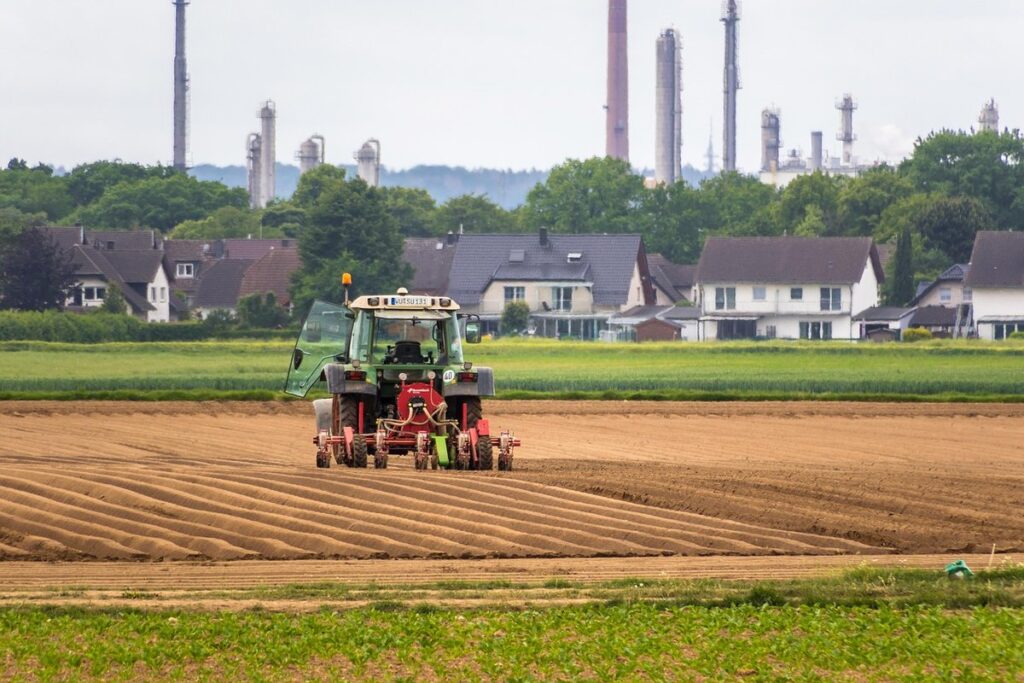
Intensive farming practices have taken a devastating toll on the world’s soil. Topsoil erosion is a significant consequence of intensive agriculture, with an estimated 30% of arable land being degraded worldwide. This loss of topsoil leads to reduced fertility and increased greenhouse gas emissions, as crops are forced to grow in less nutrient-rich soil.
One factor contributing to topsoil degradation is the removal of crop residues and organic matter. When these residues are not left on the soil surface, they fail to break down and replenish nutrients. This practice also removes the protective cover that prevents erosion. As a result, soils become increasingly barren and vulnerable to erosion.
The consequences of nutrient depletion are far-reaching. Soils with low nutrient levels struggle to support healthy crop growth, leading to reduced yields and increased reliance on synthetic fertilizers. These fertilizers can further exacerbate soil degradation by contributing to greenhouse gas emissions and water pollution. To mitigate this issue, farmers can adopt no-till or reduced-till farming practices that minimize soil disturbance and preserve organic matter.
Water Pollution from Agricultural Chemicals
When agricultural chemicals like fertilizers and pesticides are applied to crops, they can run off into nearby water sources through rainfall or irrigation. This can lead to contamination of rivers, lakes, and underground aquifers. For example, the Mississippi River Basin in the United States has been impacted by nutrient pollution from fertilizer runoff, causing algal blooms that deplete oxygen levels and harm aquatic life.
Fertilizers, particularly nitrogen-based ones, contribute to eutrophication – a process where excess nutrients stimulate excessive plant growth, leading to decreased water quality. The World Health Organization estimates that 1 in 9 people worldwide lack access to safe drinking water, partly due to agricultural pollution. Pesticides can also contaminate water sources, posing risks to human health through direct consumption or exposure during irrigation.
Some common agricultural chemicals found in water pollution include atrazine, glyphosate, and chlorpyrifos. These pollutants can accumulate in the food chain, affecting both wildlife and humans who consume contaminated produce or drink polluted water. To mitigate this issue, farmers can implement best management practices (BMPs) like buffer strips, cover crops, and integrated pest management systems to reduce chemical runoff.
Greenhouse Gas Emissions and Climate Change
Agriculture plays a significant role in greenhouse gas emissions, accounting for nearly 25% of global emissions. Here, we’ll examine the impact of agricultural activities on climate change.
Contribution of Agriculture to Global Warming
Agriculture is a significant contributor to global warming, responsible for around 20-30% of total greenhouse gas emissions. Deforestation and land-use changes are major drivers of climate change, with millions of acres of forests cleared each year for agricultural purposes. The resulting loss of carbon sequestration capacity exacerbates the problem.
Livestock production is another critical factor, accounting for a substantial share of agriculture’s overall emissions. Cattle, in particular, have a significant impact due to their methane production, which is estimated to be around 20-30 times more potent than CO2 over a 100-year time frame. The production of feed crops such as soy and maize also contributes to deforestation.
The way we produce and consume meat plays a crucial role in this process. Factory farming methods prioritize efficiency and profit over animal welfare, leading to higher emissions from manure management and feed production. Furthermore, the demand for cheap meat drives deforestation, as forests are cleared to make way for grazing land or feed crops.
Agricultural Production Methods and Carbon Footprint
Agricultural production methods vary significantly in their carbon footprint. Conventional intensive farming, which relies heavily on synthetic fertilizers and pesticides, tends to have a higher carbon footprint compared to organic or regenerative practices. For instance, studies have shown that industrial-scale monoculture farms release up to 14 times more greenhouse gas emissions per hectare than smaller-scale, diverse farms.
Regenerative agriculture, which focuses on soil health through practices like no-till or reduced-till farming and cover cropping, can sequester significant amounts of carbon. This approach not only reduces synthetic fertilizer use but also promotes soil biodiversity. However, widespread adoption is hindered by the need for large upfront investments in new infrastructure and equipment.
To give you a better idea of the differences between production methods, consider these key characteristics:
- Conventional intensive farming: heavy reliance on synthetic fertilizers, pesticides, and machinery
- Organic farming: use of natural or organic fertilizers, prohibition of synthetic pesticides
- Regenerative agriculture: focus on soil health through practices like no-till or reduced-till farming and cover cropping
Biodiversity Loss and Habitat Destruction
Agriculture plays a significant role in biodiversity loss, as the expansion of farmland leads to widespread deforestation and habitat destruction. This has severe consequences for countless species.
Deforestation and Land-Use Changes
Large-scale agriculture is a primary driver of deforestation and land-use changes worldwide. As forests are cleared to make way for crops like soybeans, palm oil, and cattle feed, ecosystems are disrupted and habitats lost for countless species. The Amazon rainforest, for example, has experienced significant deforestation in recent years due to the expansion of soybean and cattle farming.
The consequences of this land-use change extend beyond the immediate loss of biodiversity. Forests play a critical role in regulating global climate patterns, and their destruction contributes to increased greenhouse gas emissions. Additionally, forests help maintain water cycles, and their clearance can lead to reduced river flow and altered water quality. The conversion of forestland to agricultural use also leads to soil degradation, as tree roots are lost and nutrient-rich topsoil is eroded.
To put a stop to this trend, many companies have begun to adopt more sustainable practices. Some have committed to sourcing their palm oil from certified sustainable sources or have implemented zero-deforestation policies for their supply chains. Consumers can also play a role by choosing products that come from environmentally responsible producers and supporting organizations working to protect and restore forests.
Monoculture Farming and the Decline of Pollinators
Monoculture farming, which involves growing a single crop over large areas, has devastating effects on pollinator populations. This intensive farming practice relies heavily on pesticides and fertilizers to control pests and promote growth. However, these chemicals have a toxic impact on bees, butterflies, and other pollinators that visit the crops.
The widespread use of monoculture farming contributes to the decline of crop diversity as well. When only one or two high-yielding crop varieties are grown, farmers become increasingly dependent on external inputs like pesticides and fertilizers. This reduces the resilience of ecosystems, making them more vulnerable to pests and diseases.
Pollinators are essential for maintaining ecosystem health and crop yields. Without them, plants struggle to reproduce, leading to reduced crop diversity and lower yields. The loss of pollinator populations has significant economic implications for farmers, particularly in regions where these insects are crucial for food production.
To mitigate the effects of monoculture farming on pollinators, consider implementing integrated pest management (IPM) strategies that minimize the use of chemical pesticides. This can involve using physical barriers, introducing beneficial insects, or practicing crop rotation to promote biodiversity and ecosystem resilience.
Water Scarcity and Over-Extraction
Agriculture is a significant contributor to water scarcity, with over-extraction from aquifers and rivers threatening ecosystems worldwide.
This alarming trend has severe consequences for both human populations and the environment.
Groundwater Depletion and Aquifer Stress
Groundwater depletion and aquifer stress are pressing concerns resulting from agricultural water over-extraction. When farmers rely heavily on groundwater for irrigation, they can deplete the aquifer faster than it can recharge. This phenomenon is particularly pronounced in regions with low rainfall and high population growth.
In the United States, for instance, intensive farming has led to significant declines in groundwater levels. The High Plains Aquifer, a vital source of water for agriculture, has lost nearly 30 feet of water since the 1950s. If this trend continues, it could lead to widespread crop failures and economic losses for farmers.
Aquifers are often treated as infinite resources, but they have finite capacities. Over-extraction can cause land subsidence, reduced crop yields, and decreased water quality. In California’s Central Valley, for example, over-pumping of the aquifer has led to soil compaction and increased salinity levels, making it difficult for crops to grow.
To mitigate these effects, farmers should adopt more efficient irrigation systems and practices that prioritize groundwater conservation. This can be achieved through technologies like drip irrigation or precision agriculture, which reduce water waste and optimize resource use.
Irrigation Systems and Water Conservation Strategies
Agricultural irrigation systems often rely on outdated and inefficient technologies. Many farms still use gravity-fed canals or low-pressure sprinkler systems, which can waste up to 60% of applied water due to evaporation, runoff, and deep percolation into the soil. In contrast, modern drip irrigation systems can reduce water loss by as much as 90%. However, even these more efficient systems require significant upfront investment and technical expertise.
Some innovative water conservation strategies are emerging in response to these challenges. For example, precision irrigation involves using satellite imaging and sensor data to monitor soil moisture levels and adjust watering schedules accordingly. This approach can save up to 20% of applied water while also reducing chemical use by minimizing the need for frequent applications. Another strategy is crop selection: choosing drought-tolerant crops or varieties that require less water can significantly reduce irrigation needs.
To optimize water use, farmers are increasingly turning to technologies like soil moisture sensors and weather stations. These tools provide real-time data on soil conditions and weather patterns, enabling farmers to make more informed decisions about when and how much to water their crops. By adopting these strategies, agricultural operations can not only conserve water but also improve crop yields and reduce the environmental impact of irrigation.
Food Waste and Inefficient Distribution Networks
Food waste and inefficient distribution networks are two major problems plaguing our food system, resulting in massive environmental costs that we all pay. Let’s take a closer look at how these issues contribute to agricultural’s devastating effects on the environment.
Causes and Consequences of Food Loss
Food loss occurs at various stages along the supply chain. Overproduction is a significant contributor, with many farms cultivating more crops than can be sold or consumed. This surplus often ends up as waste due to spoilage from inadequate storage facilities or poor handling practices.
Inadequate storage facilities are another major cause of food loss. Many developing countries lack refrigeration and proper storage infrastructure, leading to rapid spoilage and waste. In the United States, it’s estimated that 20% of produce is discarded simply because it’s cosmetically imperfect – a problem further exacerbated by retailers’ strict appearance standards.
Economies of scale can also lead to inefficiencies in distribution networks. Large-scale agricultural operations often rely on long-distance transportation, resulting in higher carbon emissions and increased food spoilage during transit. This has significant environmental implications, with greenhouse gas emissions contributing to climate change.
In contrast, localized food systems that prioritize proximity to consumers tend to have lower waste rates due to reduced transportation distances and more direct sales channels.
Innovative Solutions for Reducing Food Waste
Emerging technologies and strategies are being developed to combat food waste throughout the supply chain. One such innovation is artificial intelligence-powered inventory management systems. These systems use machine learning algorithms to analyze sales data, weather forecasts, and other factors to predict demand and optimize stock levels, reducing the likelihood of overproduction and subsequent waste.
Another strategy gaining traction is the use of blockchain technology to track food from farm to table. By providing a transparent and tamper-proof record of a product’s origin, quality, and movement, blockchain can help identify areas where food is being lost or wasted. For example, a study by the Food Waste Reduction Alliance found that using blockchain to track produce reduced waste by 20% in some cases.
Food recovery apps are also becoming increasingly popular, connecting surplus food from restaurants, cafes, and other food businesses with those who need it most – such as homeless shelters, soup kitchens, and low-income families. By reducing the amount of food discarded at the end of its shelf life, these apps can make a significant impact on reducing waste.
In addition to these technologies, some companies are implementing “ugly produce” initiatives, where imperfect fruits and vegetables are sold at a lower price or donated to those in need. This not only reduces waste but also promotes sustainability and challenges consumer perceptions of what constitutes “perfect” produce.
Sustainable Agriculture Practices and Future Directions
As we’ve discussed the environmental impacts of agriculture, let’s now turn our attention to sustainable practices that can help mitigate these effects. We’ll explore innovative approaches being developed worldwide.
Regenerative Agriculture and its Benefits
Regenerative agriculture offers a promising approach to sustainable farming by prioritizing soil health, biodiversity, and ecosystem services. By adopting practices like no-till or reduced-till farming, cover cropping, and integrating livestock grazing, farmers can improve soil structure and fertility. This, in turn, enhances the soil’s ability to sequester carbon, reducing greenhouse gas emissions.
Regenerative agriculture also promotes biodiversity by creating habitat for beneficial insects, pollinators, and wildlife. For instance, planting a diverse mix of crops can attract bees, butterflies, and other pollinators, while also providing food and shelter for birds and small mammals. By mimicking natural ecosystems, regenerative farms can support complex web of relationships between plants, animals, and microorganisms.
Some key benefits of regenerative agriculture include improved soil health, increased biodiversity, and enhanced ecosystem services. Regenerative farmers can expect to see improvements in crop yields, reduced water usage, and lower costs associated with fertilizers and pesticides. To get started, farmers can begin by assessing their current practices and identifying areas for improvement. They can then implement changes incrementally, starting with small-scale experiments or pilot projects.
Policy and Regulatory Frameworks for Supporting Sustainable Agriculture
Current policy and regulatory frameworks can either support or hinder the adoption of sustainable agriculture practices. In many countries, subsidies for conventional farming methods continue to dominate agricultural policies, making it difficult for sustainable farmers to compete. For instance, in the United States, the 2018 Farm Bill allocated a significant portion of funding towards programs supporting conventional farming practices.
On the other hand, some governments have implemented initiatives aimed at promoting sustainable agriculture. The European Union’s Common Agricultural Policy (CAP) has undergone reforms to include more support for organic and agroecological farming methods. Similarly, in Australia, the government has introduced incentives for farmers to adopt regenerative practices.
However, there are also regulatory frameworks that hinder the adoption of sustainable agriculture. For example, strict regulations around labeling and certification can create barriers for small-scale, local producers who may not have access to economies of scale or resources for compliance. Moreover, the lack of clear standards and guidelines for sustainable agriculture practices can lead to confusion among farmers and consumers alike.
To support a transition towards more sustainable agricultural practices, governments should consider implementing policies that address these challenges, such as providing incentives for sustainable farming methods, streamlining regulations around labeling and certification, and developing clear standards and guidelines for sustainable agriculture.
Frequently Asked Questions
Can I still support local farmers while choosing sustainable options?
You can definitely support local farmers by choosing sustainable options like organic produce or regenerative agriculture products. Many local farms now offer these options, and you can also ask your local farmer about their practices to ensure they align with your values.
How do I know if a specific agricultural practice is contributing to greenhouse gas emissions?
To determine if an agricultural practice contributes to greenhouse gas emissions, look for factors like deforestation, soil degradation, or the use of synthetic fertilizers. You can also consult resources like the United Nations’ Food and Agriculture Organization (FAO) guidelines on sustainable agriculture practices.
What if I live in a region with limited access to organic produce? Are there still ways to make a positive impact?
Even without easy access to organic produce, you can still make a difference by reducing food waste, choosing seasonal produce when available, or supporting local initiatives that promote sustainable agriculture. Every small action counts, and collective efforts can lead to significant positive change.
How do I choose between different types of sustainable agriculture practices, such as regenerative agriculture versus permaculture?
When deciding between different sustainable agriculture practices, consider factors like your region’s climate, soil type, and available resources. Regenerative agriculture focuses on soil health and biodiversity, while permaculture emphasizes designing self-sustaining ecosystems. Research each option to determine which best suits your needs and goals.
Can I adopt sustainable agriculture practices on a small scale, such as in my own backyard garden?
Yes, you can definitely start implementing sustainable agriculture practices on a small scale, like in your backyard garden. Begin by reducing waste, using compost, and choosing heirloom seeds or native plant species that require less water and care. As you gain experience and confidence, you can expand your efforts to larger areas or share knowledge with others.
