
Sesame seeds are a staple in many cuisines worldwide, offering a rich source of nutrition and flavor. However, growing these tiny yet mighty seeds can be a daunting task for beginners. The process involves understanding the specific climate conditions and soil preparation required to cultivate healthy sesame plants that yield high-quality seeds.
You may have tried growing sesame seeds before, but perhaps you’ve struggled with inconsistent yields or poor plant growth due to inadequate knowledge of varieties and growing requirements. This comprehensive guide aims to address these common challenges by providing expert tips on choosing the right sesame seed variety for your climate, preparing the ideal soil conditions, and nurturing your plants from germination to harvest.
By the end of this article, you will be able to successfully grow sesame seeds in your garden or indoor space with confidence.
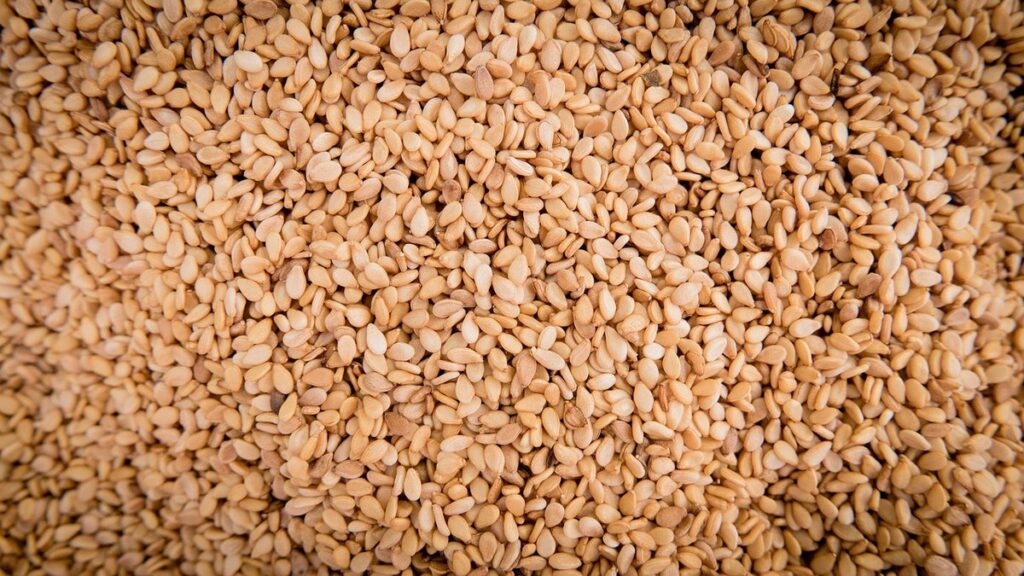
Choosing the Right Variety and Climate
Choosing the right sesame variety is crucial for a successful harvest, as some thrive in hot climates while others prefer cooler temperatures. Consider your region’s climate to make an informed decision.
Understanding Sesame Seed Varieties
Sesame seed plants come in various varieties, each with its unique characteristics and growth habits. The most common types are open-pollinated (OP) and hybrid (H). OP varieties are often preferred for their high yield potential and adaptability to different climates, while H varieties offer improved disease resistance and uniformity.
Some popular sesame seed varieties include ‘Nelspruit’, ‘Kamalata’, and ‘T87’. ‘Nelspruit’ is a high-yielding OP variety with a strong tolerance to heat and drought. ‘Kamalata’ is another OP variety, known for its disease resistance and ability to thrive in cooler climates. ‘T87’ is a hybrid variety with improved yield potential and uniformity.
When choosing a sesame seed variety, consider your specific climate and growing conditions. For example, if you live in an area with high temperatures and low rainfall, look for varieties like ‘Nelspruit’ that are tolerant of heat and drought. If you’re concerned about disease resistance, opt for hybrid varieties like ‘T87’. Keep in mind that different varieties may have varying maturity periods, so be sure to choose one that aligns with your growing schedule.
Optimizing Climate Conditions for Sesame Growth
Sesame seeds thrive in warm and dry climates with plenty of sunlight. The ideal temperature range for sesame growth is between 64°F (18°C) and 90°F (32°C), with an average daily temperature of around 75°F (24°C). Temperatures above 100°F (38°C) can lead to heat stress, causing the plants to become scorched and reducing yields.
Humidity levels also play a crucial role in sesame growth. Sesame seeds prefer well-drained soil and low humidity, typically below 60%. Prolonged exposure to high humidity can cause fungal diseases to develop, such as powdery mildew or root rot.
Sesame plants require full sun to produce optimal yields, receiving direct sunlight for at least six hours a day. In regions with intense sunlight, it’s essential to provide some shade during the hottest part of the day to prevent scorching.
In terms of precipitation, sesame seeds require about 20-25 inches (500-600 mm) of rainfall annually, spread evenly throughout the growing season. However, most of this water should be received before flowering and seed set, as excessive moisture can lead to fungal diseases during these stages.
Preparing the Soil and Sowing Seeds
To successfully grow sesame seeds, it’s essential to prepare the soil properly, which involves loosening the top layer of soil and adding organic matter. This sets the stage for healthy seed germination and growth.
Testing and Amending the Soil
Sesame seeds require a specific set of nutrients to grow optimally. To determine if your soil is lacking essential nutrients, you’ll need to test its pH levels and nutrient content. You can purchase a soil testing kit or send a sample to a laboratory for analysis.
Typically, sesame prefers well-draining, alkaline soils with a pH between 6.0 and 7.5. However, the ideal pH range may vary depending on your specific climate and region. For example, in areas with high rainfall, you may need to adjust the pH levels to prevent waterlogged soil.
Common nutrient deficiencies in sesame-growing regions include low nitrogen, phosphorus, and potassium levels. If your test results indicate a deficiency, amend the soil accordingly. Organic matter like compost or manure can help improve soil structure and fertility. You can also add synthetic fertilizers specifically formulated for sesame crops.
Some key nutrients to focus on include:
• Nitrogen (N): promotes leaf growth and overall plant health
• Phosphorus (P): essential for root development and seed production
• Potassium (K): helps regulate water balance and resistance to disease
By testing and amending your soil, you can create an optimal environment for sesame growth, reducing the risk of nutrient deficiencies and improving yields.
Sowing Sesame Seeds: Techniques and Timings
When sowing sesame seeds, timing is crucial to ensure optimal germination and growth. In most regions with a temperate climate, spring or early summer is an ideal time for direct sowing, when the soil has warmed up to at least 65°F (18°C). This allows the seedlings to establish themselves before the heat of summer sets in.
For areas with mild winters, fall sowing can be an option. However, avoid sowing during extreme weather conditions, such as intense rainfall or scorching heatwaves, which can lead to poor germination rates and weakened seedlings.
Two primary techniques for sowing sesame seeds are direct sowing and transplanting. Direct sowing involves planting the seeds directly into their final position in the garden, typically 1/8 inch deep and 6-12 inches apart. Transplanting, on the other hand, involves starting the seeds indoors or in seed trays and then transferring them to individual pots or directly into the garden once they have 2-3 sets of leaves.
When direct sowing, ensure the soil is consistently moist during the first few weeks after planting. For transplanting, choose seedlings with at least two sets of leaves to minimize shock when introducing them to the outdoors.
Plant Care and Maintenance
To grow healthy sesame seeds, you’ll need to understand how to properly care for your plants, including watering, fertilizing, and pruning them regularly. This involves creating an optimal environment that promotes strong growth.
Watering and Irrigation Strategies
Sesame plants require a consistent supply of water to thrive, but overwatering can be detrimental. Watering and irrigation strategies should prioritize providing the right amount of moisture at the right time. Aim for about 1 inch of water per week, either from rainfall or irrigation.
To achieve this balance, it’s essential to understand your soil type. Sandy soils drain quickly, requiring more frequent watering, while clay soils retain water longer. If you’re unsure about your soil composition, perform a simple test: dig a small hole and fill it with water – if it drains rapidly, you have sandy soil.
During the germination phase (typically 1-2 weeks), keep the soil consistently moist but not waterlogged. Once seedlings emerge, reduce watering to about once or twice a week, depending on weather conditions. Avoid getting water directly on leaves to prevent fungal diseases; instead, water at soil level.
Managing Pests and Diseases in Sesame Crops
Sesame plants are susceptible to various pests and diseases that can significantly impact yields. Two common pests affecting sesame crops are aphids and whiteflies, which can be controlled by introducing natural predators such as ladybugs or lacewings into the field. Regularly inspecting the plants for signs of infestation is crucial.
Diseases like powdery mildew and leaf blight are also prevalent in sesame fields. These fungal infections thrive in humid environments and can be prevented by maintaining good air circulation around the plants. Crop rotation, removing infected plant material, and using fungicides as a last resort can help manage disease outbreaks.
Another significant concern is root rot, caused by overwatering or waterlogged soil conditions. To prevent this issue, ensure that the soil drains well before sowing sesame seeds, and avoid excessive irrigation during the growing season. Additionally, maintaining soil pH between 6.0 and 7.0 can also help mitigate disease susceptibility.
Effective management of pests and diseases requires a combination of good agricultural practices, crop monitoring, and targeted interventions when necessary. By staying vigilant and taking proactive measures, sesame growers can minimize losses and optimize their yields.
Supporting Growth with Fertilization and Pruning
To help your sesame seed plants thrive, we’ll cover the importance of fertilization and pruning to ensure optimal growth and a bountiful harvest. Proper fertilization supports robust plant development.
Nutrient Requirements for Sesame Plants
Sesame plants require a balanced diet of nutrients to grow and thrive. To meet their needs, you’ll want to focus on providing adequate levels of nitrogen (N), phosphorus (P), and potassium (K). Nitrogen promotes leaf growth and development, while phosphorus supports root development and overall plant health. Potassium helps regulate water balance within the plant.
For optimal growth, sesame plants typically require a soil with moderate N levels – around 1.2-1.5% by weight. Phosphorus levels should be slightly higher at 0.25-0.30% by weight. Potassium requirements are generally met through adequate watering and irrigation strategies, but a concentration of 0.15-0.20% K in the soil is suitable.
It’s essential to note that sesame plants have different nutrient demands during various growth stages. For example, seedlings require more N for leaf growth, while mature plants need P for root development. To ensure your sesame crop receives the right balance of nutrients, you can use a fertilizer with an NPK ratio of 10-20-15 (nitrogen-phosphorus-potassium) or adjust the application rate based on soil test results.
A well-balanced fertilizer should also include secondary micronutrients like calcium and sulfur.
Pruning Techniques for Optimal Yield
Pruning sesame plants is a crucial step in promoting optimal yield and preventing disease. Regular pruning helps control the plant’s height, encourages bushy growth, and increases the number of flowers and seeds produced. Prune your sesame plants when they reach about 6-8 inches tall, removing any weak or spindly stems.
To prune effectively, follow these steps:
- Remove lower leaves to prevent fungal diseases from spreading
- Cut back leggy stems by one-third to encourage branching
- Thin out the center of the plant to allow for good air circulation and sunlight penetration
Timing is also essential when pruning sesame plants. Prune in the early morning or late evening when the sun is not intense, as this reduces stress on the plant. Avoid pruning during periods of rapid growth, such as after fertilization, as this can cause shock.
Proper pruning techniques will reward you with a healthier, more productive sesame crop. By removing weak growth and encouraging bushy development, you’ll be well on your way to achieving optimal yield and enjoying a bountiful harvest.
Harvesting and Processing Sesame Seeds
Once you’ve harvested your sesame seeds, it’s time to carefully process them to preserve their flavor, nutritional value, and shelf life. This step is crucial for enjoying your homegrown sesame seeds at their best.
Identifying Maturity and Harvesting Time
When sesame seeds are mature and ready for harvest, they’ll typically turn a light yellow or beige color. Check the seed pods regularly, as they can change color quickly. The pods will also dry out and split open naturally, revealing the mature seeds inside.
Look for the following signs to determine maturity:
- The plants’ growth slows down, and the leaves start to yellow and fall off.
- The seed pods turn a light yellow or beige color and become brittle to the touch.
- The pods start to split open at the seam, releasing the mature seeds.
You can also gently twist the stem of a mature pod to see if it splits open. Harvesting too early can result in immature seeds that are high in moisture content, which can be difficult to dry and store. On the other hand, waiting too long can lead to moldy or rotten seeds.
To ensure you harvest at the optimal time, check the seed pods every 7-10 days during the last few weeks of growth. This will give you a sense of when they’re ready for harvest.
Drying, Cleaning, and Storing Sesame Seeds
Drying sesame seeds quickly and evenly is crucial to preventing mold and preserving their nutritional value. You can dry them using a food dehydrator set to 135°F (57°C) or by spreading them out on a paper towel-lined baking sheet and placing it in a low-temperature oven (150°F/65°C). Monitor the temperature closely, as high heat can damage the seeds.
Once dried, sesame seeds are brittle and prone to breaking. To clean them, use an air sifter or winnowing tray to separate the seeds from their hulls. Be gentle, as excessive force can cause the seeds to crack. If you don’t have specialized equipment, you can also place the seeds in a fine-mesh strainer and blow through it gently.
When storing sesame seeds, keep them in an airtight container in a cool, dark place. Store them away from direct sunlight and heat sources to prevent degradation. You can also store them in the refrigerator or freezer to maintain their freshness for up to six months. However, be aware that moisture can seep into containers stored in humid environments, so ensure your storage space is dry.
Frequently Asked Questions
Can I Grow Sesame Seeds in Containers?
Yes, sesame seeds can be grown in containers as long as they have good drainage and receive sufficient sunlight. However, keep in mind that container-grown sesame plants may require more frequent watering due to their compact root system.
How Do I Know if My Sesame Plants Are Getting Enough Nitrogen?
Monitor your sesame plants for signs of nitrogen deficiency, such as pale yellow leaves or stunted growth. You can also test the soil pH and nutrient levels to determine if additional nitrogen is required. Adjust your fertilization schedule accordingly to ensure optimal plant health.
What Happens If I Don’t Prune My Sesame Plants Regularly?
If you don’t prune your sesame plants regularly, they may become leggy and produce fewer seeds. Pruning also helps control pest populations and promotes air circulation within the plant, reducing the risk of disease.
Can I Use Companion Planting to Repel Pests from My Sesame Crop?
Yes, certain companion plants like marigolds and nasturtiums can help repel pests that target sesame crops. These plants release chemicals that deter nematodes, whiteflies, and other pests, reducing the need for pesticides.
How Do I Store My Harvested Sesame Seeds to Maintain Their Quality?
To store harvested sesame seeds, keep them in an airtight container in a cool, dry place with low humidity. You can also consider vacuum-sealing or freezing the seeds to extend their shelf life and maintain their quality for future use.
