
Mining bees are often overlooked, but these tiny creatures play a massive role in our ecosystem. They’re responsible for pollinating many plant species, including some that are essential to food production. But mining bees aren’t just valuable for their contribution to agriculture; they also help maintain the health of meadows and forests by pollinating flowers and facilitating seed production. Unfortunately, these vital ecosystem engineers are facing a range of threats, from habitat loss to pesticide use. As we explore the fascinating world of mining bees, we’ll delve into their life cycle, examine their crucial role in pollination, and discuss conservation efforts aimed at protecting these vital species. By the end of this article, you’ll have a deeper understanding of the importance of mining bees and what you can do to help safeguard their populations.
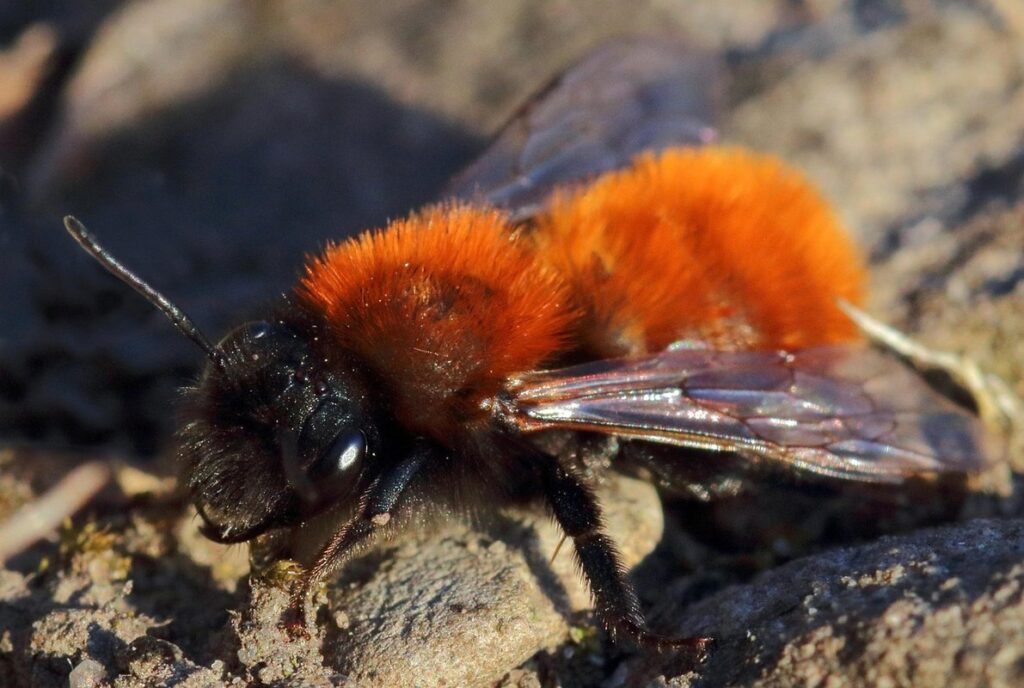
What are Mining Bees?
Let’s start by learning what mining bees are, exactly. These tiny creatures are some of the most fascinating and important pollinators in our ecosystem.
Characteristics and Identification
Mining bees belong to the family Andrenidae, comprising over 1,000 species worldwide. These solitary bees exhibit a range of physical characteristics, making identification in the wild feasible. One key feature is their metallic coloration, with many species displaying bright blues, greens, or golds due to structural properties in their cuticle. Another distinguishing trait is their elongated bodies and narrow waists, often giving them a wasp-like appearance. To identify mining bees, look for their size: most are between 5-15 millimeters long.
When observing mining bees in the wild, note their behavior as well. They’re typically seen visiting flowers to collect pollen, which they store in specialized baskets or corbiculae on their legs. Bees from different species may be identified by differences in their leg structure and basket shape. Some species have distinctive markings on their faces or thoraxes, such as stripes or spots.
While some mining bee species can be challenging to distinguish, certain characteristics like the presence of a white tip at the end of their abdomen can aid identification. Familiarizing oneself with local species’ physical traits and behaviors will improve the chances of accurate identification in the field.
Habitat and Distribution
Mining bees can be found on every continent except Antarctica, inhabiting a wide range of ecosystems from tropical forests to arctic tundras. They are commonly encountered in gardens, meadows, and prairies, where their nesting habits often overlap with human activities. In North America, for example, mining bees are particularly abundant in the eastern and central regions, while in Europe, they can be found throughout most of the continent.
Some species of mining bees are specialized to specific habitats, such as sand dunes or rocky outcrops. The genus Andrena, which includes over 1,000 species, is known for its ability to nest in a variety of substrates, from soil and gravel to moss and lichen. In contrast, the genus Colletes is primarily found in arid regions with limited vegetation.
Mining bees are also distributed across various geographical locations, with some species migrating between continents or island groups. For instance, the mining bee species Halictus hesperus can be found in both North America and Eurasia, highlighting their ability to adapt to different environments.
Life Cycle of a Mining Bee
Mining bees go through several distinct stages of development, from egg to larva to adult, and each stage is crucial for their survival and success. Understanding these stages can help us appreciate their remarkable life cycle.
Emergence from Hibernation
As winter sets in, mining bees prepare for a period of dormancy known as hibernation. To survive the cold months, they rely on stored fat reserves accumulated during the summer and fall. Female mining bees typically find sheltered locations such as under rocks or in underground burrows to protect themselves from harsh weather conditions.
During this time, their metabolism slows down significantly, allowing them to conserve energy. This adaptation is crucial for their survival since they wouldn’t be able to gather nectar and pollen during the winter months. In most cases, individual mining bees do not survive the entire winter but rather only a portion of it. They often emerge from hibernation in late winter or early spring when temperatures start rising.
When they emerge, they’re usually hungry and need access to food sources quickly. Mining bee colonies can take several weeks to rebuild after emerging from hibernation, so their ability to find resources efficiently is vital for the colony’s success.
Nesting Habits
Mining bees dig complex networks of burrows in sandy soil, often with a single entrance tunnel leading to multiple cells within. These underground structures serve as both nesting sites and food storage facilities for the colony. When selecting a location for their burrow, mining bees tend to favor areas with well-draining soil and minimal vegetation cover. This allows them to easily excavate tunnels without encountering significant resistance or obstruction.
The structure of a mining bee burrow typically consists of a narrow entrance tunnel, often 1-2 cm in diameter, which leads to a larger chamber containing the cells where pollen and nectar are stored. The cells themselves are usually arranged in a radial pattern, with each cell connected to the central chamber by a short tunnel. Mining bees line their cells with wax produced from their own bodies, which is used to seal the cells and prevent moisture loss.
The location of burrows can provide valuable insights into mining bee behavior and habitat preferences. For example, studies have shown that burrows in areas with high soil moisture content tend to be shorter and more shallow than those found in drier regions. This adaptation helps minimize water infiltration into the burrow, reducing the risk of cell collapse and damage to stored food.
Pollination Process
Mining bees are responsible for pollinating a wide variety of plants, including many crops and wildflowers. As they move from flower to flower collecting pollen and nectar, they inadvertently transfer pollen between plants, allowing them to reproduce.
In the process of pollination, mining bees come into contact with the reproductive organs of flowers – typically the anthers (which produce pollen) and stigmas (receptive surfaces that collect pollen). As they gather pollen, some of it sticks to their bodies, including their hairy faces, legs, and bodies. When they visit another flower, this pollen is transferred from the mining bee’s body to the new plant.
This process is crucial for the reproduction of many plants, as it allows them to fertilize their seeds. In fact, without pollinators like mining bees, around 75-80% of crop species would be unable to reproduce. Mining bees are particularly effective at transferring pollen between flowers due to their hairy bodies and specialized leg structures that allow them to collect large amounts of pollen.
As an example, many apple trees rely on mining bees for pollination. A single tree may require multiple visits from different bees to ensure successful reproduction.
Mining Bee Communication and Social Behavior
Mining bees are incredibly social creatures, with complex communication systems that allow them to work together seamlessly in their search for nectar-rich flowers. Let’s take a closer look at how they convey information and coordinate their behavior.
Mating and Reproduction
Mating among mining bee colonies is a complex and highly choreographed process. A single dominant male will often defend a territory, which may contain several females. The female bees are attracted to pheromones released by the male, but they also use their own chemical signals to communicate their receptivity or lack thereof. In some species, a single mating event can last for just a few seconds, while in others it may involve multiple males vying for dominance.
Reproduction is often a communal affair among mining bees. Some species will form large aggregations around a dominant male, with females clustering at the periphery of his territory. As these females mate, they will often store the sperm from their encounters in specialized structures within their bodies called spermathecae. This allows them to control fertilization and choose when and how many eggs to lay.
A key aspect of mining bee reproduction is its impact on colony size and structure. The number of females that emerge from a given nest can greatly influence the colony’s overall population dynamics, as well as its ability to adapt to environmental changes.
Colony Size and Structure
Mining bee colonies can range from a few dozen individuals to thousands of workers. The colony size is influenced by factors such as food availability, nesting site quality, and environmental conditions. For example, colonies in areas with an abundance of nectar-rich flowers tend to be larger than those in areas with limited floral resources.
Colony structure also varies among mining bee species. Some colonies are organized into a strict caste system, where different individuals perform specific roles such as foraging, caring for young, or defending the nest. In contrast, other colonies have more flexible social structures, where individuals can take on multiple roles depending on the needs of the colony.
Colony growth is often influenced by the availability of suitable nesting sites. Mining bees typically excavate their nests in sandy banks or soil, and the quality of these sites can impact colony size. For instance, colonies in areas with high-quality nesting sites tend to grow faster and produce more offspring than those in areas with poor-quality sites.
A larger colony size is generally associated with increased reproductive success, as it allows for a greater number of females to emerge from the nest. However, this also increases competition for resources such as food and nesting sites, which can impact colony growth and survival.
Threats to Mining Bees: Conservation Efforts
Mining bees face numerous threats, including habitat loss and climate change, which can have severe consequences on their populations. We’ll examine the conservation efforts underway to protect these vital pollinators.
Habitat Loss and Fragmentation
Mining bees rely on specific habitats, often characterized by open areas with sandy soil and scattered vegetation. Human activities like urbanization, agriculture, and infrastructure development are leading to habitat loss and fragmentation. As a result, mining bee populations are declining due to reduced nesting sites and disrupted foraging routes.
Urban expansion is particularly devastating as it replaces natural habitats with impervious surfaces that are inhospitable to mining bees. A single large development can wipe out entire colonies, pushing survivors into isolated patches of remaining habitat. In contrast, conservation efforts focus on preserving and reconnecting fragmented areas through strategies like habitat restoration and creation of bee-friendly corridors.
Effective mitigation involves a combination of local planning and community engagement. This includes incorporating bee-friendly design principles in urban planning, reducing pesticide use, and promoting pollinator-friendly gardening practices. By addressing the root causes of habitat loss and fragmentation, we can help stabilize mining bee populations and safeguard their ecological role in maintaining ecosystem health.
Pesticide Use and Climate Change
Pesticide use has been identified as a significant threat to mining bee populations worldwide. Many pesticides, particularly neonicotinoids, have been shown to be highly toxic to bees. These chemicals can affect navigation and communication skills, leading to confusion and disorientation among foragers. As a result, bees may struggle to find their way back to the hive or even die after a single exposure.
Climate change also poses a significant threat to mining bee populations. Rising temperatures alter the timing of plant growth, disrupting the delicate synchrony between bees and their food sources. This can lead to reduced pollen availability during peak foraging periods, making it difficult for bees to gather enough resources to sustain themselves.
In regions with extreme climate fluctuations, mining bee colonies may not be able to adapt quickly enough to changing environmental conditions. As a result, colonies may decline or even disappear altogether. To mitigate these effects, conservation efforts should focus on reducing pesticide use and promoting sustainable land management practices that prioritize pollinator-friendly habitats.
Mining Bee Folklore, Mythology, and Cultural Significance
Mining bees have long been a source of fascination for many cultures around the world, inspiring rich folklore and mythology. From ancient rituals to modern-day symbolism, their significance extends far beyond their impressive hives.
Historical Perspectives
In various cultures, mining bees have been imbued with symbolic meanings and mythological significance. For example, in ancient Greece, mining bees were associated with the goddess Demeter, who was revered for her role in fertility and agriculture. This connection highlights the importance of these insects as pollinators and their impact on the food supply.
In Norse mythology, the bee’s industrious nature led to its association with the god Thor, who was said to have a swarm of bees at his command. Similarly, in some African cultures, mining bees are considered messengers between humans and the spirit world. These mythological connections underscore the significance of mining bees as cultural icons.
The historical perception of mining bees also reflects their role in everyday life. In medieval Europe, for instance, beekeeping was a common practice, with many households maintaining hives to harvest honey and wax. This practical use of mining bees has contributed to their enduring symbolic value across cultures. By examining these diverse perspectives, we can gain a deeper appreciation for the cultural importance of mining bees and the ways in which they have been perceived throughout history.
Modern-Day Symbolism and Representation
Mining bees have become a popular subject in modern art, with many artists depicting them in intricate detail. This renewed interest is partly due to their unique appearance and fascinating behavior. In literature, mining bees are often used as symbols of industry and diligence. For example, in children’s books, they’re frequently portrayed as hardworking bees, collecting nectar and pollen for their colonies.
In popular media, such as films and documentaries, mining bees are sometimes featured as a vital part of the ecosystem. Their importance as pollinators is highlighted, emphasizing the need to protect these beneficial insects. Some artists and writers also draw inspiration from ancient mythologies, where mining bees were associated with fertility and abundance.
Modern-day representations often focus on the bee’s striking appearance and its role in maintaining biodiversity. This shift towards a more nuanced understanding of mining bees reflects growing concerns about environmental conservation. By exploring modern interpretations of these insects, we can appreciate their significance beyond mere symbolism and instead recognize their importance within our ecosystems.
Frequently Asked Questions
Can I attract mining bees to my garden by planting specific flowers?
Yes. Mining bees are attracted to a variety of flowers rich in nectar and pollen, such as lavender, coneflowers, and sunflowers. Incorporating these plants into your garden can help support local mining bee populations.
How do I know if I’m disturbing a mining bee colony when gardening or mowing?
Be cautious when tilling soil or mowing areas where you suspect mining bees may be nesting. If possible, avoid these activities during peak nesting seasons (spring and early summer). If you must disturb an area, gently rake away debris to minimize disruption.
What if I find a mining bee nest in a location that’s inconvenient for me – can I move it?
No. Mining bees are sensitive to disturbance and relocation can be detrimental to the colony. Instead, consider relocating any structures or features that may be interfering with their nesting sites. Leave the nest intact and allow the bees to thrive.
Can mining bees become aggressive if threatened or provoked?
Generally no. Mining bees tend to avoid confrontations and are non-aggressive unless defending their nest or young. However, they can sting if threatened or cornered, so exercise caution when approaching areas where they’re active.

