
Aphids are tiny insects that may seem harmless, but their impact on ecosystems is significant. These soft-bodied pests can infest plants in gardens, farms, and forests, feeding on sap and spreading plant viruses as they move from one host to another. The consequences of unchecked aphid populations can be devastating for agriculture, leading to crop losses and economic damage. Moreover, aphids also have a profound impact on beneficial insects that rely on them as a food source, causing disruptions in the delicate balance of ecosystems. In this article, we’ll explore how aphids affect agriculture and beneficial insects, discuss natural control methods for managing their populations, and examine future research directions for effective aphid management. By the end of this post, you’ll have a deeper understanding of the complexities surrounding aphid ecology and will be equipped to develop strategies for mitigating their impact on your garden or farm.
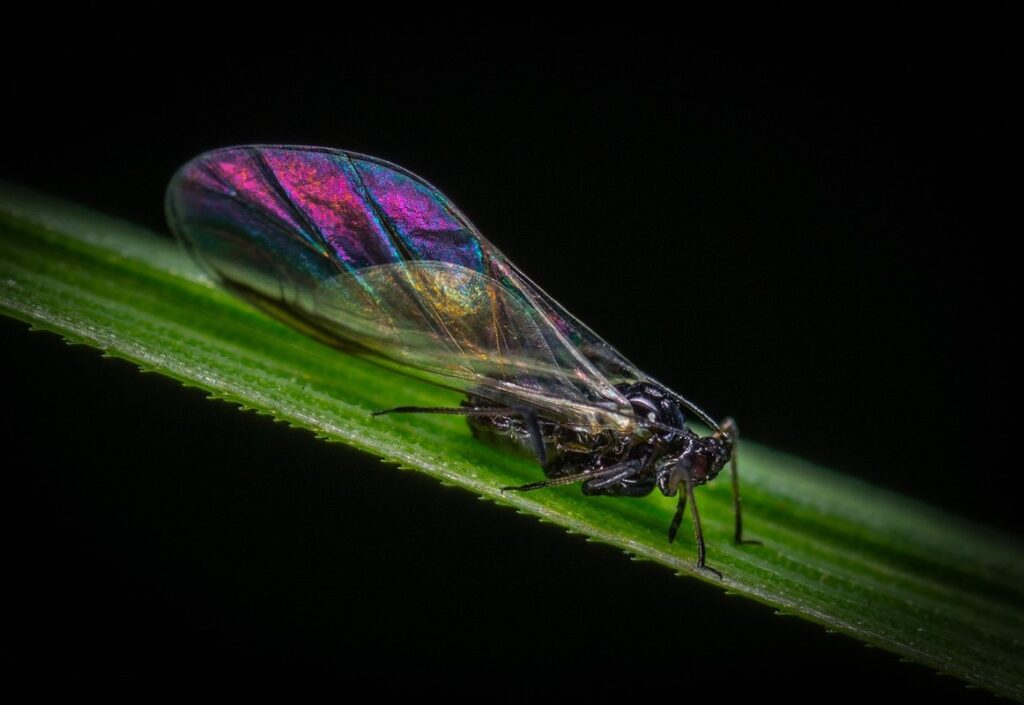
What Are Aphids?
Aphids are tiny, soft-bodied insects that can be found on a wide range of plants, from vegetables to flowers. They’re often mistaken for other pests due to their small size and delicate appearance.
Definition and Classification
Aphids are a type of small, soft-bodied insect that belongs to the superfamily Aphidoidea. They are typically between 1-10 millimeters long and have a pear-shaped body with six slender legs. Aphids are often mistaken for ants or other tiny insects due to their similar size and coloration.
From a taxonomic standpoint, aphids can be classified into several subfamilies based on their physical characteristics and host plant preferences. The most well-known subfamily is the Aphidinae, which includes species that feed on plants in the rose family (Rosaceae) and other broad-leaved trees.
Aphids are also often grouped by their behavior, with some species being primary colonizers of new plant growth and others specializing in feeding on specific areas of a plant. This diversity in behavior and ecology has led to aphids being classified into different types based on their habits, such as the wingless apterous form or the winged alate form.
Some common examples of aphid species include the green peach aphid (Myzus persicae) and the potato aphid (Macrosiphum euphorbiae).
Types of Aphids
There are several main types of aphids, each with distinct characteristics and habits. One such type is the green peach aphid (Myzus persicae), a common pest found on a wide range of plants, including fruit trees and vegetables. These aphids are known for their ability to transmit plant viruses, causing significant damage to crops.
Another type is the woolly apple aphid (Eriosoma lanigerum), which is identified by its distinctive white, waxy coating. This aphid prefers cooler temperatures and can be found on apple and pear trees.
The melon aphid (Aphis gossypii) is a smaller, more delicate species that infests a variety of plants, including cucurbits, legumes, and cotton. These aphids are often accompanied by ants, which protect them from predators in exchange for sweet secretions produced by the aphids.
Some types of aphids, such as the rose aphid (Macrosiphum rosae), exhibit specialized feeding habits. For example, this species feeds on the sap of rose plants, causing curled or distorted leaves.
In general, understanding the different types of aphids and their unique characteristics can help with effective management and control strategies in various ecosystems and agricultural settings.
Life Cycle of Aphids
Aphid populations are incredibly resilient, thanks in part to their unique life cycle that involves multiple stages and a remarkable ability to reproduce rapidly. Let’s take a closer look at this process.
Eggs and Emergence
Aphid eggs are typically laid on the underside of leaves or stems, where they are protected from predators. After a gestation period of around 7-10 days, the female aphid can produce live young without mating, although fertilization is necessary for reproduction to occur. When the embryo develops inside the egg, it begins to feed on stored yolk sac material before emerging.
The process of hatching usually occurs in the morning, when temperatures are higher and humidity is relatively high. As the nymph emerges, it releases a sticky substance called honeydew, which can attract ants and other insects that prey on aphids. The newborn nymph, also known as an alate, will undergo several molts as it grows and develops into an adult.
In temperate climates, aphid eggs typically overwinter in protected areas like under bark or within plant tissue. In warmer regions, multiple generations can occur each year, allowing aphids to adapt quickly to changing environmental conditions.
Nymph Stages
After emerging from their eggs, young aphids go through several nymph stages before reaching adulthood. These stages are characterized by distinct feeding behaviors and growth patterns.
The first two nymph stages, known as instars, feed on the honeydew left behind by adult aphids. They also secrete a sticky substance called “aphid droplet” that helps them move around on their host plant. As they molt and grow, their mouthparts become more complex, allowing them to tap into the plant’s phloem tissue for nutrient-rich sap.
During the third instar, aphid nymphs begin to take on some characteristics of adult aphids, such as producing their own wax and developing reproductive organs. However, they still rely on the food provided by the first two instars.
Aphids typically undergo four to six nymph stages before reaching adulthood, although this can vary depending on factors like temperature, humidity, and available nutrients.
Adult Aphids
Adult aphids are the final stage of an aphid’s life cycle. They typically develop from a mature nymph after going through five distinct stages of growth. Adult aphids are usually winged, but some species remain wingless. Their lifespan varies greatly depending on environmental conditions, with most living between 7-21 days. However, in ideal conditions, some species can live up to several weeks or even months.
During this stage, adult aphids focus primarily on reproduction. They produce live young through parthenogenesis, a process where offspring develop without fertilization by males. A single female aphid can give birth to 80-100 offspring in just one week under optimal conditions. Some species of aphids are capable of producing multiple generations within a single growing season.
It’s worth noting that adult aphids often display a strong sex ratio bias, with many more females than males present in most populations. This is due to the fact that males are often smaller and have shorter lifespans compared to females.
Habitat and Distribution
Aphids can be found on a wide range of plants, from trees to flowers, and even crops, making their habitat and distribution quite diverse. Let’s take a closer look at where they call home.
Host Plants
Aphids have a remarkable ability to thrive on a wide range of host plants, from ornamental flowers to crops. Some common host plants include roses, lettuce, carrots, and apples, which provide aphids with the necessary nutrients for survival. These plants are often favored due to their high sugar content, making them an ideal source of energy.
The choice of host plant is not random; aphids have evolved specific preferences based on factors such as plant chemistry, temperature, and humidity. For instance, certain species of aphids tend to prefer plants with higher nitrogen levels or those that are under stress. This preference can lead to a concentration of aphid populations on specific hosts, making it easier for farmers to monitor and control infestations.
Some host plants also exhibit unique adaptations that influence aphid behavior. For example, the presence of certain plant chemicals can deter aphids from feeding on the plant or encourage them to move elsewhere. Understanding these relationships between aphids and their host plants is crucial for developing effective management strategies and minimizing damage to crops.
Environment and Climate
Aphid populations are heavily influenced by environmental factors such as temperature, humidity, and wind. Temperature is a key determinant of aphid activity, with most species thriving between 15°C to 30°C (59°F to 86°F). Above or below this range, aphid metabolism slows down or speeds up, affecting their development and reproduction.
Humidity also plays a crucial role in aphid ecology, as they are highly susceptible to desiccation. A relative humidity of at least 60% is necessary for aphids to survive, with some species tolerating higher levels. Conversely, drought conditions can lead to significant population declines.
Wind is another critical factor affecting aphid distribution and abundance. Strong winds can disperse aphids across large distances, contributing to their spread into new areas. However, wind also disrupts aphid aggregation behavior, making it difficult for them to establish stable populations.
Aphid colonies are often found in sheltered areas such as under leaves or in protected niches on plants, where they can escape harsh environmental conditions. Understanding the interplay between temperature, humidity, and wind is essential for developing effective management strategies that account for local climate and weather patterns.
Global Distribution
Aphids can be found on every continent except Antarctica, indicating their remarkable adaptability to diverse environments. High infestation rates are commonly reported in regions with mild winters and warm summers, such as southern Europe, North Africa, and parts of Asia. These areas provide ideal conditions for aphid populations to thrive, leading to severe outbreaks that can devastate crops.
In the Americas, the eastern United States and Canada are particularly prone to aphid infestations, especially in soybean and potato fields. In contrast, the western regions tend to experience fewer issues due to cooler temperatures and shorter growing seasons. Aphids also pose a significant threat to agriculture in Australia, where they can cause substantial damage to cotton, sugarcane, and wheat crops.
Some of the most common aphid hosts include plants in the rose family (Rosaceae), such as apple trees and roses, as well as those in the nightshade family (Solanaceae), including potatoes and tomatoes. Understanding the global distribution of aphids is essential for developing effective management strategies and mitigating their impact on ecosystems and agriculture.
Impact on Ecosystems and Agriculture
Aphids play a crucial role in both ecosystems and agriculture, but their impact can be either beneficial or detrimental depending on various factors. We’ll examine how they affect these areas next.
Effects on Crops
Aphids can cause significant damage to crops by piercing plant tissues with their mouthparts and sucking out sap. This process weakens the plant, making it more susceptible to disease and reducing its ability to grow. As a result, yields are often lower than average, leading to economic losses for farmers.
The extent of damage varies depending on factors such as aphid population size, host plant species, and environmental conditions. For example, sugar beet crops can lose up to 30% of their yield due to aphid infestation, while wheat crops may experience a decrease in quality rather than quantity.
In addition to reduced yields, aphids can also contaminate crops with honeydew, a sticky substance produced as they feed on sap. This not only attracts other pests but also promotes the growth of sooty mold, further reducing crop quality. To mitigate these effects, farmers often implement integrated pest management (IPM) strategies that combine cultural controls, biological controls, and chemical controls to manage aphid populations.
Some common signs of aphid damage include curled or distorted leaves, stunted plant growth, and a general decline in plant health. Farmers should closely monitor their crops for these symptoms and take prompt action if an infestation is suspected.
Impact on Beneficial Insects
Aphid infestations can have a ripple effect on beneficial insects like bees, butterflies, and ladybugs. These beneficial insects often visit aphid-infested plants to feed on the sweet, sticky substance produced by aphids, known as honeydew. However, this relationship is not always mutually beneficial.
Bees, in particular, are vulnerable to the toxic effects of high levels of honeydew, which can lead to colony collapse. Ladybugs, too, may be affected if they ingest large quantities of aphid eggs or aphid-laden plant sap. The impact on butterflies and other pollinators is less clear-cut but still significant.
The impact of aphids on beneficial insects also depends on the type of host plant. For example, aphids that infest plants like broccoli and cauliflower can be particularly detrimental to beneficial insects due to the presence of toxic compounds in these plants’ defense systems. Similarly, some ladybugs are specialized feeders that prefer specific types of aphid-infested plants.
When managing aphid populations, gardeners should consider the potential impact on beneficial insects. To minimize harm, it’s essential to monitor infestations closely and use targeted control methods that avoid broad-spectrum pesticides, which can decimate beneficial insect populations.
Potential for Disease Transmission
Aphids are capable of transmitting plant diseases to their host plants through various mechanisms. One of the primary ways aphids contribute to disease transmission is by feeding on plant sap and injecting saliva into the plant tissue, which can carry plant viruses such as potato virus X (PVX) and tobacco rattle virus (TRV). When aphids feed on infected plants, they can pick up these viruses and then transmit them to healthy plants.
Some examples of plant diseases that are transmitted by aphids include: barley yellow dwarf virus (BYDV), which affects wheat and other small grains; and maize dwarf mosaic virus (MDMV), which impacts corn production. These viral diseases can cause significant yield losses in agricultural crops, making the potential for disease transmission a major concern.
In addition to directly transmitting plant viruses, aphids also contribute to the spread of fungal diseases by creating an entry point for pathogens on plant surfaces. This highlights the need for integrated pest management strategies that address both aphid populations and disease risks.
Management and Control Strategies
To effectively manage and control aphid populations, you’ll need strategies that prevent infestations and mitigate damage to your plants. This includes tactics for monitoring, preventing, and eradicating infestations.
Natural Methods
Introducing natural predators or parasites is a non-chemical method of controlling aphid populations. Lady beetles, lacewings, and hoverflies are known to prey on aphids, while parasitic wasps can lay their eggs inside aphid bodies. Encouraging these beneficial insects in your garden or agricultural setting can help maintain a balance between pest and predator populations.
To attract these natural predators, consider planting a diverse range of flowers that provide nectar and pollen, such as marigolds, calendulas, or dill. These flowers will not only attract beneficial insects but also provide a food source for them. Additionally, maintaining a healthy ecosystem by avoiding the use of broad-spectrum pesticides can help preserve the natural balance.
Some specific examples of parasitic wasps include Aphidius ervi and Lysiphlebus testaceipes. These wasps are specialized to target aphids specifically and can be introduced into affected areas to control populations.
Chemical Controls
Chemical pesticides can provide effective control against aphid infestations, but their use comes with risks. Neonicotinoids, a commonly used class of insecticides, have been linked to harm to beneficial insects like bees and butterflies. Insecticidal soap and horticultural oil are also popular choices for controlling aphids, as they target the pest’s exoskeleton and disrupt its feeding process.
However, these chemicals can also contaminate soil and water, posing a threat to non-target organisms. Moreover, repeated use of chemical pesticides can lead to the development of pesticide-resistant aphid populations, rendering the treatments less effective over time. In addition to environmental concerns, chemical controls can also harm human health, particularly for individuals with compromised immune systems or those working directly with these substances.
To minimize risks when using chemical controls, gardeners and farmers should carefully follow label instructions and take necessary precautions to avoid exposure. They should also consider rotating between different types of pesticides to delay the development of resistance.
Integrated Pest Management (IPM)
Integrated Pest Management (IPM) offers a holistic approach to managing aphids by combining multiple techniques to minimize harm to the environment and reduce pesticide use. A key advantage of IPM is its ability to decrease reliance on chemical controls, which can have devastating effects on beneficial insects, soil health, and ecosystem balance.
When implementing IPM for aphid management, consider the following strategies:
- Encourage natural predators: Introduce beneficial insects like ladybugs, lacewings, or parasitic wasps that prey on aphids.
- Use physical barriers: Install fine-mesh screens or fine-netting to prevent aphids from reaching sensitive plant areas.
- Promote resistant varieties: Plant species with inherent tolerance to aphid infestations, reducing the need for pesticides.
IPM also involves monitoring and adjusting management strategies based on specific aphid populations. This approach helps minimize unnecessary pesticide applications and reduces the risk of developing pest resistance. By adopting IPM practices, gardeners and farmers can maintain a healthier ecosystem while protecting crops from aphid damage.
Conclusion: Future Research Directions
As we conclude our exploration of the aphid insect, let’s consider some promising avenues for future research that can further our understanding of these tiny creatures. Areas like genetic manipulation and ecosystem interactions are ripe for investigation.
Challenges in Aphid Control
Aphid control remains a complex issue due to several factors. One significant challenge is the development of pesticide-resistant aphid populations. Pesticide use can select for resistant individuals, making it difficult to find effective treatments. Additionally, many commercial insecticides target specific stages of the aphid life cycle, such as nymphs or adults, but not both simultaneously.
Another issue is the difficulty in identifying and controlling infested areas early on. Aphids can rapidly colonize new plants, leading to explosive population growth before control measures can be implemented. Moreover, their ability to reproduce parthenogenically means a single individual can produce many offspring without mating, exacerbating the problem.
Some species of aphids also have symbiotic relationships with other organisms, such as ants or fungi, which can further complicate control efforts. For example, some ant species tend aphid colonies for their sweet secretions, making it difficult to control aphid populations without addressing these symbiotic relationships. Effective aphid management requires a comprehensive understanding of these ecological interactions and the development of targeted strategies that address multiple factors simultaneously.
Emerging Trends in Research
Recent studies have highlighted several emerging trends in aphid research. One area of focus is the exploration of aphid microbiomes, which are complex communities of microorganisms living within and on aphids. Research has shown that these microbiomes play a crucial role in aphid nutrition, defense against predators, and even their ability to transmit plant viruses.
Another trend is the development of precision agriculture techniques for managing aphid populations. This includes using drones equipped with sensors to monitor aphid infestations in real-time, allowing farmers to target control measures more effectively. Additionally, researchers are investigating the use of biological control agents, such as parasitic wasps and lacewings, to manage aphid populations.
The rise of genomics and transcriptomics has also led to a better understanding of aphid biology. For example, studies have identified key genes involved in aphid reproduction and resistance to pesticides. This knowledge can be used to develop more targeted and effective management strategies for farmers and gardeners.
Researchers are also exploring the potential for using aphids as bioindicators for environmental pollution. Aphids are highly sensitive to changes in their environment and can serve as an early warning system for pollutants such as heavy metals and pesticides.
Frequently Asked Questions
Can I Use Natural Methods Alone to Control Aphid Populations?
Yes, natural methods can be effective in controlling aphid populations, especially when combined with other strategies like introducing natural predators or parasites. However, it’s essential to monitor the situation closely and adjust your approach as needed.
How Do I Know When My IPM Strategy Is Working?
An effective IPM strategy should show a noticeable reduction in aphid numbers within 2-3 weeks of implementation. Look for signs of reduced damage on plants, fewer aphids on leaves or stems, and increased activity from natural predators.
What If I’ve Already Introduced Aphid Predators to My Garden, But They’re Not Controlling the Infestation?
If your introduced predators aren’t controlling the aphid infestation, it may be due to factors like inadequate food sources for the predators or an imbalance in predator-to-prey ratios. Reassess your garden’s ecosystem and consider introducing additional predators or adjusting existing conditions.
Can Aphids Transmit Plant Diseases Through Contaminated Water?
No, aphids cannot transmit plant diseases through contaminated water. However, they can spread disease by directly transferring plant sap from infected plants to healthy ones using their piercing-sucking mouthparts. Keep your garden’s water sources clean and free of debris to minimize this risk.
How Do I Determine the Best Chemical Control for My Specific Aphid Problem?
The best chemical control will depend on factors like the type of aphids, host plants, and environmental conditions in your area. Consult with a local agricultural expert or extension service to determine the most effective chemical pesticide based on your specific situation.
