
Carpenter bees are often misunderstood as pests, but these beneficial insects play a crucial role in pollinating flowers and maintaining healthy ecosystems. To thrive, carpenter bees require specific habitat conditions that include open woodlands with plenty of nesting sites, such as dead trees or hollow branches. They also rely on nearby plant life to provide nectar and pollen for food. By creating bee-friendly environments, you can support local ecosystems and attract these valuable pollinators to your garden or yard.
If you’re interested in attracting carpenter bees to your outdoor space, it’s essential to understand their habitat needs and how to meet them. This article will explore the specific requirements of carpenter bees and provide practical tips on creating a welcoming environment that supports their populations. By the end of this post, you’ll have a better understanding of how to create a bee-friendly habitat that attracts these beneficial insects and contributes to the health of your local ecosystem.
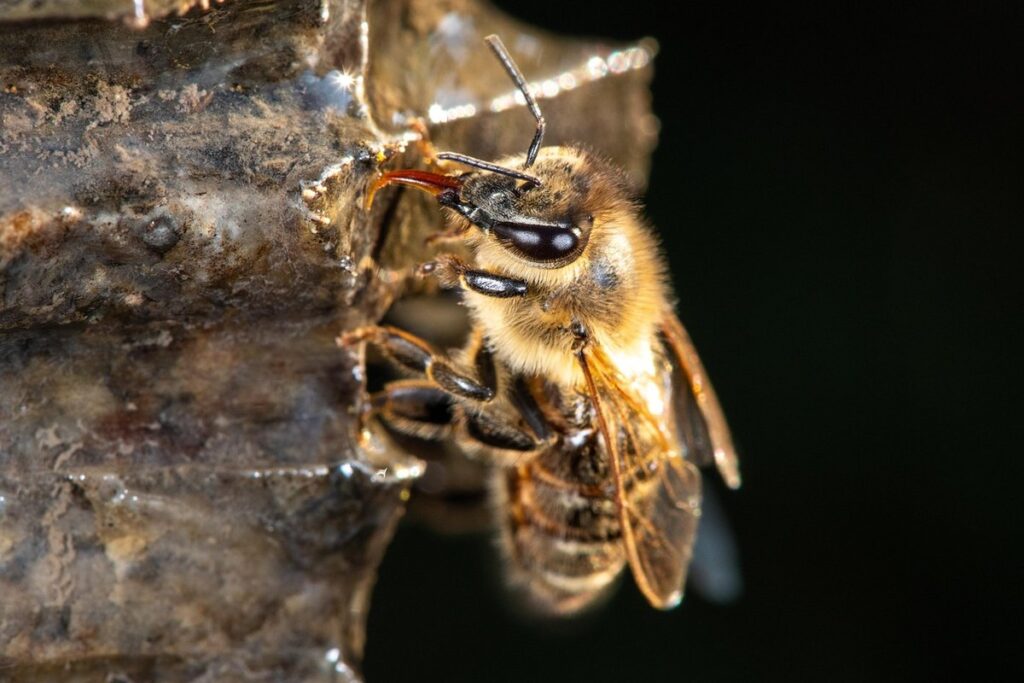
What Are Carpenter Bees?
Carpenter bees are large, solitary wasps that resemble bumblebees but have a distinctive habit of boring into wood to create nests. These fascinating creatures play a vital role in pollination and ecosystem balance.
Introduction to Carpenter Bees
Carpenter bees are often mistaken for bumblebees due to their similar size and coloration. However, they belong to a different genus and have several distinct characteristics. One of the most notable differences is their solitary nature. Unlike bumblebees that live in colonies with a queen bee, carpenter bees are individual insects that nest alone.
Their physical appearance also sets them apart from bumblebees. Carpenter bees tend to be larger, with some species reaching lengths of up to 1.5 inches, while others may be slightly smaller. They often have shiny black bodies with a metallic sheen, which can give them a distinctive appearance in the sunlight. The males are typically black and lack the yellow or white markings that are common on female bumblebees.
It’s worth noting that carpenter bees do not sting, as they do not have a stinger like honeybees and most other bees. This is because the females are sterile and only use their large, strong bodies to defend their nests from predators. Despite their intimidating appearance, carpenter bees play an important role in pollinating plants and maintaining ecosystem balance.
Physical Characteristics of Carpenter Bees
Carpenter bees are large, solitary bees with distinctive physical characteristics. They can grow up to 1 inch (2.5 cm) in length, with a metallic sheen on their bodies. Their color patterns vary by species, but most have a shiny black body with a green or blue tint. Some carpenter bee species may have yellow or white markings on their faces or thoraxes.
One of the key identifying features of carpenter bees is their elongated body shape, which allows them to fit into narrow holes and crevices in wood. Their large size and robust bodies make them well-suited for excavating nesting tunnels in trees and other wooden structures. Carpenter bees also have a distinctive habit of collecting and storing pollen on their hairy bodies, often in specialized baskets or corbiculae.
In terms of specific species, the carpenter bee genus Xylocopa includes some of the largest and most colorful species, such as the metallic blue carpenter bee (Xylocopa virginica) found in North America. When observing carpenter bees, it’s essential to note their size and coloration to accurately identify them.
Habitat Types: Where Do Carpenter Bees Live?
Carpenter bees can be found living in a variety of habitats, from urban gardens to rural woodlands. Let’s take a closer look at some of their most common nesting sites.
Open Woodlands and Forests
In open woodlands and forests, carpenter bees tend to favor deciduous trees with broad canopies, such as oak, maple, and elm. These trees often have a higher incidence of dead or decaying wood, which provides the necessary nesting sites for the bees. Carpenter bees also seem to prefer areas with mature tree stands, where the older trees provide more opportunities for cavities and hollows to form.
The type of tree is not as crucial as the presence of suitable nesting material. Carpenter bees will often nest in dead branches or trunks that are still attached to living trees. In some cases, they may even use old logs or stumps lying on the forest floor. The key factor is the availability of wood that has been weakened by disease, insects, or environmental stress.
When selecting a nesting site, carpenter bees look for areas with minimal human disturbance and a stable microclimate. This helps ensure the longevity of their nests and the survival of their young. In open woodlands and forests, it’s not uncommon to find multiple carpenter bee nests within a single tree, highlighting the importance of these environments for the species.
Urban Areas and Backyards
In urban areas and backyards, carpenter bees often take advantage of wooden structures to build their nests. Decks, fences, and buildings provide the necessary materials for them to excavate their tunnels. A small hole or gap in a wooden surface can be enough for a female carpenter bee to begin drilling into the wood, creating a complex network of tunnels and cells.
Many homeowners unknowingly provide carpenter bees with ideal nesting sites by leaving untreated wood exposed to the elements. For example, an old wooden deck that’s been weathered to a silvery gray color is particularly attractive to these bees. Their black and yellow stripes blend in well with the surrounding environment, making them nearly invisible as they go about their nesting activities.
To coexist with carpenter bees in urban areas and backyards, it’s essential to understand that they are generally non-aggressive unless provoked. By leaving some untreated wood on your property, you can create a welcoming habitat for these beneficial pollinators. Just be aware of the potential for damage to wooden structures if large populations are present. Regular inspections and maintenance can help mitigate this issue.
Nesting Habits and Behavior
Let’s take a closer look at how carpenter bees prepare their nests, including the materials they use and where they typically build them. Carpenter bee nesting habits are fascinating to explore.
Choosing a Nesting Site
When choosing a nesting site, carpenter bees are drawn to specific characteristics. The type of wood is crucial; they prefer softwoods like pine, cedar, and cypress over hardwoods like oak and maple. This preference makes sense given that carpenter bees use their powerful jaws to excavate complex tunnel systems in the wood.
Exposure to sunlight also plays a significant role in a carpenter bee’s nesting site selection. They often choose sites with direct sunlight or partial shade, which helps regulate the temperature inside the nest. This is especially important during colder months when they need to maintain a stable environment for their young.
Proximity to food sources is another key factor. Carpenter bees typically select sites near flowers, sap flows, or other nectar-rich areas. They often reuse existing nests or create new ones in close proximity to these food sources, ensuring they can easily collect resources without expending excessive energy on travel.
In terms of specific characteristics, carpenter bees tend to avoid nesting sites with high humidity, standing water, or dense vegetation that might conceal predators. By considering these factors and selecting a suitable site, you can create an environment conducive to attracting carpenter bees.
Drilling into Wood: The Nesting Process
Carpenter bees use their powerful front legs to drill holes into wood for their nests. These holes are typically 1/4 inch to 1/2 inch in diameter and can extend up to 10 inches or more in length, depending on the species and nesting site. The drilling process is a remarkable display of strength and precision, with some females creating multiple entrance and exit holes.
The front legs of carpenter bees are specially adapted for this task, featuring long, sharp claws that act as a drill bit. As they bore into the wood, the female bee uses her mandibles to remove debris and smooth out the tunnel walls. This process can take several hours or even days to complete, depending on the size and complexity of the nest.
When choosing a nesting site, carpenter bees often select softwoods like pine, cedar, or cypress over hardwoods. However, they will also use wooden structures such as fences, decks, or even hollow tree trunks if available. It’s essential to note that carpenter bees do not harm structural integrity when drilling their nests and can actually be beneficial for the wood’s durability in some cases.
Plant Life and Foraging Habits
To thrive, carpenter bees rely on specific plant species for food and shelter, making understanding their foraging habits crucial to creating a suitable habitat. We’ll explore the role of plant life in supporting these beneficial pollinators.
Favorite Flowering Plants
Carpenter bees are significant pollinators of numerous plant species, particularly those with large, showy flowers. These flowers attract carpenter bees due to their color, shape, and size. In particular, they’re drawn to blue, purple, and yellow blooms, which provide a rich source of nectar and pollen.
Some favorite flowering plants that attract carpenter bees include coneflower (Echinacea spp.), black-eyed Susan (Rudbeckia hirta), and lavender (Lavandula spp.). These flowers are often found in open woodlands and meadows, where carpenter bees can forage with ease. In urban areas, gardeners can also create carpenter bee-friendly environments by planting these species in their yards.
When choosing flowering plants, consider the specific needs of carpenter bees. They prefer plants with deep, tube-shaped flowers that allow them to insert their long tongues and feed on nectar. Some examples of suitable plants include trumpet-shaped flowers like honeysuckle (Lonicera spp.) and fuchsia (Fuchsia spp.). By incorporating these plants into your garden or landscape, you can create a welcoming habitat for carpenter bees and support their pollination activities.
Foraging Patterns: What Do Carpenter Bees Eat?
Carpenter bees are primarily solitary creatures, which means they don’t collect pollen and nectar for themselves. Instead, females will store these resources for their young to eat when they emerge from their cells. Carpenter bees visit a wide variety of flowers to gather nectar, but some species have specific preferences.
For example, the yellow-flowered plants like sunflowers (Helianthus annuus) and coneflowers (Echinacea spp.) are popular among carpenter bees. The large, showy blooms of these flowers provide easy access to nectar and pollen. In addition to nectar-rich flowers, carpenter bees also forage for insects as a protein source.
Females will often enter the nests of other solitary bees or wasps, like yellowjackets (Vespula spp.) or paper wasps (Vespidae), to feed on their larvae. This behavior is not parasitic but rather opportunistic, with carpenter bees taking advantage of an existing food source. Overall, understanding what plants and insects are attractive to carpenter bees can help you create a more hospitable environment for these beneficial pollinators in your garden or yard.
Threats to Carpenter Bee Habitat
Carpenter bees face numerous threats to their habitat, including urbanization and climate change, which can disrupt their nesting sites and food sources. We’ll explore these threats in more detail next.
Urbanization and Development
Urbanization and development can have far-reaching consequences for carpenter bee populations. As natural areas are converted into residential and commercial spaces, existing nesting sites are destroyed or degraded. This habitat loss and fragmentation make it challenging for carpenter bees to find suitable places to nest and forage.
For instance, the construction of new buildings often involves removing mature trees, which can be crucial nesting sites for carpenter bees. The excavation process also disrupts soil quality, making it difficult for bees to excavate their nests. Furthermore, urbanization leads to increased noise pollution, which can disrupt the sensitive communication and navigation behaviors of carpenter bees.
As cities expand, natural areas are fragmented into smaller patches, isolating existing populations and reducing genetic diversity. This isolation can make local bee populations more vulnerable to disease and environmental stressors. To mitigate these effects, consider incorporating native vegetation and pollinator-friendly plants in your urban garden or community space. This can help provide a lifeline for carpenter bees and other beneficial insects by preserving habitat connectivity and promoting biodiversity.
Climate Change: Impacts on Carpenter Bee Ecology
Climate change can alter the distribution and abundance of plants that carpenter bees rely on for food and nesting sites. Rising temperatures and changing precipitation patterns affect the timing of plant blooms, which is critical for carpenter bees’ survival. These pollinators have evolved to coincide with specific plant species’ flowering periods, but climate-driven shifts in these cycles can leave them struggling to find suitable resources.
For instance, if a local oak tree – often a preferred nesting site due to its durability and accessibility – experiences drought stress or heat-induced mortality, carpenter bees may be forced to seek alternative habitats. This displacement can lead to conflicts with other species competing for the same resources. Furthermore, warmer temperatures can also increase pest populations, such as fungal infestations that harm carpenter bee nests.
As a result, it’s essential for gardeners and landowners to consider climate-resilient plant choices when creating carpenter bee-friendly environments. Incorporating native plants with longer blooming periods or those that adapt well to changing conditions can help mitigate the impacts of climate change on local populations.
Conservation Efforts: Protecting Carpenter Bee Habitats
Effective conservation of carpenter bee habitats starts with protecting their natural nesting sites and reducing environmental stressors that threaten their populations. By doing so, we can safeguard these vital pollinators for future generations.
Creating Carpenter Bee-Friendly Environments
Creating carpenter bee-friendly environments in urban areas requires some thoughtful planning. One simple step is to install a bee hotel. These structures provide solitary bees, including carpenter bees, with a safe place to nest and lay their eggs. You can purchase or make your own bee hotel using materials like bamboo tubes or hollow reeds.
Another essential aspect of creating a carpenter bee-friendly environment is leaving dead wood intact. Carpenter bees often use existing holes in trees for nesting sites, so preserving these areas can be beneficial. Consider not pruning branches or cutting down dead trees, especially if they’re located near your garden or yard.
Some plants also attract carpenter bees and provide them with the necessary resources for foraging. Planting a variety of flowers that bloom at different times will ensure a constant nectar source throughout the growing season. Examples include lavender, coneflower, and bee balm. When choosing plants, opt for native species as they tend to support local ecosystems more effectively than non-native alternatives.
Supporting Local Ecosystems
Supporting local ecosystems is crucial for maintaining a healthy environment where carpenter bees can thrive. By promoting biodiversity, you’re creating a robust ecosystem that supports a wide range of plant and animal species. This, in turn, provides carpenter bees with the resources they need to survive.
To support local ecosystems, start by planting native flowers and shrubs in your garden or community space. These plants provide carpenter bees with their favorite nectar sources and pollen-rich foods. For example, purple coneflower (Echinacea purpurea) and black-eyed Susan (Rudbeckia hirta) are both popular choices that attract carpenter bees.
Consider creating a pollinator garden or meadow in your area by incorporating native grasses and wildflowers. This not only provides food for carpenter bees but also supports other beneficial insects, such as butterflies and hummingbirds. Additionally, avoid using pesticides and herbicides, which can harm or kill carpenter bees and other non-target species.
When selecting plants, choose species that are specific to your region and climate. These plants will require less maintenance and will be more attractive to local pollinators, including carpenter bees. By taking these steps, you’re supporting the local ecosystem and contributing to the conservation of carpenter bee habitats.
Frequently Asked Questions
Can I safely remove carpenter bee nests from my deck without harming the bees or the structure?
Yes, it’s possible to remove carpenter bee nests while minimizing harm. Before attempting removal, observe the nest for a few days to determine when the adult bees are absent. Use a screwdriver or drill to carefully excavate the nest, taking care not to damage surrounding wood.
How do I know if I have a carpenter bee infestation that requires professional attention?
If you notice multiple nests on your property, significant wood damage, or a large number of bees swarming in one area, it may be necessary to consult a pest control professional. However, smaller infestations can often be managed through DIY methods.
Are there any specific types of plants that I should avoid planting in my carpenter bee-friendly garden?
While carpenter bees are attracted to many flowering plant species, some plants like lavender and rosemary can be toxic to them. Research and choose non-toxic alternatives that provide nectar and pollen for the bees.
Can I use chemical pesticides near carpenter bee nests without harming them?
No, using chemical pesticides near carpenter bee nests can be detrimental to their health and survival. Instead, adopt integrated pest management techniques that prioritize natural methods of controlling pests and preserving beneficial insects like carpenter bees.
What if I live in an area with strict building codes or homeowners’ association regulations? Can I still create a carpenter bee-friendly environment?
While some regulations may restrict the creation of bee hotels or leave dead wood intact, it’s worth discussing your plans with local authorities to explore potential exemptions. Consider consulting with neighbors or fellow residents who may be interested in supporting local ecosystems.

