If you’re looking to improve your farm’s resilience in hot climates, you might want to consider introducing Brahman cattle into your herd. This hardy breed has been developed over centuries to thrive in tropical and subtropical regions, making it an attractive option for farmers facing heat stress. But the benefits of Brahman cattle go beyond just their ability to handle high temperatures – they also possess a natural resistance to diseases that can decimate less robust breeds. Additionally, Brahmans have shown promise as milk producers, with some lines capable of delivering high-quality milk at levels comparable to more temperate breeds. In this article, we’ll explore the advantages of Brahman cattle and how incorporating them into your herd can help boost productivity and profitability on your farm – by the end of it, you’ll know what makes Brahman cattle such an attractive choice for farmers in warm climates.
Origins and History of the Brahman Breed
The Brahman breed has a rich history that spans over 4,000 years, originating from the Indus Valley Civilization in ancient India. Let’s take a step back to explore how this incredible breed came to be.
Early Development in India
In India over 1,000 years ago, the foundation of the Brahman breed was laid. These early cattle were highly valued for their remarkable heat tolerance and resistance to disease. The Indian climate is one of the most challenging environments for livestock, with temperatures often soaring above 100°F (38°C) during the summer months. Yet, the Brahman’s ability to thrive in such conditions made them an essential component of Indian agriculture.
High milk production was another key trait that contributed to the Brahman’s popularity in India. The breed was highly sought after by farmers who needed reliable sources of dairy products for both local consumption and trade. In fact, the Brahman’s high milk production is attributed to its unique genetic makeup, which allows it to produce more lactose than other breeds.
The Brahman’s heat tolerance and disease resistance were not just beneficial in Indian agriculture but also helped the breed survive in other parts of Asia where similar conditions prevailed. This adaptability was a crucial factor in the breed’s early development and laid the groundwork for its future success on other continents, particularly in Australia and the United States.
Introduction to Australia and the United States
As the Brahman breed spread from its origins in India, it was introduced to two new continents: Australia and the United States. In Australia, the Brahman’s adaptability and hardiness made them an instant hit among ranchers. They thrived in the country’s harsh climate, withstanding extreme temperatures and humidity levels that would be challenging for other breeds.
The Brahman’s popularity in Australia was largely due to their ability to tolerate heat stress, which allowed them to perform well on hot days when other cattle struggled. This characteristic made them an attractive choice for Australian farmers who needed a breed that could handle the country’s summer months.
In the United States, the Brahman was introduced in the late 19th century and quickly gained popularity among beef producers. They were valued for their hardiness and ability to adapt to different climates and production systems. Many American ranchers opted to crossbreed Brahman cattle with other breeds to create hybrid offspring that combined the best traits of both parents.
The introduction of Brahman cattle to Australia and the United States marked a significant milestone in the breed’s global spread, and their popularity has endured to this day due to their many advantages.
Characteristics of the Brahman Breed
The Brahman breed is known for its distinctive characteristics, which have been shaped by centuries of selective breeding and adaptation to challenging environments. Let’s take a closer look at what makes this breed so remarkable.
Physical Traits
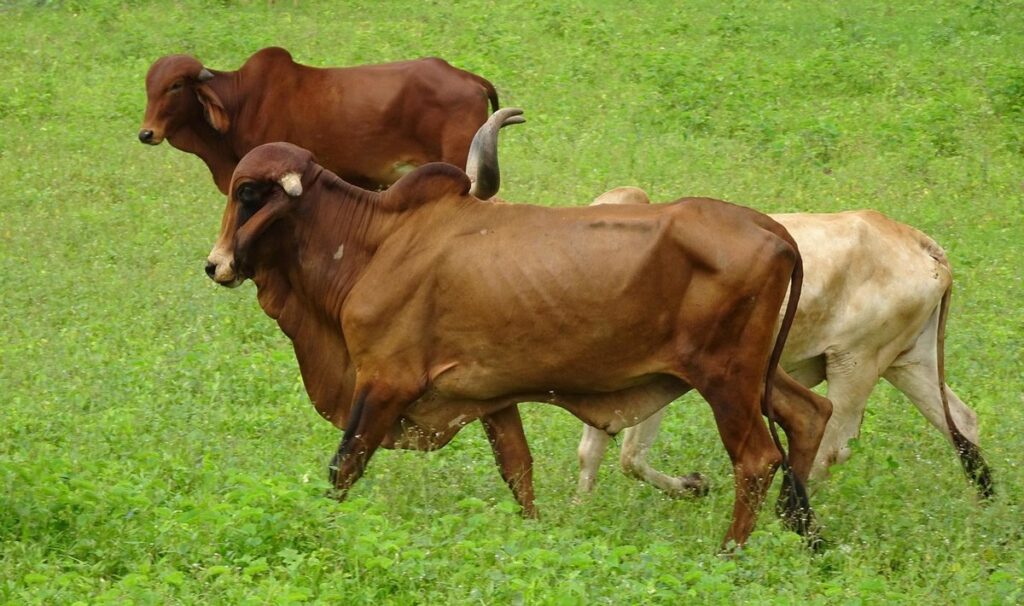
The Brahman’s physical traits are a notable aspect of its appearance. One of its most distinctive features is the hump on its shoulders, which is a result of its Zebu ancestry. This characteristic sets it apart from other cattle breeds and has been passed down through generations.
In addition to its hump, the Brahman has a robust build, which allows it to withstand harsh weather conditions. Its large ears are also an adaptation to its native Indian climate, helping to dissipate heat and keep the animal cool. The breed’s short, smooth coat is another notable feature that helps with thermoregulation.
The combination of these physical traits makes the Brahman well-suited for hot and humid climates. In fact, many farmers have successfully raised Brahman cattle in regions with extreme temperatures, where other breeds may struggle to thrive. When selecting a Brahman for your farm or ranch, look for an animal with a prominent hump, robust build, and large ears – these features will indicate its ability to withstand challenging environmental conditions.
Temperament and Behavior
Brahmans are known for their calm demeanor, making them a pleasure to handle. This docile nature is essential for farmers and ranchers who need to manage large herds. A Brahman’s temperament is often described as easy-going, which means they adapt well to new environments and handling techniques.
One of the key benefits of Brahman cattle is their ability to remain calm in hot climates. In areas with high temperatures and humidity, it can be challenging to manage livestock that become agitated or stressed. However, Brahmans are better equipped to handle these conditions due to their natural temperament. This makes them an ideal choice for farmers operating in tropical regions.
In addition to their ability to cope with heat, Brahmans are also known for being relatively low-maintenance animals. They require minimal training and can be easily handled by farm staff of varying levels of experience. This is particularly useful on larger operations where labor may be scarce or inexperienced.
Overall, the temperament and behavior of Brahman cattle make them a popular choice among farmers and ranchers worldwide.
Uses of Brahman Cattle
The Brahman cattle breed has a wide range of practical uses, from ranching and beef production to dairy farming and conservation efforts. We’ll explore some of these unique applications in more detail.
Beef Production
The Brahman’s ability to produce high-quality beef is one of its most valuable traits. In crossbreeding programs, Brahman genetics are often used to improve the quality and consistency of beef cattle. This is due in part to their high marbling content – a characteristic that results in tender and flavorful meat. Brahman calves can be raised on a variety of feedstocks, from grass to grain, making them adaptable to different production systems.
For example, in Australia, Brahman cattle are often used in feedlot operations where they’re fed a diet of grains to promote rapid growth and marbling development. In the United States, many ranchers use Brahman crossbreeding to improve the beef quality on their grass-fed operations. When selecting Brahman genetics for beef production, producers should look for animals with high marbling scores and a strong muscling pattern.
When incorporating Brahman genetics into your herd, consider the following:
- Select Brahman sires or dams that have demonstrated high marbling potential
- Monitor your herd’s growth rates and adjust feeding programs accordingly
- Consider implementing a crossbreeding program to introduce Brahman genetics into your existing herd
Dairy Production
Brahman cows are a versatile breed that can thrive in various production systems. While not as widely used for dairy as other breeds, they have shown promise in producing high-quality milk with excellent fat and protein profiles. This is due in part to their genetic makeup, which includes a unique combination of tropical and temperate traits.
In regions where Brahman cows are raised for dairy, they often produce milk that is rich in omega-3 fatty acids and conjugated linoleic acid (CLA). These nutrients have been linked to improved human health outcomes, making Brahman-derived milk a sought-after product. To optimize dairy production from Brahman cows, farmers should focus on providing them with a balanced diet, adequate nutrition, and proper management practices.
Some key considerations for Brahman dairy producers include:
- Providing access to clean water and shade to maintain optimal temperature regulation
- Implementing a rotational grazing system to ensure adequate forage intake
- Monitoring milk production regularly to identify any potential issues
By adopting these strategies, farmers can unlock the full potential of their Brahman herd and produce high-quality dairy products that meet market demand.
Advantages of Raising Brahman Cattle
Brahman cattle offer numerous benefits for farmers and ranchers, from their adaptability to harsh climates to their potential for high-quality beef production. Let’s take a closer look at these advantages.
Heat Tolerance
Brahmans are remarkably well-suited to hot and humid climates, making them an ideal choice for farmers in tropical regions. Their ability to thrive in these conditions is due in part to their unique physiology, which allows them to conserve water more efficiently than other breeds.
One key adaptation is the Brahman’s ability to produce less moisture through respiration, a process known as “dry heat tolerance.” This means they can operate with minimal evaporative cooling from the lungs, allowing them to maintain body temperature even in extremely hot environments. As a result, Brahmans require less water intake than other breeds, making them a practical choice for areas where access to clean drinking water is limited.
In Australia, for example, Brahman cattle have been extensively used on large-scale ranches due to their ability to withstand the harsh tropical conditions. Their heat tolerance has also made them a popular choice in parts of South America and Africa. When selecting Brahman cattle for hot climates, it’s essential to consider factors such as coat color (darker coats tend to absorb more heat), age, and individual temperament when determining which animals are best suited for the local environment.
Disease Resistance
Brahman cattle are known for their impressive disease resistance, which is a significant advantage for farmers and ranchers. Their robust immune system allows them to withstand many common cattle diseases, reducing the need for antibiotics and other treatments. This resilience can be attributed to the breed’s genetic makeup, which has been shaped by centuries of adaptation in tropical environments.
In particular, Brahman cattle are less susceptible to tick-borne illnesses like anaplasmosis and babesiosis, as well as internal parasites such as worms and liver flukes. They also tend to recover more quickly from illness or injury, which reduces the risk of secondary infections and complications.
One key factor contributing to their disease resistance is their efficient lymphatic system, which helps to filter out pathogens and toxins. Additionally, Brahman cattle have a relatively low inflammatory response compared to other breeds, which can help prevent tissue damage and promote healing.
When raising Brahman cattle, farmers can further support their health by providing access to clean water, a balanced diet, and regular vaccinations. By understanding the breed’s natural disease resistance, producers can develop targeted management strategies that minimize the need for antibiotics and promote overall animal well-being.
Breeding and Management Considerations
When it comes to successfully raising Brahman cattle, careful consideration of breeding and management practices is crucial for optimal health and productivity. Effective planning can make a significant difference in your herd’s overall performance.
Selection Criteria
When selecting Brahman bulls or heifers for breeding purposes, several key factors come into play. Fertility is a crucial consideration, as it directly impacts the success of your breeding program. Look for animals with a proven track record of producing healthy offspring, and evaluate their reproductive history to identify any potential issues.
Another important factor is growth rate. Brahman cattle are known for their rapid growth and development, but some individuals may excel in this area more than others. Selecting bulls or heifers that demonstrate strong growth rates can help you optimize your breeding program’s efficiency.
Milk production potential is also a vital consideration, particularly if you plan to use Brahman cattle for dairy purposes. Look for animals with a strong pedigree for milk production and evaluate their udder conformation, mammary gland development, and other factors that contribute to their milk-making ability.
To assess these factors, consider the following:
- Evaluate reproductive history and fertility records
- Measure growth rates using metrics such as weight gain per day or age at maturity
- Assess udder conformation and mammary gland development in dairy-focused breeding programs
Nutritional Requirements
Brahmans have specific nutritional needs, particularly in terms of heat stress management during the hot summer months. Their digestive system is adapted to thrive on a diet rich in fiber and low in protein, which allows them to conserve energy for growth and maintenance. In contrast to other breeds, Brahman cattle require less dietary protein to maintain their weight, making them an attractive option for farmers who want to minimize feed costs.
To manage heat stress effectively, Brahman cattle benefit from access to plenty of clean water and shade. This can be achieved by providing a large area for grazing during cooler parts of the day or implementing rotational grazing practices that allow animals to rest in shaded areas. It’s also essential to monitor their body condition score regularly to ensure they’re not overeating, as this can exacerbate heat stress.
Some key nutritional requirements to consider when raising Brahman cattle include:
- Adequate access to clean water (at least 20-30 liters per day)
- A balanced diet that provides the necessary fiber and protein levels
- Avoiding excessive grain feeding during hot weather to prevent digestive upset
- Regular monitoring of body condition score to ensure optimal health and performance
Conclusion and Future Outlook
As we wrap up our exploration of the Brahman cattle breed, let’s take a moment to reflect on its significance and consider what the future holds for these impressive animals.
Summary of Key Points
When evaluating the suitability of Brahman cattle for your operation, consider their adaptability, disease resistance, and heat tolerance. These traits make them an attractive choice for producers facing challenging environmental conditions. Remember, Brahman cattle are not only resilient but also excel in various production systems, including beef and dairy.
A key takeaway is that Brahman cattle can thrive in hot and humid climates with minimal cooling resources. This means you can reduce your costs associated with maintaining a large-scale cooling infrastructure. Their disease resistance is another significant advantage – they have a lower incidence of common diseases such as tick fever and anaplasmosis, which translates to reduced veterinary expenses.
In terms of selection criteria, prioritize the Brahman breed if you’re looking for cattle that can withstand harsh environmental conditions without sacrificing growth rates or milk production. Consider factors like bloodlines, breeding programs, and genetic testing when selecting your herd.
Potential for Expansion into New Markets
As global demand for sustainable and resilient livestock continues to grow, the Brahman breed is well-positioned to meet this need and expand its presence in new markets. One key area of opportunity lies in regions with challenging climate conditions, such as tropical or subtropical zones. The Brahman’s exceptional heat tolerance, made possible by its unique genetic adaptations, makes it an attractive choice for farmers operating in these environments.
In countries like Brazil, Argentina, and parts of Africa, the Brahman’s ability to thrive in high-temperature climates could provide a significant competitive advantage over other breeds. Furthermore, its disease resistance traits can help reduce healthcare costs and minimize the use of antibiotics, appealing to consumers seeking more sustainable meat options.
To capitalize on these opportunities, farmers should consider collaborating with local breeding programs or importing Brahmans from established producers. They should also prioritize genetic selection for desirable traits like fertility, growth rate, and feed efficiency. By doing so, they can create a robust and resilient Brahman population that meets the specific needs of their market and climate conditions.
Frequently Asked Questions
Can I crossbreed Brahman with other breeds for improved heat tolerance?
Yes, the Brahman breed’s high heat tolerance can be passed on to its offspring through crossbreeding. This is often done by breeding Brahman bulls or heifers with other breeds known for their heat tolerance, such as the Angus or Simmental.
How do I manage nutritional needs for my Brahman cattle during extreme heat?
To manage nutritional needs during extreme heat, consider providing Brahman cattle with access to cool water and shade. Additionally, feed them high-quality hay and grains that are easy to digest, and limit their exposure to direct sunlight between 11am-3pm.
What if I’m not experienced in handling cattle? Can the Brahman breed still be manageable?
Yes, the Brahman breed is known for its docile nature, making it an excellent choice for farmers or ranchers with limited experience. With proper training and handling techniques, Brahman cattle can be easily managed and worked with.
How do I determine if my Brahman cattle are truly heat-tolerant?
To determine if your Brahman cattle are heat-tolerant, monitor their behavior during hot weather. Look for signs of stress such as panting, drooling, or listlessness. If they appear to handle the heat well and continue to produce milk or gain weight, it’s likely they have a high level of heat tolerance.
Can I use Brahman cattle in dairy production if my farm has limited space?
While Brahman cattle can be used for dairy production, their large size and robust build require adequate space to roam. If your farm has limited space, consider crossbreeding Brahman with smaller dairy breeds or using them as a “companion” breed to improve the overall health and productivity of your herd.