
Corn rootworm beetles are one of the most destructive pests of maize crops worldwide, causing significant damage to yield and resulting in substantial economic losses for farmers. These tiny insects feed on plant roots, weakening the corn’s ability to absorb water and nutrients, ultimately leading to stunted growth and reduced harvests. For farmers who rely heavily on maize production, protecting their crops from these beetles is crucial not only for maintaining yields but also for ensuring long-term profitability. In this article, you’ll learn about the damage caused by corn rootworm beetles and discover effective management strategies to prevent infestations and reduce economic losses associated with these pests. By the end of this guide, you’ll be equipped with practical knowledge on how to protect your maize crops from corn rootworm beetle damage.
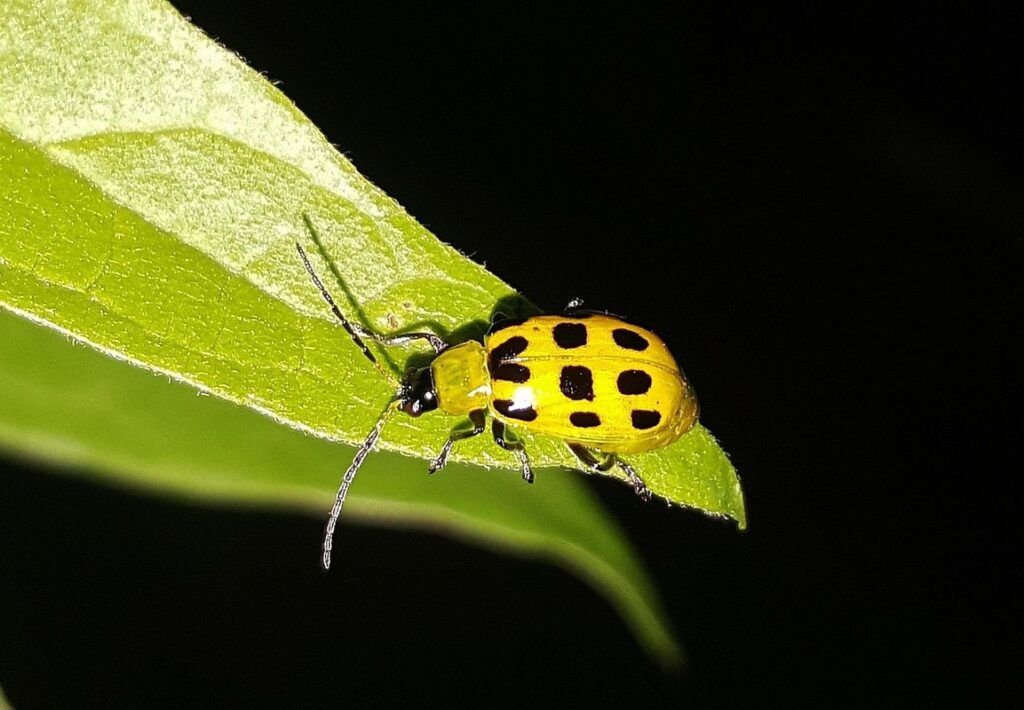
What is a Corn Rootworm Beetle?
The corn rootworm beetle is a tiny but mighty pest that has been wreaking havoc on maize crops for decades. Let’s take a closer look at its biology and habits to understand what makes it so destructive.
Definition and Classification
Corn rootworm beetles are members of the Chrysomelidae family and belong to the species Diabrotica virgifera virgifera. They are a type of beetle, specifically a true bug, characterized by their oval shape and metallic sheen. These beetles are typically between 1/4 inch to 1/2 inch in length and have a distinctive coloration ranging from yellow to black.
Their classification places them within the order Coleoptera, which comprises all beetles. Within this order, corn rootworm beetles fall under the family Chrysomelidae, commonly referred to as leaf-feeding beetles. This family is further divided into several subfamilies and tribes, with Diabrotica being one of the most notable genera.
Corn rootworm beetles are primarily distributed across North America but have also been found in parts of South America, Europe, and Asia. Their global distribution makes them a significant threat to maize production worldwide. They can thrive in various environments, from temperate to tropical regions, as long as there is an adequate food source – typically maize or other members of the Poaceae family.
Their adaptability has contributed to their widespread presence, making them a persistent pest in agricultural settings.
Life Cycle and Habitat
The corn rootworm beetle’s life cycle consists of four stages: egg, larva, pupa, and adult. Female beetles typically lay their eggs near the base of maize plants, where they can hatch into larvae within a week or two. These early-stage insects feed on plant roots, causing damage to the roots’ growth and development.
The larval stage is the most destructive part of the corn rootworm beetle’s life cycle. During this period, the larvae tunnel through the roots, creating channels that disrupt water and nutrient uptake. The beetles prefer areas with moist soil and adequate food sources, often targeting regions with high maize yields.
After a few weeks, the larvae transform into pupae, which eventually emerge as adult beetles. These adults feed on plant sap, but their primary role is to mate and lay eggs for the next generation. Corn rootworm beetles can complete multiple generations per growing season, making them particularly challenging to manage.
In areas with suitable habitats, corn rootworm populations can thrive, inflicting significant damage to maize crops. Understanding the beetle’s life cycle and habits can help farmers anticipate and prepare for potential infestations.
Damage to Maize Crops
Maize crops are often severely damaged by corn rootworm beetle larvae, leading to significant losses in yield and revenue for farmers worldwide. The extent of this damage can vary depending on several factors.
Symptoms of Infestation
Infestation by corn rootworm beetles can manifest through several distinct symptoms. One of the most noticeable signs is stunted growth, where maize plants fail to reach their full height and produce smaller ears. This occurs because the beetles’ feeding activity damages the roots, impeding water and nutrient uptake. As a result, affected plants may appear pale or yellowish due to reduced chlorophyll production.
Another symptom of infestation is the presence of characteristic “V”-shaped notches on maize leaves, created by the beetles’ chewing activity. These notches can be seen on both the upper and lower surfaces of the leaves. In severe cases, entire sections of the leaf may become discolored or die back.
Crop owners should also look out for unusual patterns in plant spacing or density. Corn rootworm infestations often lead to uneven growth, with some plants thriving while others struggle. Monitoring crop health regularly can help identify these signs early on, allowing for timely intervention and minimizing potential losses. Regular scouting, either by hand or with the aid of technology, is crucial in detecting and managing corn rootworm infestations before they spread.
Economic Impact
Infestations of corn rootworm beetles can lead to significant economic losses for maize farmers worldwide. The primary effect is a reduction in yield, as damaged roots impair the plant’s ability to absorb water and nutrients. This decrease in productivity translates into lower revenue for farmers, with some studies suggesting average losses ranging from 10% to 50% per infested field.
The impact of these losses extends beyond individual farms to affect local economies and global food markets. In regions where maize is a staple crop, the economic consequences can be particularly severe. For instance, in the United States alone, corn rootworm beetles are estimated to cost farmers over $1 billion annually. These costs do not account for indirect expenses, such as pest management measures and reduced land values.
To mitigate these losses, farmers can adopt integrated pest management (IPM) strategies, which involve combining physical barriers, crop rotation, and targeted pesticide applications to minimize damage. Proactive monitoring and early detection of infestations are also crucial in preventing economic losses. By understanding the economic consequences of corn rootworm beetle infestations, farmers can make informed decisions about their pest management practices.
Causes and Contributing Factors
The corn rootworm beetle is a complex pest, and understanding its causes and contributing factors is crucial to developing effective management strategies. Several underlying factors contribute to this beetle’s rise as a major threat to global maize production.
Climate Change
Warmer temperatures and changing precipitation patterns associated with climate change are creating ideal conditions for corn rootworm beetles to thrive. Rising temperatures allow these pests to complete their life cycles more quickly, resulting in multiple generations per year. This acceleration of the life cycle enables them to adapt faster to new environments and exploit new food sources. In areas where temperatures were previously too cool, corn rootworm beetles can now survive and multiply.
Changes in precipitation patterns also contribute to the spread and prevalence of these pests. Droughts can weaken maize plants, making them more susceptible to infestation. Conversely, excessive rainfall can trigger the emergence of larvae from soil-borne eggs, leading to higher populations. This increased pressure on crops can be particularly challenging for farmers who rely on a single harvest per year.
In regions with a history of cooler climates, corn rootworm beetles are emerging as a significant threat due to warmer temperatures and altered precipitation patterns. For example, in the Midwest United States, where maize is a major crop, climate change has led to an increase in corn rootworm beetle populations.
Pesticide Resistance
The overuse and misuse of pesticides have led to a significant increase in pesticide resistance among corn rootworm beetles. This resistance is a major contributor to the escalating infestation rates of these pests. When pesticides are applied repeatedly, often at high doses, it puts selective pressure on the beetle population. Over time, this leads to the development of resistant populations that can withstand even the most potent chemicals.
The consequences of pesticide resistance are far-reaching. Resistant beetles not only survive but also continue to reproduce, spreading their genetic traits to other individuals and perpetuating the problem. This creates a vicious cycle where farmers must apply increasingly high doses of pesticides to control the infestation, further exacerbating the issue.
In some cases, beetles have developed resistance to multiple pesticides simultaneously, making them almost impervious to chemical control. For example, in the United States, the western corn rootworm has developed widespread resistance to certain pyrethroids and neonicotinoids.
Agricultural Practices
Monoculture farming is a significant contributor to the spread of corn rootworm beetles. This practice involves growing large areas of land with a single crop species, often maize. By cultivating a single crop, farmers create an environment where pests like the corn rootworm beetle can thrive. The larvae feed on the roots of maize plants, causing significant damage and reducing yields.
In addition to monoculture farming, the use of shallow tillage and lack of crop rotation also contribute to the spread of corn rootworm beetles. Shallow tillage disrupts the soil ecosystem, making it easier for the beetle’s eggs to hatch and larvae to feed on roots. Crop rotation is an effective way to break pest cycles, but if a single crop like maize is grown year after year, pests have more opportunities to adapt and multiply.
In some regions, corn rootworm beetles have developed resistance to certain pesticides used in monoculture farming systems. This further exacerbates the problem, as farmers may be using ineffective or even counterproductive methods to control pest populations.
Identification and Monitoring
To effectively manage corn rootworm beetle infestations, it’s crucial to accurately identify and monitor the pests’ presence on your maize crop. This involves recognizing common signs of damage and using reliable monitoring techniques.
Visual Inspection Methods
When inspecting maize crops for signs of corn rootworm beetle infestation, there are several visual methods to look out for. Start by examining the soil around the base of the plants, checking for small holes or pits where the beetles have been feeding on roots. Look for yellowing or stunted plants, which can indicate that the beetles have damaged the roots.
Check the soil for adult beetle activity, particularly in areas with high moisture levels. Female beetles typically lay eggs near the base of maize plants, so inspect the soil around the stem to see if you notice any egg clusters. If you suspect an infestation, use a probe or spade to gently dig up small sections of soil to inspect for larvae.
It’s also essential to monitor for frass – the insect droppings that can accumulate near infested areas. A significant amount of frass can indicate a large population of beetles. Keep in mind that these signs may not be immediately apparent, so regular monitoring is crucial.
Trapping and Sampling Techniques
Trapping and sampling corn rootworm beetles are crucial steps in monitoring their populations and preventing infestations. There are several techniques for trapping these pests: sticky traps, pitfall traps, and bait traps. Sticky traps, coated with a sweet-tasting adhesive, attract adult beetles with pheromones or other lures. Pitfall traps involve digging shallow holes filled with water, where beetles fall in to drown.
Bait traps use food baits like soybean meal or cornmeal to attract beetles. These traps can be baited with pheromone-laced lures to increase their effectiveness. Sampling involves collecting soil and plant samples from the field for laboratory analysis. For effective trapping, place sticky and bait traps near the maize plants’ roots, typically within 30 cm of the stem base.
When using pitfall traps, position them in areas where beetles are most active, often near water sources or where the soil is moist. A combination of these techniques can provide a comprehensive understanding of corn rootworm beetle populations in a given field. Sampling and trapping should be conducted regularly during peak beetle activity periods, typically from late spring to early summer.
Use of Technology and Drones
Monitoring corn rootworm beetle infestations can be a labor-intensive and time-consuming process, especially for large-scale maize fields. However, technology has come to the forefront as an effective solution to streamline identification and tracking of these pests. One such innovative tool is the use of drones equipped with high-resolution cameras and sensors.
Drones can capture detailed aerial footage of the crop, allowing farmers to identify potential infestation hotspots from a safe distance. This reduces the need for physical inspections, minimizing exposure to pesticides and other chemicals. Additionally, drones can be programmed to fly over specific areas repeatedly, providing real-time data on the population density and movement patterns of corn rootworm beetles.
Some key features to consider when using drones for monitoring include:
- Equipping drones with multispectral or hyperspectral cameras to detect subtle changes in crop health
- Utilizing sensors that can measure soil moisture, temperature, and other environmental factors affecting beetle populations
- Integrating drone data with existing management systems to inform decision-making
- Regularly calibrating and maintaining drones to ensure accuracy and reliability
Management and Control Strategies
To effectively manage corn rootworm beetle populations, it’s essential to understand various control strategies that farmers can implement. These strategies will be discussed in detail below.
Cultural Controls
Crop rotation is a fundamental cultural control strategy for managing corn rootworm beetles. By alternating between maize and non-host crops such as soybeans or alfalfa, farmers can break the beetle’s life cycle and reduce infestation pressure on their fields. This approach is particularly effective when combined with other cultural controls like sanitation practices.
Sanitation involves removing any debris, weeds, or volunteer maize plants from the field that could harbor corn rootworm beetles. Keeping the soil clean also helps to prevent egg-laying females from finding suitable oviposition sites and reduces the chances of larvae surviving over winter. In addition to crop rotation and sanitation, planting resistant maize varieties can provide a more sustainable solution.
When selecting resistant varieties, farmers should consider factors such as root depth, diameter, and hardness. These traits contribute to the plant’s ability to withstand feeding by corn rootworm larvae. For example, some research has shown that maize varieties with deeper roots exhibit reduced damage from corn rootworm infestations compared to those with shallower roots.
Chemical Controls
Insecticides are a common chemical control method used against corn rootworm beetles. However, their effectiveness is often compromised by pesticide resistance, which has been reported in many regions where these pests are prevalent. Pyrethroids and organophosphates are among the most commonly used insecticides for controlling corn rootworms, but their overuse has led to widespread resistance.
Rotenone and carbaryl are other chemical control options, although they have their own set of drawbacks, including toxicity to non-target organisms. For instance, rotenone is highly toxic to aquatic life, whereas carbaryl poses risks to bees and other pollinators. The use of insect growth regulators (IGRs) has also been explored as a way to combat corn rootworm populations.
When using chemical controls, it’s essential to follow the recommended application rates and timing to minimize risks to non-target organisms and the environment. Farmers should also consider integrated pest management strategies that combine multiple tactics, such as crop rotation and biological control methods, to reduce reliance on chemical pesticides.
Integrated Pest Management (IPM)
Implementing Integrated Pest Management (IPM) strategies is crucial for managing corn rootworm beetle populations. IPM involves a holistic approach to pest control by combining physical, cultural, biological, and chemical controls. This multi-faceted approach helps minimize the use of chemical pesticides, reducing the development of pesticide-resistant pests.
A key aspect of IPM is monitoring and identifying the pest population. Regular scouting and trapping can help detect early signs of infestation, allowing farmers to take prompt action. For instance, using sticky traps or pitfall traps can effectively capture adult corn rootworm beetles, providing valuable data on population density and movement patterns.
Effective IPM strategies also consider crop rotation, soil preparation, and sanitation practices. Rotating maize with non-host crops like soybeans or wheat can break the pest’s life cycle, reducing egg-laying sites and preventing infestation. Additionally, maintaining optimal soil moisture and fertility levels can encourage plant growth, making it more difficult for the pests to penetrate the roots.
When implementing IPM, farmers should consider a combination of these tactics to create an integrated control plan tailored to their specific situation. For example, combining crop rotation with biological controls like introducing beneficial nematodes or parasitic wasps can significantly reduce corn rootworm beetle populations.
Frequently Asked Questions
Can I use integrated pest management (IPM) strategies to control corn rootworm beetle populations without completely abandoning chemical controls?
Yes, IPM strategies often incorporate targeted chemical applications alongside non-chemical methods. By combining these approaches, you can reduce the reliance on broad-spectrum insecticides and minimize resistance development.
What if I notice a small infestation in one part of my maize field – should I treat the entire field or just isolate and manage the affected area?
It’s generally recommended to isolate and manage the affected area first. This approach allows you to assess the severity of the infestation, implement targeted control measures, and prevent potential contamination of other areas.
Can I use a single chemical control method to effectively manage corn rootworm beetles in my entire maize crop, or is it better to rotate between different types?
While some chemical controls can be effective against corn rootworm beetles, relying on a single method may not provide long-term solutions due to potential resistance development. Rotating between different types of chemical controls can help mitigate this issue.
How do I know when my maize crop has reached the optimal stage for cultural control methods like crop rotation and sanitation practices?
Optimal timing for cultural control methods usually occurs during the early growth stages of your maize crop, before infestation levels become severe. Monitor your crop regularly for signs of damage and take prompt action to implement these non-chemical controls.
Can I use technology, such as drones equipped with sensors or cameras, to monitor and identify corn rootworm beetle infestations in real-time?
Yes, technology like drones can be used to monitor maize crops for signs of corn rootworm beetle infestations. These tools can provide valuable insights into the severity and spread of the infestation, enabling timely decision-making and more effective management strategies.
