
Rice farming has been the backbone of agriculture for thousands of years, providing sustenance for over half of the world’s population. Yet, despite its importance, rice farming methods have remained relatively unchanged in many parts of the world. You may be surprised to learn that traditional flooding techniques are still widely used in some areas, where water is intentionally drained and replenished to stimulate crop growth. However, with the demand for food increasing and climate change posing a significant threat to global food security, innovative approaches to irrigation, crop management, and harvesting have become essential. This article will explore the history of rice farming, current practices, and cutting-edge innovations aimed at improving yields and sustainability in this crucial sector. By the end of it, you’ll know how modern rice farmers are using technology and sustainable methods to ensure a steady supply of this staple food.
History and Significance of Rice Farming
Rice farming has a rich history that spans thousands of years, with its significance extending far beyond being a staple food source for billions worldwide. Let’s take a closer look at where this ancient practice came from.
The Origins of Rice Cultivation
Rice cultivation originated around 8,000 years ago in the Yangtze River Delta in southern China. Archaeological evidence suggests that early humans domesticated wild rice species, specifically Oryza rufipogon and Oryza nivara. These species were likely drawn to flooded areas where they could grow more efficiently.
From China, rice cultivation spread to other parts of Asia, including India, Indonesia, and Southeast Asia. It’s believed that the practice was introduced through trade routes and migration. The crop thrived in regions with suitable climates, becoming an integral part of many ancient civilizations’ diets.
Rice became a staple food due to its adaptability to various environments and ability to provide sustenance for large populations. Its ease of cultivation also made it accessible to farmers without extensive resources. In Japan, rice was considered a symbol of wealth and social status, while in India, it was often used as a form of currency.
The spread of rice cultivation is closely tied to the development of agriculture and the rise of complex societies. Today, rice remains one of the most widely consumed crops globally, with over 3.5 billion people relying on it as their primary food source.
Cultural and Economic Importance of Rice
Rice has been a cornerstone of many societies for centuries, playing a vital role in local economies and cultures. In East Asia, for example, rice is not only a staple food but also a symbol of good fortune and prosperity. In Japan, the traditional New Year’s visit to family graves often involves exchanging gifts of rice cakes and mochi, highlighting its cultural significance.
Globally, rice is a significant commodity in international trade, with major producers like China, India, and Thailand relying heavily on rice exports for revenue. The global rice market is valued at over $30 billion annually, making it one of the most valuable crops traded worldwide. Locally, rice farming supports millions of small-scale farmers, contributing to rural economies and food security.
In addition to its cultural and economic importance, rice has also had a profound impact on human migration patterns. The spread of rice cultivation from Southeast Asia to other parts of the world, such as Africa and Latin America, was often driven by trade and migration routes. Today, understanding the cultural significance of rice can help policymakers support sustainable agriculture practices and equitable trade relationships between countries.
Types of Rice Farming
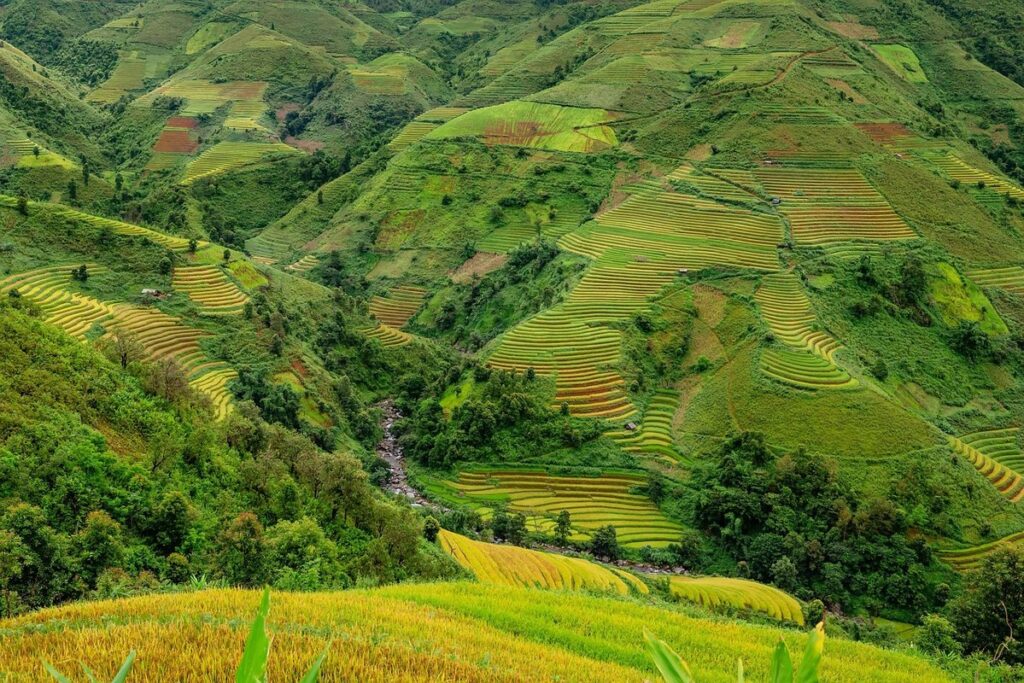
Rice farming comes in many forms, from paddies and plains to terraces and hillsides, each requiring unique techniques to thrive. Let’s take a closer look at these diverse methods used around the world.
Irrigated Rice Cultivation
Irrigated rice cultivation relies heavily on controlled water management systems to ensure consistent moisture levels throughout the growth cycle. This method requires a substantial amount of infrastructure, including canals, pumps, and other machinery to manage water flow. Farmers typically build earthen bunds or levees around their fields to prevent flooding and retain excess water.
A network of canals supplies water from nearby rivers or reservoirs to the fields. Pumps are used to lift water from lower-lying areas to higher elevations, ensuring even distribution across the cultivated land. In some cases, farmers also use sprinkler systems or drip irrigation to deliver precise amounts of water directly to the roots.
Effective drainage is equally crucial in irrigated rice farming. Water-saturated soil can become anaerobic, leading to reduced oxygen levels and stunted growth. Farmers often construct subsurface drains or install drainage pipes to remove excess water and prevent waterlogging. By controlling water flow and managing soil moisture, farmers can optimize crop yields and minimize the risk of crop failure.
Rainfed Rice Cultivation
Rainfed rice cultivation relies on natural rainfall and water storage to sustain crops. This method is more challenging than irrigated farming due to variable weather patterns and potential droughts. In regions with adequate rainfall, farmers typically plant short-duration or medium-duration varieties that mature within 100 to 150 days.
Crop selection plays a crucial role in rainfed rice cultivation. Farmers choose varieties that are tolerant of drought and have good yield stability. Planting methods also vary depending on the region’s climate. For example, some farmers use transplanted seedlings, while others direct-seed their crops.
Post-harvest processing for rainfed rice is similar to irrigated farming, with a focus on drying and storing grains to maintain quality. Farmers often rely on traditional methods like sun drying or using simple machines to dry grains. However, in areas with limited resources, farmers may not have access to these tools, leading to a higher risk of grain spoilage.
Rainfed rice cultivation requires careful planning and management due to its reliance on natural weather patterns. Farmers must monitor crop health closely and adapt their practices accordingly. This might involve adjusting planting dates or using conservation agriculture techniques to reduce soil erosion.
Preparing the Land for Rice Farming
Before planting rice, it’s essential to prepare the land properly, which involves several crucial steps that ensure a bountiful harvest and healthy crops. This section focuses on those key preparatory tasks.
Soil Preparation and Testing
Before planting rice, farmers must prepare the soil to ensure optimal growing conditions. This involves testing for nutrient levels and pH balance to identify areas where amendments are needed. A typical soil test will check for nitrogen, phosphorus, potassium, and other essential nutrients, as well as the soil’s acidity or alkalinity level.
A slightly acidic to neutral pH range (around 6.0-7.0) is ideal for rice cultivation, as it allows for balanced nutrient uptake and optimal root growth. If the soil is too alkaline or acidic, farmers may need to add lime or sulfur to adjust the pH. Regular soil testing also helps identify any nutrient deficiencies, such as nitrogen or potassium depletion.
To test the soil, farmers typically collect a sample from multiple locations within the field and submit it to a laboratory for analysis. The results will provide a detailed breakdown of the soil’s composition, including nutrient levels, pH, and other important factors. This information enables farmers to make informed decisions about fertilizer application and other soil management strategies.
A balanced fertilizer program, based on the test results, can help optimize rice yields while minimizing environmental impact. By understanding their soil’s unique characteristics, farmers can create a tailored plan for improving soil fertility and promoting healthy crop growth.
Drainage and Water Management Systems
In rice farming, effective drainage and water management systems are crucial to prevent waterlogging and ensure optimal crop growth. Waterlogged fields can lead to root rot, reduced yields, and increased pest susceptibility, ultimately affecting profitability.
There are various drainage systems used in rice farming, including:
- Subsurface drainage: This involves installing perforated pipes below the soil surface to remove excess water. The pipes are typically laid at a slope to allow for easy water flow.
- Surface drainage: Also known as open ditches or canals, this system involves creating channels on the surface to redirect excess water away from the field. Regular maintenance is essential to prevent clogging and ensure efficient water removal.
- Mounding: This technique involves creating raised beds or mounds to improve soil aeration and reduce waterlogging. By elevating the soil, roots have better access to oxygen, promoting healthy root growth.
Regular inspection of drainage systems is vital to ensure their effectiveness. Clogged pipes or blocked ditches can lead to waterlogging, compromising crop health. Farmers should also monitor water levels and adjust irrigation schedules accordingly to prevent over-saturation.
Planting and Crop Management
When it comes to growing rice, proper planting techniques are crucial for a successful harvest. We’ll walk you through the best practices for planting and crop management in this critical stage of rice cultivation.
Seed Selection and Sowing Methods
Rice seeds are carefully selected based on factors such as varietal characteristics, disease resistance, and adaptability to local climate conditions. In tropical regions, short-grain varieties with high yield potential are often preferred for their ability to thrive in hot and humid environments. In contrast, temperate regions may require longer-grain varieties that are more resistant to cold temperatures.
There are several sowing methods used in rice cultivation, depending on the region and soil type. Transplanting involves growing seedlings in a nursery before transferring them to the main field, while direct seeding involves sowing seeds directly into the main field. The choice of method depends on factors such as labor availability, water resources, and soil fertility.
In regions with high water tables or heavy rainfall, rice is often grown using the “wet seeding” method, where seeds are sown in flooded fields to reduce soil erosion. In areas with limited irrigation, dry seeding methods are used, where seeds are sown directly into the soil without prior flooding. These varying sowing methods allow farmers to adapt their practices to local conditions and optimize rice yields.
Pest and Disease Management
Rice crops are susceptible to various pests and diseases that can significantly impact yields. One of the most common pests is the rice blast fungus, which causes lesions on leaves and stems, leading to defoliation and reduced grain quality. To prevent this, farmers often rotate their fields with non-rice crops, such as legumes or maize, to break disease cycles.
Another key pest is the rice moth, whose larvae feed on grains, causing damage during storage. To control moths, farmers use sealed storage containers or bagged grains, ensuring minimal exposure to pests. Regularly inspecting fields for signs of infestation and monitoring weather conditions can also help predict when pest issues are likely to arise.
Common diseases affecting rice include sheath blight and bacterial leaf blight, both caused by fungal pathogens. To control these, farmers apply fungicides or bactericides during critical growth stages, taking care to avoid overuse, which can harm the environment. Some farmers also practice integrated pest management (IPM), combining multiple methods to minimize chemical use while maintaining effective control measures.
Harvesting and Post-Harvest Processing
After planting and nurturing, it’s time to reap what you’ve sown – literally. We’ll take a closer look at how rice is harvested and processed after being plucked from the fields.
Mechanized vs. Manual Harvesting Methods
Mechanized harvesting methods have become increasingly prevalent in modern rice farming due to their efficiency and ability to reduce labor costs. These systems typically involve a combine harvester that cuts, separates, and threshes the rice grains in one pass. One of the primary advantages of mechanized harvesting is its speed: it can process large areas quickly, allowing farmers to harvest multiple crops per season.
On the other hand, manual harvesting methods are still used in some regions, particularly where labor costs are low or where the terrain is challenging for machinery. Hand-cutting and hand-threshing require a significant amount of labor, but they also allow for more selective harvesting and can result in higher-quality rice. However, this method is often time-consuming and can be affected by weather conditions.
When deciding between mechanized and manual harvesting methods, farmers should consider their specific needs and resources. Factors to weigh include the size of the farm, the type of terrain, labor availability, and equipment costs. In some cases, a combination of both methods may be the most practical solution.
Rice Milling and Grading Processes
After harvesting, rice undergoes a series of processes to produce high-quality grains. Cleaning is the initial step where impurities and debris are removed from the paddy rice using sieves, air jets, or water currents. The next stage is hulling, which involves removing the outer husk of the grain, leaving just the inner starchy endosperm.
Hulling can be achieved through mechanical methods, such as abrasion or impact, or through dry milling techniques that use heat and friction to loosen the husk. Polishing is the final step in processing before grading, where the rice grains are refined to remove any remaining impurities or imperfections. This process typically involves passing the rice through a series of rollers under high pressure.
Grading procedures then follow to separate the polished rice into various quality categories based on factors such as grain length, thickness, and color. The most common classification systems include extra-long-grain (ELG), medium-grain (MG), and short-grain (SG) varieties, each with distinct characteristics suited for different culinary applications. Regular grading ensures consistency in rice quality, which is essential for both consumers and manufacturers who rely on the product’s texture and flavor profiles.
Challenges and Innovations in Modern Rice Farming
Rice farming is becoming increasingly complex, thanks to changing environmental conditions and shifting consumer demands. Let’s take a closer look at some of the unique challenges modern rice farmers face.
Climate Change and Its Impact on Rice Yields
Rising temperatures and changing precipitation patterns due to climate change have significant effects on rice yields. In many regions, warmer winters can cause rice seeds to sprout too early, leading to reduced grain quality and lower yields. Conversely, prolonged dry spells or intense rainfall events can damage crops during critical growth stages.
Climate change also alters the distribution and prevalence of pests and diseases that affect rice crops. Warmer temperatures can increase the spread of fungal diseases like rice blast, which can devastate entire fields if left unchecked. In some areas, changing weather patterns may bring new pest species or exacerbate existing ones.
Proper water management is crucial in mitigating climate-related impacts on rice yields. This involves maintaining optimal water levels during critical growth stages and ensuring adequate drainage to prevent waterlogging. However, adapting water management strategies can be challenging due to the variability of weather conditions.
Rice farmers must also adopt integrated pest management (IPM) techniques that minimize chemical use while controlling pests and diseases effectively. Some effective IPM methods include crop rotation, biological control, and resistant cultivar development. These approaches not only promote sustainable rice farming but also help reduce the environmental footprint associated with intensive pesticide use.
Sustainable and Technological Advancements in Rice Farming
Rice farming has long relied on manual labor and traditional methods, but modern advancements are revolutionizing the industry. Precision farming is one such technique gaining traction, allowing farmers to optimize water usage, reduce waste, and increase crop yields. By using satellite imaging and data analysis, farmers can pinpoint areas of high fertility and adjust their planting schedules accordingly.
Drones have also become an essential tool in rice farming, enabling farmers to monitor crops from above and detect any potential issues early on. Equipped with sensors and cameras, drones can track moisture levels, identify pests and diseases, and even apply targeted fertilizers or pesticides. This not only improves crop health but also reduces chemical usage.
Artificial intelligence (AI) is another innovative technology being applied in rice farming. AI-powered systems can analyze vast amounts of data on weather patterns, soil types, and crop varieties to provide personalized recommendations for farmers. This helps them make informed decisions about planting schedules, irrigation levels, and pest management strategies. By embracing these cutting-edge technologies, rice farmers can enhance efficiency, productivity, and sustainability while minimizing environmental impact.
Frequently Asked Questions
Can I apply modern irrigation techniques to small-scale rice farms?
Yes, many farmers have successfully implemented precision irrigation systems on smaller plots, improving water efficiency and crop yields. Consider investing in drip irrigation or micro-sprinkler systems to optimize water use.
What are the most common pests affecting rainfed rice crops?
Pests like stem borers, sap suckers, and leaf folder insects can significantly impact rainfed rice yields. To mitigate damage, practice integrated pest management techniques such as crop rotation, biological control, and targeted pesticide applications.
How do I determine if my rice farm is vulnerable to climate change impacts?
Assess your farm’s vulnerability by evaluating factors like changing precipitation patterns, temperature fluctuations, and increased pest/disease pressure. Consult local extension services or agricultural experts for guidance on adapting management practices to address these challenges.
Can I use drones in rainfed rice farming to monitor crop health?
Yes, drone technology can be an effective tool for monitoring crop health, identifying stress areas, and detecting pests/diseases early. Consider partnering with a drone operator or investing in your own equipment to enhance precision agriculture on your farm.
