
Extracting honey from your long Langstroth hive can be a thrilling experience, especially after months of careful tending to your bees. But with so many variables at play, it’s easy to get overwhelmed by the process. One mistake could mean lost honey or even worse – damaged equipment and potentially hurtful stings. That’s why having a solid understanding of how to extract honey safely and efficiently is crucial for any beekeeper. In this article, we’ll take you through every step of extracting honey from long Langstroth hives, including preparation, equipment setup, and essential safety precautions. By the end of this comprehensive guide, you’ll be able to confidently extract your honey, minimizing waste and maximizing harvest potential.
Understanding Your Hive and Preparation
Before you start extracting honey, it’s essential to understand your hive’s layout and prepare for the process by checking the frame configuration and equipment readiness. Familiarize yourself with your long Langstroth hive.
Assessing Your Hive’s Health and Readiness
Before extracting honey from your long langstroth hive, it’s crucial to ensure the colony is healthy and thriving. A strong and productive colony will not only produce more honey but also make the extraction process smoother and safer for you. Look for signs of a robust colony, such as a well-established brood pattern, a large number of bees on each frame, and a visible nectar flow.
Check for pests like mites, small hive beetles, or American foulbrood disease, which can decimate your colony if left unchecked. A healthy colony should have a pleasant odor, with the scent of honey and wax being dominant. Avoid extracting from a hive that shows signs of stress, such as an excessive number of dead bees on the floor or frames.
Regular inspections before extraction will help you identify potential issues early on. Check the hive’s temperature, typically between 92°F to 95°F (33°C to 35°C), and ensure there are no drafts or ventilation problems that could affect the colony’s health. By assessing your hive’s health and readiness, you’ll be able to extract honey more efficiently and minimize the risk of damaging the colony.
Preparing Your Equipment and Tools
To extract honey from your long langstroth hive, you’ll need a few essential pieces of equipment and tools. Start by gathering a reliable smoker to calm the bees during extraction. Choose a model with adjustable airflow control and a fuel capacity of at least 1 pound.
Next, prepare your extractor, which can be manual or electric. A manual extractor is ideal for small-scale operations, while an electric one is more suitable for larger yields. Ensure it’s specifically designed for langstroth hives to prevent damage to the frames.
Protective gear is also crucial when working with bees. Wear a beekeeping suit that covers your entire body, including your head and neck. Opt for a veil with a mesh design to allow for airflow while keeping stingers out. Gloves are another essential item; choose ones made from durable materials like leather or synthetic fabrics.
Additionally, have a frame grip handy to handle the frames safely during extraction. A hive tool can also come in handy for prying open the hive’s seams and removing any debris. Finally, have a clean container ready to store your extracted honey.
Understanding the Extraction Process
The honey extraction process involves several key components that work together to extract nectar from the honeycomb. At its core, the process relies on frames, supers, and boxes to store and manage the comb. Frames are where the bees build their comb, and they’re typically arranged in a rectangular pattern within the hive’s supers. Supers are additional boxes added to the hive to hold excess honey, allowing you to harvest it without disrupting the main brood chamber.
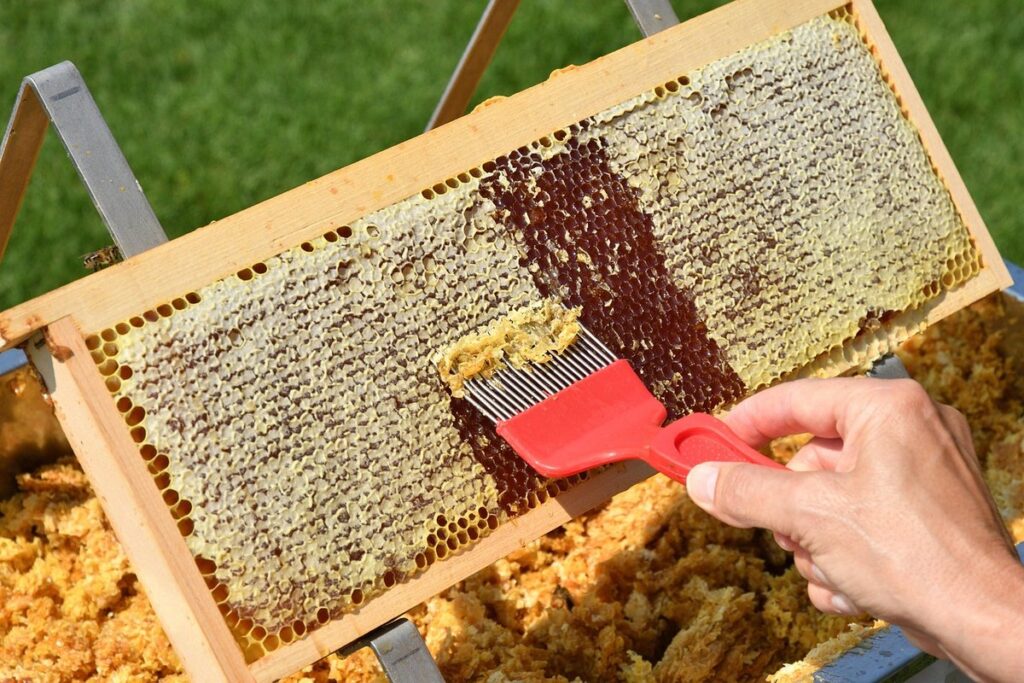
When extracting honey from long langstroth hives, it’s essential to understand how these components interact. The frames should be removed from their supers and placed in an extractor or a centrifuge. This is where the honeycomb is spun, releasing the nectar from the cells. Beeswax cappings are often removed before extraction using a tool called an uncapping knife.
The extracted honey will then flow into a storage tank or container, typically located below the extractor. From there, it can be filtered and bottled for consumption. Understanding how these components fit together is crucial to ensuring a successful and efficient extraction process.
Extracting Honey: The Smoker and Hive Preparation
Now that you’ve prepped your smoker, it’s time to prepare your hive for extraction. This process involves setting up your equipment for a smooth and efficient honey harvest.
Preparing Your Smoker and Heated Equipment
A properly functioning smoker is crucial for calming bees during extraction. Its primary role is to generate a gentle stream of smoke that confuses the bees into thinking their hive is on fire, causing them to temporarily abandon their honey stores. This allows you to work more safely and efficiently.
Before using your smoker, ensure it’s in good working order. Check for any blockages or issues with airflow by lighting it up and observing how well it draws fuel. You can use a mixture of kindling and combustible wood, such as apple or hickory, which produces minimal smoke that won’t contaminate your honey.
Make sure to clean out the smoker’s ash pan regularly to prevent any potential hazards. A buildup of ash can lead to an increase in temperature, causing the smoker to malfunction and potentially damaging the equipment. You should also check the smoker’s water bowl for adequate moisture levels, as this will help regulate its performance.
A well-maintained smoker is essential for effective extraction. If it’s not functioning correctly, you may find yourself dealing with aggressive bees or struggling to access your honey stores. Take a few minutes to inspect and prepare your smoker before starting the extraction process.
Opening the Hive and Removing Frames
To open the hive and remove frames, start by carefully inspecting the exterior for any signs of damage or pests. Next, place the smoker a short distance away from the hive entrance to calm the bees. Once the bees have settled, you can begin to open the hive.
Gently lift the inner cover and set it aside, taking care not to disturb the frames within. Remove the top bars and lift out the frames one by one, handling them with a gentle touch to minimize disturbance to the bees. Avoid jostling or bumping the frames against each other, as this can cause the bees to become agitated.
As you remove the frames, gently brush off any excess propolis or debris from the frame’s edges and surfaces. This will help prevent any obstructions during the extraction process. Place the removed frames in a nearby container, such as a honey extractor, where they can be processed without further disturbing the hive. Remember to work carefully and methodically to avoid stressing the bees and ensure a smooth extraction process.
Extracting Honey: The Extractor and Press
Now that you’ve got your honey frames ready, it’s time to extract the honey using a centrifugal extractor or a manual press, both of which are essential tools for this step. The extractor and press play a crucial role in separating the honey from the wax.
Setting Up Your Extractor and Press
Begin by attaching the extractor’s frame grips to the frames you’ve removed from the hive. Ensure they’re securely fastened to prevent any movement during extraction. Next, attach the extractor’s headstock to a stable surface or a stand designed for this purpose. This will provide a smooth and efficient way to spin the frames.
For long Langstroth hives, consider using an extractor with a larger capacity to accommodate the extra space between frames. A dual-speed extractor is also beneficial, allowing you to fine-tune the spinning speed according to your needs.
Before adding the frames to the extractor, make sure they’re aligned properly and the extractors’ headstock is securely attached. This will prevent any damage or issues during operation.
The press is typically used after extraction to remove excess honey from the frames. Attach it to a stable surface, ensuring it’s level and secure. When ready, carefully place the extracted frames into the press, following the manufacturer’s guidelines for proper alignment.
It’s essential to position the press so that gravity aids in extracting any remaining honey.
Operating the Extractor and Press
To operate the extractor and press efficiently, start by placing the frames with the honeycomb into the centrifugal extractor. Ensure the frames are securely fastened to prevent them from shifting during extraction. Next, set the extractor’s speed according to the manufacturer’s guidelines or your personal preference; most extractors have multiple settings for different types of honeycomb.
As the extractor begins to spin, you’ll notice the honey being flung out of the comb and into a collection container. Monitor the flow rate and adjust the speed as needed to maintain an optimal pace. If you’re extracting from frames with particularly dense honeycomb, you may need to increase the speed or apply more pressure.
Once the extractor has finished its cycle, carefully remove the frames and transfer them to the press. The press is designed to extract any remaining honey from the comb, leaving a dry and clean frame. Place the pressed frames back into the extractor for another round if necessary, then proceed with cleaning and sanitizing both the extractor and press according to your standard protocols.
Handling and Processing Extracted Honey
Now that you have extracted honey from your long Langstroth hive, it’s time to handle and process it properly to ensure its quality and shelf life remains intact.
You’ll learn how to extract honey efficiently while maintaining its delicate flavor and texture.
Filtering and Bottling Your Honey
Proper filtering and bottling are crucial steps to maintain honey quality and prevent contamination. Raw honey is a natural product with a unique character, but it’s not sterile. If not handled carefully, it can become contaminated with debris or even develop off-flavors.
Use a coarse filter to remove large particles and wax fragments before transferring the honey to smaller containers for bottling. A 2- to 4-mesh filter is ideal for this step, as it catches most impurities while preserving the natural pollen and enzymes present in raw honey.
When bottling your honey, use clean equipment and store the jars in a cool, dark place to slow down fermentation. Keep an eye out for signs of spoilage, such as mold or an off smell, which can indicate that the honey has become contaminated. Regularly inspect your stored honey and remove any bottles showing signs of spoilage.
For smaller-scale operations, you can use glass bottles with tight-fitting lids. For larger quantities, consider using plastic containers or drums specifically designed for storing honey. Regardless of container type, make sure to label each batch with the date it was extracted and a unique identifier to track its origin.
Capping and Sealing Your Jars
When capping and sealing jars, it’s essential to ensure a tight seal to preserve the honey’s freshness and safety. Begin by using a clean and dry capping tool to create a small indentation on the top of each jar, just below the rim. This helps the capping wax adhere properly.
Next, apply a thin layer of capping wax to the indentation, making sure it covers the entire surface. You can use a spatula or a specialized capping iron to melt and shape the wax. For optimal results, use high-quality capping wax that’s specifically designed for honey production.
Once you’ve applied the capping wax, press the lid onto the jar firmly but gently, ensuring it’s securely seated on the rim. To guarantee a tight seal, apply a thin layer of melted beeswax around the edge of the lid before screwing it into place.
Some beekeepers prefer to use a wire or plastic bee guard on top of the lid for added security. However, this is optional and depends on your specific needs and preferences.
Advanced Techniques and Troubleshooting
As you’re extracting honey from your long Langstroth hive, unexpected issues can arise. This is where advanced techniques and troubleshooting come into play to rescue your harvest.
Dealing with Extractor Malfunctions or Issues
Extractor malfunctions can be frustrating and costly. Common issues include stuck frames, clogged extractors, and unbalanced presses. To address these problems, check for blockages before attempting extraction. This may involve cleaning the extractor’s mesh or screens to prevent clogging.
If a frame becomes stuck during removal from the hive, gently rock it back and forth while slowly lifting it out of the hive. Be cautious not to apply too much force, which can damage the frame or the surrounding honeycomb.
For extractors with mechanical issues, such as a malfunctioning motor or faulty gears, refer to your manufacturer’s troubleshooting guide. In some cases, you may need to replace worn-out parts or perform routine maintenance tasks like lubricating moving components.
When dealing with clogged extractors, start by reversing the extraction process and allowing honey to flow back into the hive. This can help dislodge blockages without causing further damage. If issues persist, consider consulting online forums or seeking advice from experienced beekeepers who have encountered similar problems. Regular maintenance and cleaning of your equipment will also help prevent these common malfunctions.
Optimizing Honey Extraction Yields
When optimizing honey extraction yields, it’s essential to consider the extractor settings and adjust hive management practices accordingly. A common mistake is over-processing the frames, which can damage the comb and reduce honey yield. To avoid this, use a slower drum speed (typically around 100-150 RPM) for initial extractions, allowing the honey to flow freely without excessive force.
Another key factor is the frame-to-drum ratio. This should be optimized to ensure even extraction and prevent congestion in the extractor. A general rule of thumb is to allocate at least two frames per drum, depending on their size and weight. This allows for a smooth flow of honey while preventing overloading, which can lead to inefficient processing.
In terms of hive management, maintaining a balanced population and regular inspections can significantly impact honey yields. By ensuring a healthy mix of worker bees and monitoring for pests and diseases, you can minimize losses and maximize nectar collection. Furthermore, keeping the hive well-maintained and free from debris can facilitate easier frame removal and extraction.
Safety Precautions and Bee Handling
When working with beehives, safety should always be your top priority. This section will guide you through essential precautions to minimize risks while handling bees during honey extraction.
Protecting Yourself from Stings and Allergic Reactions
When working with long langstroth hives for honey extraction, bee stings and allergic reactions can be a significant concern. To minimize these risks, it’s essential to wear protective gear, including a beekeeping suit, veil, gloves, and closed-toe shoes. This attire prevents direct skin contact with the bees and reduces the likelihood of an allergic reaction.
In case of a sting or allergic reaction, keep epinephrine auto-injectors nearby, such as EpiPens. If you experience symptoms like hives, itching, swelling, or difficulty breathing after being stung, administer the auto-injector immediately and seek medical attention if necessary.
Prevent allergic reactions by taking medication ahead of time, especially during peak pollen seasons. Antihistamines, commonly found in over-the-counter medications, can alleviate allergic symptoms. However, consult a doctor before taking any new medication.
If you’re new to beekeeping or experience anxiety around bees, consider working alongside an experienced mentor or beekeeper. They can provide guidance and help you develop essential skills for handling the bees safely.
Minimizing Disturbance to the Bees
When working with long langstroth hives, it’s essential to minimize disturbance to the bees during extraction. This not only preserves the colony’s health but also ensures a smoother and more efficient honey harvesting process.
Firstly, avoid opening the hive during peak sun hours or when the temperature is extreme, as this can cause the bees to become agitated and defensive. Instead, opt for early morning or late afternoon visits when the bees are generally calmer.
When removing frames from the hive, do so slowly and carefully to prevent sudden vibrations that might startle the bees. Use a gentle rocking motion to release the frame from its position, rather than yanking it out abruptly.
To further minimize disturbance, consider setting up your extractor and press near the hive entrance, allowing you to process the frames in close proximity without having to transport them across the yard. This reduces the likelihood of accidental drops or spills that can cause the bees to become excited.
Frequently Asked Questions
What if I’m still getting stung despite wearing protective gear?
Yes, it’s possible to get stung even with proper protective gear, especially if you’re working in a crowded or agitated hive. To minimize the risk, make sure your suit is well-maintained and properly fitted, and consider using a veil or other face protection.
Can I extract honey from my Langstroth hive during peak nectar flow?
Yes. Extracting honey during peak nectar flow can actually help regulate your colony’s population and prevent overcrowding. However, be aware that extracting too much honey at once can stress the bees, so aim to remove only what you need.
How often should I inspect my extractor for wear and tear?
Regularly inspect your extractor every 1-2 years or after each use to catch any signs of wear and tear. Check for rust, corrosion, or worn-out parts, and consider replacing them before they cause issues during extraction.
What if I accidentally crush bees while handling frames in the hive?
If you accidentally crush bees while handling frames, carefully remove the crushed bees from the frame and discard them outside the hive to prevent attracting other pests. Then, inspect the frame for any remaining debris or dead bees and clean it before returning it to the hive.
Can I use a different type of extractor for my long Langstroth hives?
Yes, you can use various types of extractors for your long Langstroth hives, such as centrifugal or tangential extractors. However, keep in mind that each type has its own requirements and settings, so be sure to research and follow the manufacturer’s instructions carefully to ensure optimal performance.

