
Thyme has been a prized herb for centuries, with ancient Greeks and Romans using it to enhance the flavor of their cooking and as a medicinal treatment for various ailments. But did you know that there are over 300 different species of thyme? From the popular garden variety ‘English Thyme’ to the more exotic ‘Lemon Thyme’, each one has its unique characteristics, growth habits, and uses in the kitchen. Whether you’re looking to grow your own thyme or want to learn how to use it in cooking and herbal remedies, this article is for you. We’ll take a closer look at the history of thyme varieties, explore their cultivation needs, and examine their culinary and medicinal applications. By the end of this article, you’ll know how to choose the right thyme variety for your garden and kitchen, and be able to confidently grow and use this versatile herb in all its forms.
History and Origin of Thyme
Thyme has a rich history dating back thousands of years, with its earliest recorded use being in ancient Greek and Roman medicine. Let’s take a closer look at where thyme originated and how it became an integral part of our culinary world.
The Ancient Roots of Thyme
Thyme has a rich and storied history that spans thousands of years. Its earliest recorded use dates back to ancient Greece around 500 BCE, where it was revered for its medicinal properties and culinary uses. The Greeks prized thyme as an herb that promoted courage and good health, often presenting it as gifts to their gods.
Thyme’s significance extended beyond the Mediterranean region, with evidence of its cultivation in ancient Rome, Egypt, and other parts of Europe. In medieval times, thyme was used extensively in herbal remedies and perfumes, and its use continued through the Renaissance period. The herb’s popularity can be attributed to its versatility and fragrance.
Today, thyme remains a staple in many modern gardens, where it is prized for its low-maintenance requirements and adaptability to various climates. When growing thyme from seed, it’s essential to plant multiple seeds together to ensure successful germination, as the seeds are often slow to sprout. By understanding thyme’s ancient roots, gardeners can better appreciate this hardy herb’s ability to thrive in a variety of conditions.
Thyme’s Journey to Europe and Beyond
Thyme’s spread from its Mediterranean origins was a gradual process facilitated by ancient trade routes and cultural exchange. As civilizations rose and fell, thyme seeds and cuttings were carried along the Silk Road to Asia, while Roman conquests introduced it to Europe. The herb thrived in many regions due to its hardiness and adaptability.
In ancient Greece, thyme was valued for its medicinal properties and used extensively in perfumes and culinary dishes. As Greek colonies expanded across the Mediterranean, they brought thyme with them, establishing a presence in modern-day Turkey, Egypt, and North Africa. The herb’s popularity continued to spread through the Roman Empire, which further solidified its place in European cuisine.
Thyme’s journey to Asia is attributed to Arab traders who introduced it to India and China along the spice routes. In these regions, thyme was incorporated into traditional medicine and cooking practices. Today, many Asian countries cultivate thyme for both local consumption and export to global markets. The herb’s adaptability has allowed it to thrive in diverse environments, making it a staple in gardens worldwide.
Classification and Types of Thyme
Thyme comes in a wide range of varieties, each with its unique characteristics, growth habits, and uses. Let’s take a closer look at some of the main categories that classify these diverse herbs.
The Main Categories of Thyme
Thyme is a diverse herb with several main categories, each with its unique characteristics. The three primary categories are Leptostachys, Serpyllum, and Pulegioides. Leptostachys thymes have long stems that grow upright, making them ideal for garden borders or topiaries. They tend to be more robust and require more maintenance than other types.
Serpyllum thymes, on the other hand, are low-growing and spreading, forming a dense mat of tiny leaves. They prefer well-drained soil and can tolerate some shade, making them suitable for areas with limited sunlight. These varieties often have delicate, lacy foliage that adds texture to gardens.
Pulegioides thymes share characteristics with both Leptostachys and Serpyllum types. However, they tend to be more compact and have a slightly upright growth habit. They are versatile and can thrive in various conditions, from full sun to partial shade. When selecting thyme for your garden or cooking purposes, understanding these categories will help you choose the right type for your needs.
It’s worth noting that some varieties may blend characteristics from multiple categories, making them even more fascinating to explore.
Popular Varieties of Thyme
English thyme is a popular choice for its compact growth habit and delicate flavor. It’s often used as a border plant or in container gardens due to its small size. French thyme, on the other hand, has a more upright growth pattern and a slightly stronger fragrance. This variety is commonly used in Mediterranean cooking.
Lemon thyme adds a bright and citrusy note to dishes, making it a popular choice for seafood and vegetable recipes. Its leaves are typically smaller than those of English or French thyme, but the flavor is just as intense. Silver needle thyme has silvery-green leaves with a subtle minty flavor, while creeping thyme forms a dense mat that can withstand light foot traffic.
Other notable varieties include golden lemon thyme and variegated thyme, which both offer unique visual interest to the garden. When selecting thyme for your garden or kitchen, consider the specific growing conditions and uses you have in mind. For example, English thyme prefers well-drained soil and partial shade, while lemon thyme can thrive in full sun with regular watering.
Growing and Caring for Thyme
To grow thyme successfully, you’ll want to understand its specific needs, including optimal temperatures, watering habits, and pruning techniques. This section will walk you through those essential care tips.
Soil and Climate Requirements
Thyme is a Mediterranean native that thrives in well-draining soil and full sun. To replicate its natural environment, gardeners should aim for a slightly acidic to neutral soil pH (around 6.0-7.0). Sandy loams or soils with high organic matter content work best, as thyme’s roots don’t tolerate wet conditions.
In terms of climate, thyme is sensitive to extreme temperatures and humidity levels. It prefers a moderate climate with average winter lows around 40°F (4°C) and summer highs below 85°F (30°C). Thyme can be grown in containers or indoor pots, but it requires protection from frost and consistent moisture.
For gardeners who want to grow thyme outdoors, the USDA Hardiness Zone should be considered. Most thyme varieties are hardy in zones 5-9, but some tender species may require additional care or protection during harsh winters. When selecting a growing location, ensure good air circulation to prevent fungal diseases that thrive in humid environments.
In general, thyme is not suitable for areas with high rainfall or standing water, which can lead to root rot and other issues. By choosing the right soil type and climate conditions, gardeners can promote healthy growth and encourage their thyme plants to thrive.
Tips for Pruning and Propagation
When pruning thyme to encourage bushy growth, it’s essential to remove only the top third of the stems. This will help control the plant’s height and promote a fuller appearance. Make sure to cut just above a node, as this is where new growth will emerge.
To prune your thyme regularly, trim back any leggy stems in spring or early summer. This will prevent the plant from flowering, which can be beneficial if you’re growing thyme for its leaves rather than its flowers. Consider pruning in the afternoon, when the heat of the day has died down and the plant is less stressed.
For propagation, take 2-3 inch cuttings from mature stems during spring or early summer. Remove lower leaves, leaving only a few pairs at the top of each cutting. Dip the cut end into rooting hormone powder to increase the chances of successful root development. Plant the cutting in well-draining soil, firming it gently around the stem. Water thoroughly and keep the soil consistently moist until roots have developed. This method typically takes 1-2 weeks to show results.
Uses of Thyme in Cooking and Medicine
Beyond its wonderful flavor, thyme has a rich history in medicine, where it’s been used to soothe sore throats and calm digestive issues for centuries. We’ll explore some of these uses in more detail.
Culinary Delights with Thyme
Thyme’s versatility extends far beyond its ornamental value and medicinal properties. It is a staple in many cuisines worldwide, prized for its distinctive flavor and aroma. In cooking, thyme can be used to add depth to soups and stews, with popular pairings including beef stew, chicken soup, and creamy tomato sauces.
When it comes to marinades and sauces, thyme’s potency allows it to stand alone as a primary flavor component or blend with other herbs like rosemary and oregano. Try combining thyme with olive oil, garlic, and lemon juice for a simple yet effective herb butter that enhances grilled meats and vegetables.
Thyme is also an excellent choice for roasted vegetables, especially Brussels sprouts and carrots, which can be tossed with olive oil, salt, pepper, and chopped fresh thyme before roasting. In Mediterranean cuisine, thyme is often used to flavor legumes like chickpeas and lentils, adding a savory depth to stews and salads.
When using thyme in cooking, remember that it’s best to use fresh thyme leaves rather than dried ones for the most vibrant flavor. Fresh thyme can be used whole or chopped into smaller pieces depending on your recipe requirements.
The Medicinal Properties of Thyme
Thyme’s antimicrobial properties have been well-documented for centuries. In fact, ancient Greek physician Hippocrates used thyme to treat a variety of ailments, including respiratory issues and skin conditions. The herb contains compounds like carvacrol and thymol, which have potent antibacterial and antifungal effects.
Research suggests that thyme’s antimicrobial properties can be particularly beneficial for addressing respiratory problems, such as bronchitis and coughs. Thyme tea or infusion has been shown to help alleviate congestion and ease coughing fits. To make a thyme tea, simply steep 1-2 teaspoons of fresh thyme leaves in boiling water for 5-7 minutes.
When using thyme medicinally, it’s essential to note that different varieties may have varying levels of antimicrobial activity. For example, English thyme (Thymus vulgaris) and lemon thyme (Thymus x citriodorus) are both commonly used in herbal remedies, but their effectiveness can differ depending on the specific application.
Some studies suggest that thyme’s medicinal properties can be enhanced when combined with other herbs or essential oils. For instance, a blend of thyme, eucalyptus, and menthol has been shown to provide relief from congestion and coughs.
Thyme in Gardening and Landscaping
When it comes to incorporating thyme into your garden design, there are several factors to consider for a thriving landscape. Let’s explore its uses and benefits in gardening and landscaping.
Companion Planting with Thyme
When grown alongside thyme, certain plants can complement its flavor and fragrance while others repel pests. One of the most notable benefits of companion planting with thyme is its ability to deter pests like whiteflies, aphids, and spider mites. This makes it an excellent choice for herb gardens or vegetable plots where these pests are a problem.
Some plants that pair well with thyme include rosemary, oregano, and marjoram. These herbs not only complement the flavor of thyme but also share similar growing conditions. For example, all four plants thrive in well-drained soil and full sun, making them easy to integrate into existing gardens.
On the other hand, some plants can repel pests that target thyme, such as nematodes. Planting garlic or chives nearby can help deter these microscopic worms that can harm thyme roots. Similarly, basil is known to repel aphids and whiteflies, making it a useful companion plant for thyme.
When selecting companion plants, consider the mature size of each plant and leave enough space for them to grow without overcrowding. By incorporating these complementary plants into your garden or herb bed, you can create a balanced ecosystem that promotes healthy growth and reduces pest issues.
Design Ideas for Incorporating Thyme into Gardens
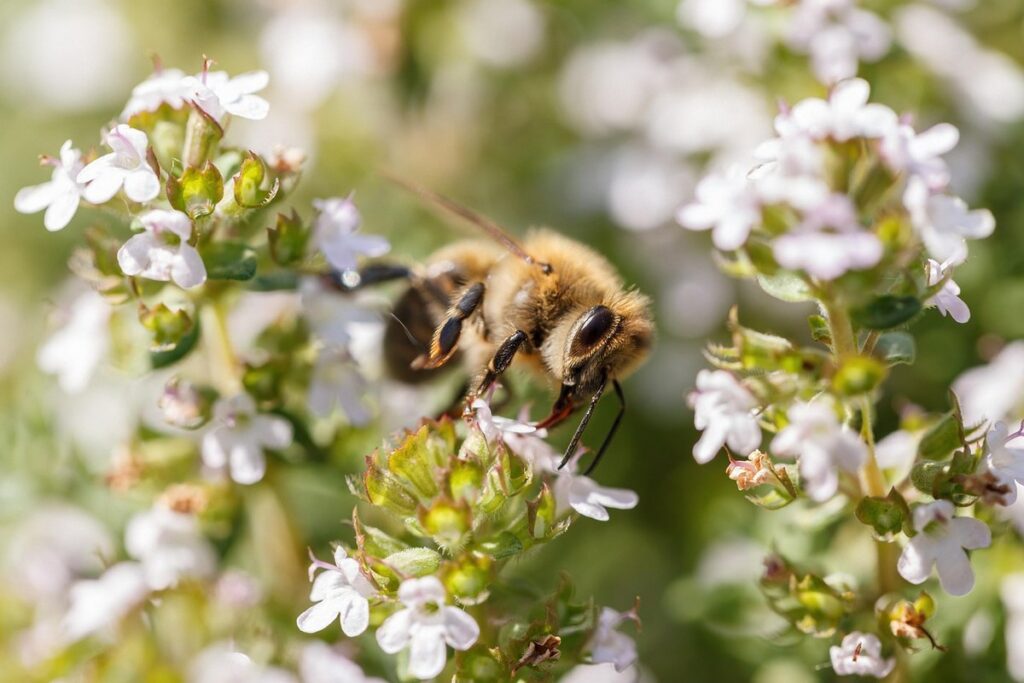
Incorporating thyme into garden designs can add depth, texture, and fragrance to outdoor spaces. One popular way to utilize thyme is by planting it in borders alongside other low-maintenance herbs like rosemary or oregano. This creates a visually appealing combination that also attracts pollinators.
Thyme can also thrive in containers, making it an excellent choice for small gardens or balcony spaces. When selecting containers, choose ones with good drainage to prevent root rot and ensure the thyme’s roots stay healthy. A well-draining potting mix is essential as well. For a more dramatic effect, plant thyme as a groundcover, allowing its stems to spill over the edges of raised beds or walkways.
Consider the mature size of the thyme variety you’ve chosen when planning its placement in your garden. Some compact thymes can be pruned regularly to maintain a neat shape and prevent them from spreading too much. Others, like ‘Pink Chintz’ or ‘Elfin’, may require more space due to their sprawling habit.
When planting thyme as a groundcover, it’s best to choose varieties that have a moderate growth rate, such as ‘English Lavender Thyme’ or ‘Creeping Thyme’.
Conclusion: The Versatility of Thyme
Thyme’s adaptability is one of its most remarkable qualities. This herb can thrive in various conditions, from full sun to partial shade and well-drained soil to dry environments. Its versatility extends beyond growing requirements as it pairs well with a wide range of flavors – from sweet vegetables like carrots to savory meats such as lamb. Additionally, thyme is a valuable addition to various cuisines worldwide due to its numerous varieties, each offering distinct flavor profiles.
For instance, lemon thyme adds a bright and citrusy note to dishes, while the more robust flavor of English thyme works well in hearty soups and stews. Thyme’s culinary applications are not limited to savory dishes; it can also be used in sweet treats like baked goods and teas.
Frequently Asked Questions
Can I Grow Thyme in Containers if My Garden Has Poor Soil?
Yes, thyme can thrive in containers even with poor soil as long as you provide good drainage and regular watering. Use a well-draining potting mix and fertilize regularly to promote healthy growth.
How Do I Identify the Best Thyme Variety for Companion Planting?
When choosing a thyme variety for companion planting, consider factors like pest-repellent properties, growth habits, and fragrance intensity. For example, English thyme is known to repel pests that target vegetables, making it an excellent choice for gardens.
Can I Use Thyme as a Groundcover in Shaded Areas?
While thyme can tolerate some shade, it generally requires at least 4-6 hours of direct sunlight per day to thrive. In shaded areas, consider growing creeping thyme or other low-growing varieties that can handle more shade.
Is It Possible to Grow Thyme Indoors Year-Round Without Losing Its Flavor and Aroma?
Yes, you can grow thyme indoors year-round by providing the right conditions: plenty of sunlight (using grow lights if necessary), adequate watering, and fertilizing regularly. Keep in mind that indoor-grown thyme may not develop as strong a flavor or aroma as outdoor-grown varieties.
Can I Use Thyme Oil Instead of Fresh or Dried Thyme for Cooking?
Yes, you can use thyme oil as a substitute for fresh or dried thyme in cooking, but be aware that the flavor and aroma profiles will differ. Thyme oil is more concentrated than fresh or dried thyme, so use it sparingly to avoid overpowering your dishes.
