
As a gardener or orchard owner, you’re constantly looking for ways to improve your crop yields while reducing reliance on pesticides and other chemicals. One powerful technique is tree grafting fruit, which allows you to combine desirable traits in trees such as increased disease resistance and higher yields. By grafting a variety of fruit onto a rootstock with natural resilience, you can create healthier and more productive trees that thrive in challenging conditions. For commercial orchards and home gardeners alike, this method is essential for maximizing harvests while minimizing waste and environmental impact. This article will walk you through the basics of tree grafting fruit and provide guidance on how to successfully combine different varieties to achieve your desired outcome: growing robust and disease-resistant trees that flourish in your garden or orchard.
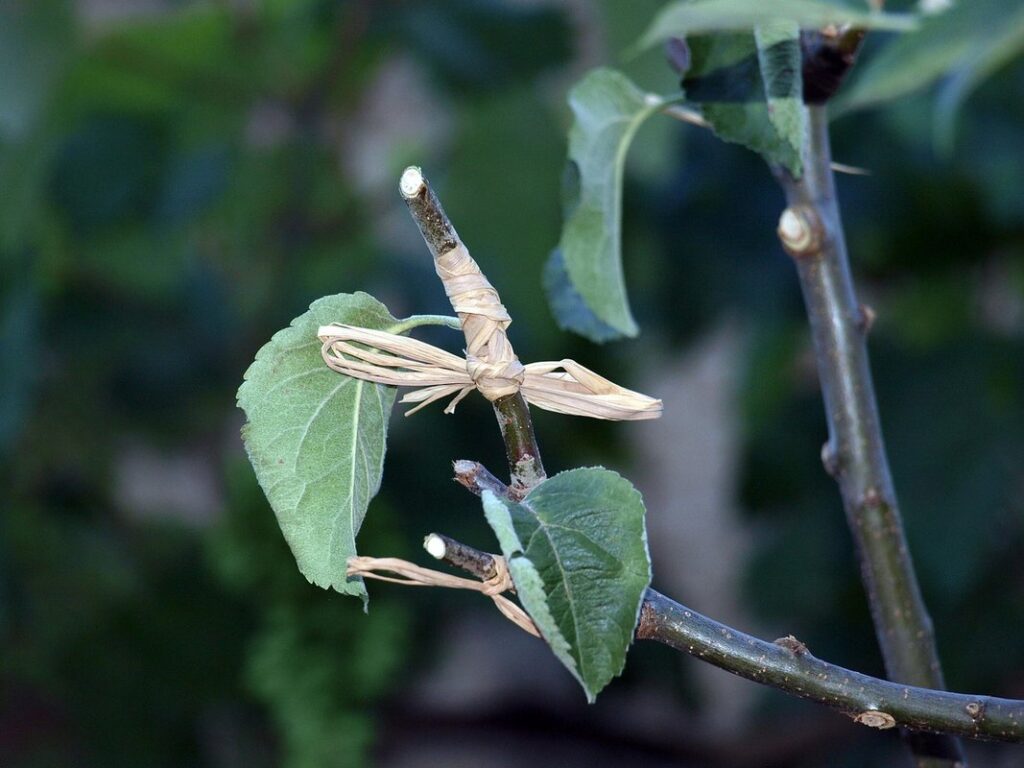
Understanding Tree Grafting Basics
To get started, it’s essential to understand the fundamental principles of tree grafting, including how to choose compatible rootstocks and scions. This foundation will help you successfully combine two trees into one.
What is Tree Grafting?
Tree grafting is a horticultural technique where a stem section from one tree (the scion) is joined to the root system of another tree (the rootstock). This process allows for the combination of desirable traits, such as improved fruit quality, enhanced disease resistance, and increased adaptability. By uniting these two components, growers can create trees that are better equipped to thrive in various environments.
For instance, a scion from a renowned apple variety might be grafted onto a rootstock known for its resilience to drought conditions or ability to tolerate poor soil quality. This fusion enables the tree to inherit the beneficial traits of both parent plants, resulting in a more robust and productive fruit-bearing tree.
The technique relies on a precise match between the scion and rootstock, taking into account factors like climate, soil type, and disease susceptibility. Careful selection is crucial to ensure that the resulting tree can perform optimally in its intended environment.
Importance of Tree Grafting in Fruit Production
Tree grafting plays a vital role in commercial orchards by allowing farmers to produce high-quality fruits with specific characteristics. By combining scions from superior cultivars with rootstocks tailored to local conditions, farmers can significantly boost yields and reduce disease susceptibility. For instance, grafting a scion from a renowned apple variety like ‘Red Delicious’ onto a rootstock that’s resistant to fire blight can result in healthier trees that produce more fruit.
This approach is especially crucial for regions with challenging climate or soil conditions. In areas prone to frost, farmers can choose rootstocks with cold hardiness, ensuring their trees survive and thrive despite the harsh weather. Similarly, in regions with poor soil quality, grafting allows farmers to use rootstocks that are well-suited to the local soil type, reducing the risk of nutrient deficiencies.
By controlling both the rootstock and scion varieties, farmers can also minimize pests and diseases that affect specific cultivars. This targeted approach enables them to grow a diverse range of fruits with improved quality and consistency. By mastering grafting techniques, commercial orchardists can optimize their yields while maintaining environmental sustainability.
Choosing the Right Rootstock and Scion
When selecting a rootstock, consider its disease resistance, hardiness, and compatibility with your chosen scion variety. A well-matched combination is crucial for a healthy and productive tree.
Factors Influencing Rootstock Selection
When selecting a rootstock, several key factors come into play to ensure the long-term health and productivity of your grafted tree. One crucial consideration is climate tolerance – will the rootstock thrive in the temperature fluctuations and precipitation patterns of your region? For example, ‘MM.111’ is well-suited for cooler climates with moderate winters, while ‘M.9’ excels in warmer conditions.
Another important factor is soil adaptability: some rootstocks can handle a wide range of soil types, while others require more specific conditions. ‘Troyer’, for instance, prefers slightly acidic soils and full sun.
Pest and disease resistance are also essential – certain rootstocks have natural defenses against common fruit tree pests like aphids or diseases like fire blight. ‘M.9’ is known to be relatively resistant to woolly apple aphid, while ‘MM.111’ has shown some tolerance to powdery mildew.
When choosing a rootstock, it’s essential to match the specific needs of your climate and soil with the characteristics of the rootstock. This may involve consulting local nurseries or grafting experts for guidance on selecting the best rootstock for your specific conditions.
Considerations for Scion Selection
When selecting a scion for grafting, consider factors that will ultimately impact the quality and resilience of the grafted tree. Desired fruit quality is a primary concern – do you want to grow apples with a sweet-tart flavor or plums with a succulent texture? Some scions are bred specifically for their disease resistance, which can be crucial in areas prone to fungal infections like powdery mildew or fire blight.
Adaptation to local conditions is also essential. Consider the chilling hours required by your chosen fruit variety – some trees need prolonged periods of cold weather to break dormancy, while others can thrive in warmer climates. Sun exposure and pollination requirements are other critical factors: ensure that your scion will receive sufficient sunlight and provide for adequate cross-pollination if necessary.
To make informed decisions, research the specific needs of your chosen fruit variety. Look up its growth habits, climate tolerance, and pest/disease susceptibility to determine whether it’s well-suited to your local environment. This upfront consideration will help you avoid potential problems down the line and ensure a successful grafting outcome.
Grafting Techniques and Tools
To master tree grafting, you’ll need to learn various techniques for joining different plant materials together, such as whip-and-tongue grafting. This section covers the essential tools and methods used in these delicate processes.
Whip-and-Tongue Grafting Method
To perform a whip-and-tongue graft, you need to make precise cuts on both the rootstock and scion. The rootstock is cut at an angle, typically 1/4 inch above a bud eye, creating a sloping surface known as the “tongue.” This tongue allows for better union between the two plant parts.
On the scion, you’ll make a corresponding cut, typically in a vertical direction, to match the shape of the tongue. The length and width of these cuts vary depending on the specific grafting technique being used. Ensure that both cuts are smooth and free from any debris or rough edges, as this will help prevent complications during the healing process.
Once you’ve made the necessary cuts, carefully align the rootstock and scion, ensuring the tongue fits snugly onto the scion’s vertical cut. Secure the union with tape or twine, taking care not to constrict the area too tightly.
A common mistake when using this method is cutting the rootstock at an angle that’s too shallow. This can lead to the scion detaching from the rootstock over time due to uneven healing pressure. To avoid this issue, aim for a tongue with a more pronounced slope, allowing for better stability and a stronger union between the two plant parts.
Cleft Grafting Method
Cleft grafting is a technique used for larger caliper trees, where the rootstock is cut to accommodate the scion. This method involves making a wedge-shaped incision into the rootstock, removing a section that will allow the scion to fit snugly in place.
To perform a cleft graft, you’ll need a sharp, sterile knife or pruning saw and a clear understanding of the tree’s anatomy. The cut should be made at an angle, with the top of the wedge facing towards the scion. This allows for a secure fit and promotes healthy healing. It’s essential to make precise cuts, as a poorly angled incision can lead to graft failure.
In this method, the rootstock is effectively “cleaved” to allow the scion to be inserted. The cut surface should be smooth and free of any debris or damage that might impede healing. A small amount of rooting hormone may be applied to the cut area to promote cell growth and ensure a strong bond between the two trees.
When performing cleft grafts, it’s crucial to work carefully and deliberately to avoid damaging either the rootstock or scion. This technique requires patience and attention to detail, but with practice, you’ll develop the skills needed for successful tree grafting.
Post-Grafting Care and Management
Now that you’ve successfully grafted your tree, it’s essential to provide proper care to ensure a healthy and thriving plant. This involves regular watering, pruning, and monitoring for signs of stress or disease.
Aftercare for Grafted Trees
Watering is the most critical aspect of aftercare for grafted trees. You should ensure the soil remains consistently moist but not waterlogged during the first year after grafting. This means checking the soil daily, especially during hot or dry spells. A good rule of thumb is to provide about 1 inch of water per week through rainfall or irrigation.
Fertilization is also essential for promoting healthy growth and graft take. Use a balanced, fruit-tree specific fertilizer (5-10-5 NPK) according to the manufacturer’s instructions, usually once in spring and again in summer. Avoid over-fertilizing, as this can cause more harm than good.
Pruning is another critical step in aftercare. Remove any weak or damaged growth that may have occurred during the grafting process. This will help redirect the tree’s energy towards producing a strong framework rather than succumbing to disease or pests. For young grafted trees, prune back the scion by about one-third to half its height to encourage bushy growth and reduce stress.
Monitor your grafted trees regularly for signs of pests or diseases, such as aphids, whiteflies, or fungal infections.
Managing Stress in Grafted Trees
To mitigate stress in grafted trees, you must prioritize soil quality. Ensure the graft union is above the root flare to prevent waterlogged conditions and root rot. Monitor soil moisture levels closely, as overwatering can be detrimental during the first year after grafting.
Water your grafted tree deeply once or twice a week, depending on climate conditions. However, avoid frequent shallow watering, which can cause stress. Mulching around the base of the tree helps retain moisture and suppress weeds, further reducing stress.
Nutrient availability is also crucial. Young grafted trees require a balanced fertilizer application to support vigorous growth. Follow the recommended dosages for your specific fertilizer product, taking care not to overfertilize. Typically, a 10-10-10 NPK ratio works well for fruiting tree varieties during their first year after grafting.
Keep in mind that climate conditions can impact nutrient uptake and stress levels. For example, trees grown in full sun may require more frequent watering than those receiving partial shade. Be mindful of these factors when managing your grafted tree’s care routine to minimize stress and promote healthy development.
Benefits of Tree Grafting for Home Gardeners
For home gardeners, tree grafting offers a unique advantage: the ability to combine desirable traits from different fruit trees into a single, high-yielding plant that thrives in your climate.
Advantages of Grafted Fruit Trees
Grafted fruit trees offer several advantages over seed-grown trees. One significant benefit is earlier fruit production. Grafting allows you to combine a desirable scion variety with a vigorous and disease-resistant rootstock, resulting in a tree that produces fruit up to two years sooner than its seed-grown counterpart.
Improved disease resistance is another advantage of grafted fruit trees. By grafting onto a rootstock with built-in immunity to certain diseases, you can significantly reduce the risk of infection and protect your tree’s health. For example, grafting a delicate apple variety onto a robust rootstock like M9 can help prevent powdery mildew and scab.
Grafted trees also tend to be more adaptable to local conditions. By selecting a rootstock that thrives in your specific climate and soil type, you can create a tree that is better equipped to handle environmental stresses. This is particularly important for home gardeners who may not have the space or resources to cultivate multiple varieties of fruit trees.
In summary, grafted fruit trees offer a range of benefits that make them an attractive choice for home gardeners. By combining the best characteristics of different varieties, you can create a tree that produces high-quality fruit while minimizing the risk of disease and environmental stress.
Tips for Successful Grafting at Home
To succeed at tree grafting at home, start by preparing a clean and sterile workspace. This involves washing your hands thoroughly before handling tools and plants. You’ll also need to sterilize your grafting knife and other equipment using a mixture of bleach and water or with an autoclave. Next, choose healthy scions from mature trees that have produced well in the past. Select roots that are vigorous and resistant to disease.
When it comes to selecting rootstocks, consider factors such as climate, soil type, and disease resistance. Some popular rootstocks for home gardeners include ‘Nemagard’ and ‘Starkspur’. It’s essential to handle the scion and rootstock carefully to avoid damaging their delicate tissues.
During grafting, work quickly and efficiently to minimize tissue damage. Use a gentle touch when joining the scion to the rootstock, and make sure to secure it firmly in place with grafting tape or twine. After completing the graft, water the tree thoroughly and provide adequate humidity to promote healing.
Challenges and Future Directions
As you continue to master the art of tree grafting fruit, let’s discuss some common challenges you may face, along with potential solutions for overcoming them.
Common Challenges Faced by Tree Grafters
Scion failure is a common challenge faced by tree grafters. This can occur when the scion does not thrive due to factors such as inadequate rootstock-scion compatibility, insufficient scion wood quality, or poor grafting technique. Tree grafters must carefully select scions that are well-suited to their rootstocks and environment.
Another challenge is rootstock mismatch. Using a rootstock that is not compatible with the desired fruit variety can lead to issues such as reduced yields, delayed maturity, or increased disease susceptibility. For example, using a vigorous rootstock on a delicate scion can result in over-vigorous growth that strains the plant’s resources.
Disease susceptibility is also a significant concern for tree grafters. Grafted trees can be more prone to diseases like root rot, crown gall, and fire blight due to their increased vulnerability at graft union sites. To mitigate these risks, grafters should prioritize proper sanitation, sterilization of tools, and post-grafting care that promotes healthy tree development.
Proper selection and preparation of scions and rootstocks can go a long way in minimizing the risk of scion failure, rootstock mismatch, and disease susceptibility.
Emerging Trends in Tree Grafting Research
Researchers are exploring innovative approaches to tree grafting using advanced technologies like tissue culture and biotechnology. This shift aims to streamline graft production, reduce labor costs, and improve overall efficiency. For instance, tissue culture allows for the mass production of healthy rootstocks, which can be used in various grafting combinations. Biotechnology is also being leveraged to develop disease-resistant scions, reducing the need for pesticides and other chemicals.
Some studies are focusing on the use of micropropagation to produce uniform, high-quality scions. This involves taking a small tissue sample from a mature tree and using it to grow multiple genetically identical scions. This approach has shown promise in reducing grafting failure rates and improving fruit quality.
Researchers are also investigating the potential of gene editing techniques, such as CRISPR, to introduce desirable traits into scion varieties. For example, scientists have successfully used CRISPR to engineer disease-resistant apples and pears. These advancements hold great promise for future tree grafting research, enabling growers to produce healthier, more productive trees with improved fruit quality.
Frequently Asked Questions
How long does it take for grafted trees to produce fruit after grafting?
Grafted trees can start producing fruit within 1-3 years after grafting, depending on factors like the scion variety, rootstock quality, and growing conditions. Proper aftercare and management during this period are crucial for optimal tree health and productivity.
Can I graft multiple varieties of fruit onto the same rootstock?
Yes, it’s possible to graft multiple varieties onto a single rootstock, but it requires careful consideration of compatibility between scion and rootstock. Some popular combinations include pairing disease-resistant rootstocks with high-yielding scions or matching climate-tolerant rootstocks with sensitive scions.
How do I know if my grafted tree is under stress?
Stressed grafted trees may exhibit signs like yellowing leaves, reduced growth rates, or increased susceptibility to pests and diseases. Regular monitoring of soil quality, climate conditions, and nutrient availability can help identify potential issues early on, allowing for corrective measures to be taken.
Can I use grafting as a method to propagate rare or heritage fruit varieties?
Yes, tree grafting is an effective way to preserve and propagate rare or heritage fruit varieties by combining their desirable traits with more robust rootstocks. This technique allows home gardeners and commercial orchardists to cultivate unique and valuable cultivars that might otherwise be lost.
What if my grafted tree doesn’t take? What are the most common reasons for graft failure?
Graft failure can occur due to various factors, including improper grafting techniques, inadequate aftercare, or incompatibility between scion and rootstock. Common challenges include scion failure, rootstock mismatch, and disease susceptibility. Understanding these potential issues and taking corrective measures can improve grafting success rates and ensure optimal tree health.
