
Variable rate irrigation systems are changing the way farmers manage water resources on their land. By applying the right amount of water to specific areas, you can significantly reduce waste and make the most of every drop. This approach not only conserves water but also helps minimize the environmental impact associated with over-irrigation, such as nutrient runoff and soil erosion. But that’s not all – variable rate irrigation systems are designed to boost crop yields by ensuring each plant receives exactly what it needs, when it needs it. In this article, we’ll explore how precision agriculture techniques and data management analytics come together in these systems, increasing water efficiency and reducing the strain on natural resources while improving crop health and productivity.
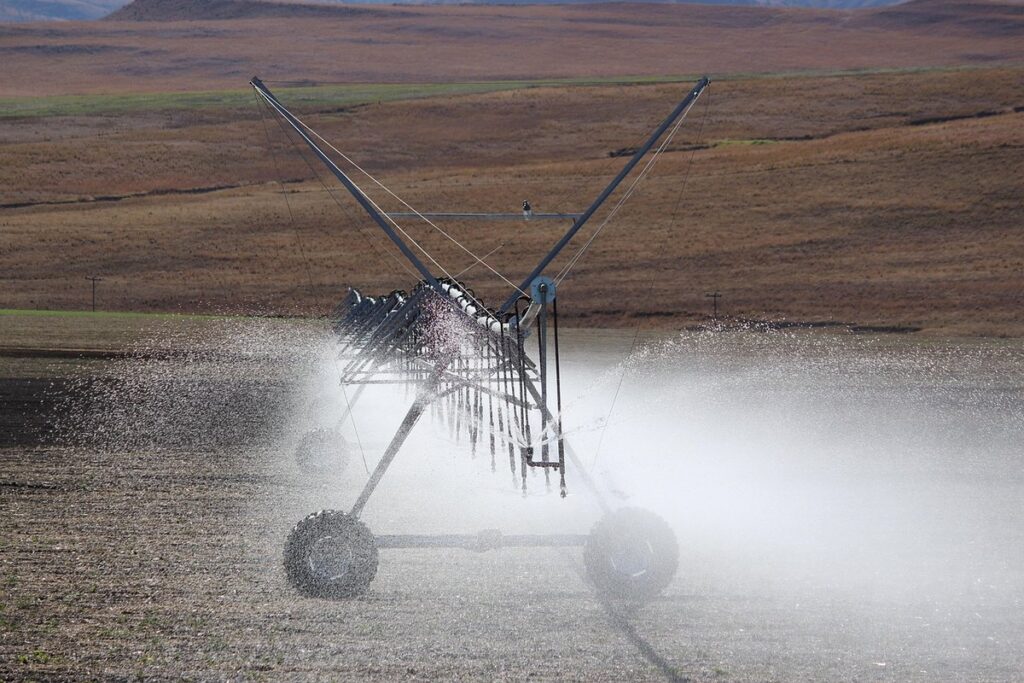
Understanding Variable Rate Irrigation
Variable rate irrigation uses a combination of sensors and mapping technology to apply exactly the right amount of water, where it’s needed most. This approach allows farmers to optimize water use and reduce waste.
Benefits of VRI Systems
Implementing variable rate irrigation (VRI) systems offers numerous benefits for farmers and agricultural producers. One of the primary advantages is increased water efficiency, allowing crops to receive exactly the right amount of moisture at the right time. This targeted approach reduces waste and minimizes runoff, resulting in significant savings on water costs.
By optimizing water use, VRI systems also help reduce the environmental impact associated with traditional irrigation methods. Over-watering can lead to soil erosion, nutrient depletion, and increased energy consumption for pumping and treatment. In contrast, VRI systems minimize these risks by adjusting flow rates based on real-time data from sensors and satellite imaging.
Furthermore, VRI systems enable farmers to adjust their irrigation schedules in response to changing weather conditions, soil type, and crop requirements. This adaptability promotes healthier plant growth, leading to improved yields and reduced pest and disease pressures. By adopting VRI technology, agricultural producers can take a proactive approach to water management, ensuring the long-term sustainability of their operations while minimizing their ecological footprint.
Common Challenges with Traditional Irrigation Methods
Traditional irrigation methods often struggle to provide optimal water distribution, leading to common challenges such as overwatering and underwatering. Overwatering can result from relying on a fixed rate of irrigation, which fails to account for varying soil types, crop water requirements, or weather conditions. This can lead to wasted water, nutrient runoff, and reduced yields.
Underwatering, on the other hand, occurs when crops don’t receive enough water, particularly during critical growth stages. This can be due to inadequate irrigation infrastructure, human error, or inaccurate soil moisture monitoring. Underwatered crops may exhibit signs of stress, including yellowing leaves, stunted growth, and reduced fruiting.
VRI systems address these challenges by providing real-time data on soil moisture levels, temperature, and other factors that influence crop water needs. This information is used to adjust irrigation rates, ensuring that crops receive the right amount of water at the right time. By optimizing water use, VRI can help farmers minimize overwatering and underwatering, leading to improved yields, reduced water waste, and a more sustainable agricultural practice.
Historical Context: Evolution of Irrigation Systems
The concept of irrigation has been around for thousands of years, with ancient civilizations such as the Egyptians and Mesopotamians using simple canals and ditches to bring water to their crops. The ancient Greeks and Romans made significant advancements, developing more sophisticated systems that included aqueducts and pipelines. However, these early irrigation systems were often inefficient and prone to waste.
The Industrial Revolution brought about a new era of innovation in irrigation technology, with the introduction of steam-powered pumps and later, electric motors. This led to the development of modern center-pivot irrigation systems, which are still widely used today. However, as agriculture became more mechanized and water demands increased, it became clear that traditional irrigation methods were not meeting the needs of modern farming.
In the mid-20th century, the first attempts at variable rate irrigation (VRI) began to emerge, with the development of early computer-controlled systems that could adjust water application rates based on soil type and crop characteristics. These early VRI systems laid the groundwork for the more advanced technologies we have today, which use a range of sensors and data analytics to optimize water use and minimize waste.
Fundamentals of Variable Rate Irrigation Technology
Variable rate irrigation technology relies on a solid foundation of principles and concepts, which we’ll break down into its core components to help you understand how it works. Understanding these fundamentals is crucial for implementing VRI successfully.
Sensor-Based Monitoring and Control
Sensor-based monitoring and control systems are a crucial component of variable rate irrigation technology. These systems use various types of sensors to gather data on soil moisture levels, crop water requirements, and weather conditions. Some common types of sensors used in VRI systems include soil moisture probes, temperature sensors, and precipitation gauges.
The data collected from these sensors is then transmitted to a central control unit, which adjusts the irrigation system‘s water application rates accordingly. For example, if the soil moisture probe detects that the soil is already saturated with water, the control unit will reduce or halt irrigation to prevent waste and runoff. Conversely, if the sensor indicates low soil moisture levels, the system will increase the water flow rate to meet the crop’s needs.
Effective sensor placement is critical for accurate data collection and optimal water application rates. Sensors should be installed in areas that represent the average conditions of the field, such as near crop rows or at intervals across the landscape. By leveraging real-time sensor data, VRI systems can optimize water use, reduce waste, and promote healthy crop growth.
Precision Agriculture Principles and Applications
Precision agriculture is a core principle underlying variable rate irrigation (VRI) technology. This approach involves tailoring agricultural practices to specific site conditions, leveraging real-time data analysis and sensor-based monitoring to inform decision-making. Site-specific management, for instance, allows farmers to adjust water application rates based on local topography, soil type, and crop requirements.
In VRI systems, precision agriculture principles are applied through the use of variable rate controllers that adjust water flow according to real-time data from sensors and GPS mapping. This enables farmers to optimize water use, reducing waste and runoff while minimizing over- or under-application. Real-time data analysis also helps farmers identify trends and patterns in crop growth, allowing for timely interventions and adjustments.
Real-world examples of precision agriculture in VRI include the use of satellite imagery to monitor crop health and soil moisture levels, and the deployment of automated irrigation systems that adjust water flow based on real-time weather forecasts. By embracing precision agriculture principles and applications, farmers can optimize their water use, improve crop yields, and reduce environmental impact – all key objectives of variable rate irrigation technology.
Data Management and Analytics for VRI Systems
Effective data management and analytics are crucial components of variable rate irrigation (VRI) systems. VRI relies on accurate and timely data to optimize water application rates, which requires robust data collection, storage, and visualization techniques. Data is collected from various sources, including soil moisture sensors, weather stations, and crop yield monitors.
To manage this data efficiently, many farmers and agricultural consultants use specialized software that can store, process, and visualize large datasets in real-time. For example, some popular VRI software platforms offer built-in data management tools, such as data logging, trending, and alerts for unusual patterns or anomalies. These features enable users to identify areas of improvement and make informed decisions about water application rates.
In addition to using specialized software, farmers can also implement simple strategies to enhance data management. For instance, they can set up regular data review sessions with their VRI system operators to discuss trends, challenges, and opportunities for improvement. This collaborative approach helps ensure that data is being used effectively to optimize water use and improve crop yields.
Implementing Variable Rate Irrigation on Farms and Ranches
So you’re ready to put variable rate irrigation into action on your farm or ranch, but where do you start? This section will cover the practical steps for implementing VRI systems.
Assessing Farm-Specific Needs and Conditions
When assessing your farm’s specific needs and conditions for implementing variable rate irrigation (VRI), it’s essential to consider several key factors. Begin by evaluating your soil type and its water-holding capacity. Different soils require varying levels of moisture, so understanding your soil’s unique characteristics will help you tailor your VRI system accordingly.
Next, assess the topography of your land. Hills, slopes, or uneven terrain can impact water distribution, making it essential to identify areas where water may accumulate or be diverted. For example, if you have a significant slope on one side of your field, you’ll need to ensure that your VRI system accounts for this factor.
Consider the crop types and their water requirements as well. Different crops demand varying levels of moisture, so understanding your specific crop needs will help you set up an effective VRI system. For instance, if you’re growing a drought-sensitive crop like tomatoes, you’ll need to prioritize water delivery in those areas.
Finally, examine your current irrigation infrastructure and determine what modifications or upgrades are needed for VRI implementation. This may involve upgrading existing pipes, installing new sensors, or integrating with other precision agriculture technologies.
Choosing the Right Equipment and Software for VRI
When selecting equipment and software for variable rate irrigation (VRI), farmers must consider their specific needs and farm conditions. The first step is to assess the type of crops being grown, soil characteristics, and topography. This information will help determine the required level of precision and accuracy for the VRI system.
Key considerations when choosing equipment include:
- Flow meters to accurately measure water flow rates
- Pressure sensors to monitor irrigation pressure and prevent damage to crops
- Soil moisture sensors to ensure optimal watering levels
- GPS guidance systems for precise application
Software options should also be carefully evaluated. Consider the following factors:
- Data management capabilities, such as storage and analysis of historical data
- Integration with existing farm equipment and software systems
- User-friendly interfaces for easy operation and monitoring
- Scalability to accommodate future expansion or changes in crop patterns
Training and Maintenance Requirements for VRI Systems
To ensure the optimal performance of VRI systems and minimize downtime, proper training and maintenance are crucial. This involves not only technical support but also ongoing education for farm staff to understand system operation and troubleshooting.
VRI equipment manufacturers often provide initial training sessions, which cover the basics of system setup, monitoring, and control. However, this is just the starting point. Ongoing maintenance requires regular software updates, sensor calibrations, and data review to optimize irrigation schedules.
In practice, farm staff should be familiar with common issues such as faulty sensors or incorrect calibration, which can lead to inefficient water use and crop damage. To avoid downtime, it’s essential to have a dedicated team member responsible for monitoring system performance and addressing any problems promptly.
A good maintenance routine also involves regular cleaning of sensors and nozzles to prevent clogging and ensure accurate moisture readings. Furthermore, data analysis is critical in identifying areas where adjustments are needed to optimize water use and minimize waste. By prioritizing training and maintenance, farmers can maximize the benefits of VRI systems and maintain a healthy, productive crop while optimizing their water resources.
Case Studies and Success Stories in Variable Rate Irrigation
Real farmers who have successfully implemented variable rate irrigation share their experiences, demonstrating its practical application and potential benefits. From increased yields to reduced water waste, you’ll see tangible results.
Real-World Examples of Water Savings and Yield Improvements
Farmers in California’s Central Valley have achieved significant water savings and yield improvements through variable rate irrigation. A 2019 study by the University of California, Davis, found that VRI systems reduced water consumption by an average of 30% across participating farms. One farm in particular, a 1,000-acre corn operation, reported a 45% reduction in water usage while maintaining yields.
In Texas, researchers at Texas A&M University implemented VRI on a 500-acre cotton farm, resulting in a 25% increase in yield and a 20% reduction in water use. The study attributed these improvements to the system’s ability to account for soil type, moisture levels, and crop stress in real-time.
In New Mexico, a rancher using VRI reported a significant decrease in water waste due to over-irrigation. By adjusting irrigation schedules based on changing weather patterns and soil conditions, he was able to allocate water more efficiently. His yield increased by 10%, while water consumption decreased by 15%. These case studies demonstrate the potential for variable rate irrigation to optimize water use and boost crop yields in a variety of agricultural settings.
Lessons Learned and Best Practices for Effective VRI Implementation
Effective implementation of variable rate irrigation (VRI) systems requires a thoughtful approach to ensure optimal water use and crop yields. A key takeaway from the case studies is the importance of thorough planning and assessment before installing VRI equipment. This includes evaluating farm-specific needs, soil types, and crop requirements to determine the most suitable VRI configuration.
When selecting VRI software and hardware, consider the compatibility and integration with existing farm infrastructure and data management systems. Regular training and maintenance are also essential to ensure that farmers can troubleshoot issues and make the most of their VRI system’s capabilities.
Some best practices for effective VRI implementation include:
• Conducting thorough soil moisture mapping to inform VRI system setup
• Implementing real-time monitoring and control to adjust irrigation schedules as needed
• Regularly reviewing and updating VRI system settings based on changing weather patterns or crop growth stages
By following these guidelines and staying committed to ongoing improvement, farmers can optimize their VRI systems for maximum water efficiency and crop productivity.
Economic and Environmental Benefits of Variable Rate Irrigation
Variable rate irrigation offers a significant reduction in water consumption, resulting from precise application rates tailored to specific crop needs. This approach also minimizes waste and runoff.
Cost Savings and Revenue Enhancements through Water Efficiency
Improved water efficiency is not just a boon for the environment; it also has significant economic benefits. By optimizing water use through variable rate irrigation (VRI), farmers can reduce their costs and boost revenue. For instance, a study found that implementing VRI systems resulted in water savings of up to 40% without compromising crop yields.
One key cost-saving area is reduced energy consumption. Traditional irrigation methods often rely on fixed-rate sprinkler systems, which spray water over large areas regardless of soil type or moisture levels. In contrast, VRI systems use sensor data to deliver targeted watering, eliminating unnecessary water and energy waste. This can lead to substantial savings on electricity bills.
To quantify the revenue enhancements, consider this: a 10% increase in crop yields translates to a 5-7% rise in revenue for farmers. By optimizing water use with VRI, farmers can achieve such yield increases while minimizing environmental impact. To maximize these benefits, it’s essential to choose an effective VRI system and properly calibrate its sensors to match the unique conditions of your farm. This requires careful planning and monitoring, but the payoff is well worth the effort.
Reduced Environmental Impact through Optimized Water Use
Reducing energy consumption is a direct result of optimized water use through VRI. By delivering exactly the right amount of water to each crop at the right time, farmers can minimize the need for pumping and other machinery that consumes energy. This reduction in energy usage also translates to lower greenhouse gas emissions, as fewer fossil fuels are burned to power these systems.
Water waste is another significant environmental benefit of VRI. Traditional irrigation methods often rely on blanket application rates, which can result in overspray and runoff. In contrast, VRI’s precision approach ensures that water is delivered directly to the roots of the plants, minimizing evaporation and soil compaction. This not only conserves water but also reduces the risk of nutrient leaching into nearby waterways.
To maximize environmental benefits, farmers should consider implementing VRI in conjunction with other conservation practices, such as crop rotation and cover cropping. By doing so, they can create a more sustainable agricultural system that minimizes its impact on local ecosystems while maintaining productivity and yields. Regular monitoring and maintenance of the VRI system are also crucial to ensure optimal performance and continued water savings.
Future Directions in Variable Rate Irrigation Research and Development
As we look ahead, several emerging technologies have the potential to revolutionize variable rate irrigation systems, improving efficiency and reducing environmental impact. Next-generation precision agriculture tools are on the horizon.
Emerging Trends and Technologies for Improved Efficiency
Machine learning algorithms are being integrated into VRI systems to optimize water distribution and adjust irrigation schedules based on real-time weather forecasts, soil moisture levels, and crop growth stages. This enables farmers to respond more effectively to changing environmental conditions and minimize water waste.
Advanced sensor technologies, such as satellite imaging and drone-mounted sensors, are providing high-resolution data on crop health and water usage patterns. This information is used to create detailed maps of soil moisture levels, allowing for targeted irrigation and reducing overwatering.
Other emerging trends include the use of precision agriculture principles, like zone mapping and variable rate fertilization, in conjunction with VRI systems. These integrated approaches aim to maximize yields while minimizing environmental impact. Some researchers are also exploring the potential of using AI-powered decision support tools to help farmers optimize their irrigation strategies and adapt to changing weather patterns.
These advancements have the potential to significantly improve the efficiency and effectiveness of VRI systems, enabling farmers to make data-driven decisions and optimize water use in real-time.
Potential Applications Beyond Agriculture and Horticulture
Beyond its applications in agriculture and horticulture, variable rate irrigation (VRI) has significant potential for use in urban landscapes. Municipalities can implement VRI systems to optimize water distribution in parks, public spaces, and green roofs, reducing evaporation and runoff while maintaining aesthetic appeal. For instance, a city might install sensors to monitor soil moisture levels under a large public lawn, adjusting irrigation schedules accordingly.
Industrial processes also stand to benefit from VRI technology. Water-intensive manufacturing facilities can incorporate VRI systems to reduce water consumption in cooling towers, boilers, and other equipment. This not only conserves resources but also helps minimize the environmental impact associated with wastewater disposal. Some industries, such as textile production, rely heavily on water for dyeing and processing fabrics.
Researchers are exploring ways to integrate VRI technology into these new areas, including developing sensors that can accurately measure soil moisture levels in dense urban environments or optimizing irrigation schedules based on real-time weather data. By expanding the scope of VRI applications, we can unlock new opportunities for water conservation across various sectors, ultimately contributing to a more sustainable future.
Frequently Asked Questions
Can I implement variable rate irrigation on small-scale farms or in areas with limited water resources?
Yes. Variable rate irrigation systems can be designed and implemented to accommodate smaller farms or areas with limited water resources, by optimizing water application rates based on soil type, crop water requirements, and other factors.
How do I know if my current irrigation system is already using some form of variable rate technology, even if it’s not explicitly labeled as VRI?
Many modern irrigation controllers and sensors can provide basic forms of variable rate control. Check your system’s documentation or contact the manufacturer to determine if any advanced features like soil moisture monitoring or weather-based adjustments are available.
What happens when there is a power outage or equipment failure during peak water demand, and how do I prepare for such scenarios?
VRI systems often have built-in backup power sources or redundant sensors to minimize downtime. Consider investing in solar-powered controllers or battery backups to ensure continued operation during extended power outages.
Can variable rate irrigation be used with existing crop management software and equipment, or are specialized VRI systems required?
Many leading crop management platforms and software solutions already integrate with VRI systems, allowing you to leverage your existing infrastructure. However, specific compatibility will depend on the vendor and system specifications.

