Raising Katahdin sheep can be an attractive option for small-scale farmers and beginners looking to diversify their livestock operations. These hardy, adaptable animals are well-suited to a variety of management systems and environments, making them an ideal choice for those new to sheep farming. Originally developed in the 1940s, the Katahdin breed has been bred specifically for its high-quality wool and rapid growth rate, with some individuals reaching market weight in just six months. As you’ll learn, one of the key advantages of raising Katahdins is their ability to thrive on pasture alone, reducing feed costs and making them a more sustainable choice for small-scale farmers. By the end of this article, you’ll be able to understand the history and characteristics of Katahdin sheep and make an informed decision about whether they’re right for your farm or homestead.
History and Origin of Katahdin Sheep
Katahdin sheep have a rich history that spans over six decades, originating from Maine’s rugged landscape to become one of the world’s most popular breeds. Their development is a fascinating story worth exploring further.
Early Development in North America
In 1916, John and Helen Mackenzie introduced a group of Rambouillet ewes from Canada to their farm in Maine. These early imports were instrumental in laying the foundation for the development of the Katahdin sheep breed in North America. The Mackenzies crossed these Rambouillets with native Longwool sheep, resulting in offspring that combined the hardiness and adaptability of the local breed with the fine wool and improved fertility of the Rambouillet.
This initial breeding program was followed by further introductions of other breeds, including the Lincoln and Montadale. Breeders selectively bred these animals to emphasize desirable traits such as ease of care, strong mothering ability, and high-quality fleece. The Katahdin breed began to take shape, with a focus on creating a hardy, low-maintenance sheep that could thrive in the rugged environments characteristic of North America.
As the breed continued to evolve, early pioneers like the Mackenzies played a crucial role in shaping its development. Their dedication and expertise helped establish the foundation for the Katahdin sheep we know today – a testament to the power of careful breeding and selection.
Key Breeders and Their Contributions
The development of the modern Katahdin breed can be attributed to several influential breeders who introduced key innovations and improvements. One notable breeder was Paul Knowlton, who founded the Katahdin Sheep Company in 1966 and played a crucial role in establishing the breed’s foundation flock. Knowlton’s efforts led to the creation of the first registered Katahdin ram, which served as a model for future breeding programs.
Another significant contributor was John Keller, who developed the first Katahdin ewe lambs specifically designed for meat production. Keller’s innovative approach focused on selecting sheep with desirable traits such as high fertility and rapid growth rates. His work laid the groundwork for the breed’s widespread adoption in the meat industry.
The introduction of genetic diversity through cross-breeding programs also contributed to the modern Katahdin breed’s success. Breeders like Robert Rose and his team at the University of Maine developed new lines of Katahdin sheep with improved hardiness, fertility, and disease resistance. Their research and breeding efforts have helped establish the Katahdin as a reliable choice for farmers seeking a versatile and productive flock.
Characteristics and Traits of Katahdin Sheep
Katahdin sheep are prized for their hardiness, adaptability, and unique characteristics that set them apart from other breeds. Let’s take a closer look at what makes these incredible animals tick.
Body Type and Size
Katahdin sheep are known for their lean and agile physique, which is a result of selective breeding to emphasize hardiness and efficiency. On average, mature Katahdin ewes typically weigh between 90-120 pounds (40-54 kg) and stand approximately 16-18 inches (40-45 cm) tall at the shoulder. This compact size, combined with their well-muscled bodies, makes them ideal for small-scale farming operations.
In comparison to other breeds, Katahdins tend to have less muscling in their hindquarters compared to some other breeds. However, this is not a disadvantage, as it allows them to maintain excellent mobility and agility in rugged terrain. Their body type also enables them to excel in hot and humid climates, where excessive heat can be detrimental to livestock health.
When evaluating Katahdin sheep, look for ewes that have well-defined muscles throughout their legs and shoulders, with a moderate amount of bone density. Avoid those that appear excessively thin or underweight, as this may indicate underlying health issues. By selecting Katahdins with the right body type, you can optimize your flock’s overall performance and productivity.
Coat Colors and Patterns
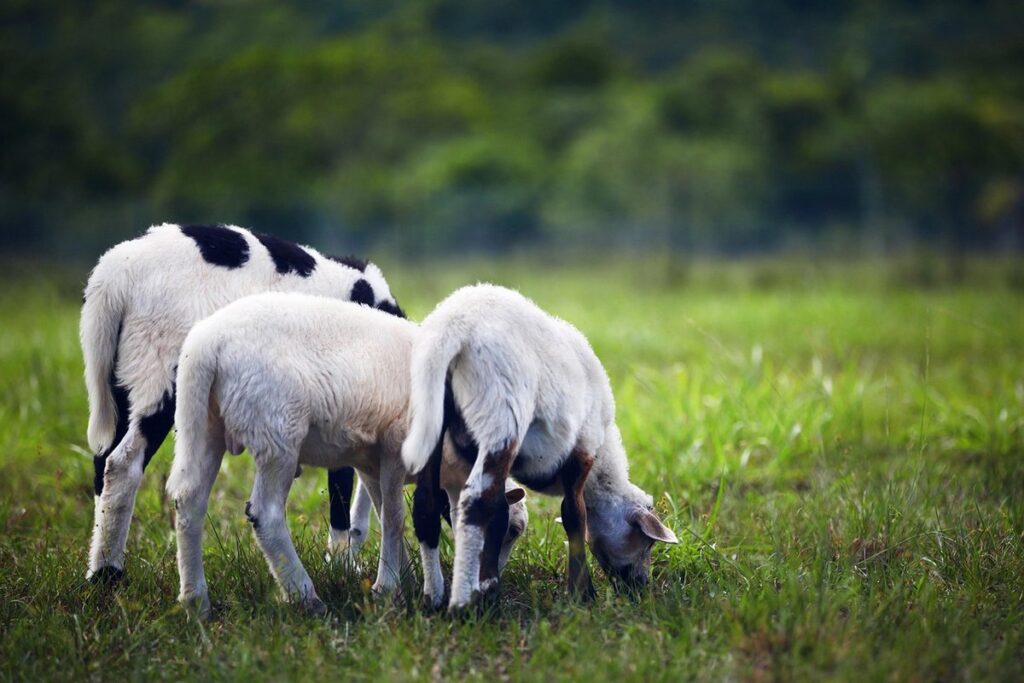
Katahdin sheep are known for their unique and varied coat colors and patterns. The breed’s genetics allow for a wide range of color expression, including solid colors like black, white, gray, and brown, as well as various shades of tan and roan.
Breeders select for desirable traits by focusing on specific genes that control color production. For example, the agouti gene is responsible for creating banding or mottling patterns in the coat. When two Katahdin sheep with the agouti gene are bred together, their offspring often display this characteristic pattern.
The genetics of coat color and pattern are complex, involving multiple genes interacting to produce a specific outcome. Breeders must consider these interactions when selecting sires and dams for breeding programs. By doing so, they can achieve consistent results in terms of desired traits.
Some common patterns found in Katahdin sheep include:
- Mottled or “dappled” effect, often seen in gray or brown sheep
- Banding or striped pattern, typically on the legs, face, and belly
- White markings, such as socks or blaze faces
- Tan points, where tan color appears on the face, legs, or belly of a dark-coated sheep
Advantages of Raising Katahdin Sheep
One of the most significant benefits of raising Katahdin sheep is their incredible hardiness, allowing them to thrive on a wide range of forage sources. They’re also relatively low-maintenance and easy to care for.
Easier Care and Handling
Katahdin sheep are renowned for their exceptional hardiness and ability to thrive in a variety of environments. This resilience is due in part to their robust immune system, which enables them to resist many common diseases that affect other breeds. As a result, Katahdins require less frequent veterinary care and vaccinations, making them an attractive choice for small-scale farmers or those new to raising sheep.
One key advantage of raising Katahdins is their ease of handling. They are known for their calm temperament and gentle nature, which makes them relatively easy to manage, even for inexperienced farmers. This characteristic also allows Katahdins to be handled by a single person, reducing the need for additional labor or equipment. Additionally, their small size and agility make them well-suited for grazing in tight spaces, such as smaller pastures or rotational grazing systems.
In comparison to other breeds, Katahdins have fewer specific care requirements, which can help reduce costs and minimize logistical challenges for farmers. For example, they are less prone to parasite infestations, which means that farmers may not need to use expensive deworming medications. By choosing to raise Katahdin sheep, farmers can enjoy a more straightforward and efficient management process, freeing up resources for other aspects of their operation.
High-Quality Wool and Meat Production
Katahdin sheep are renowned for their exceptional wool quality, with fibers known for their fineness, softness, and strength. When raised on pasture or in a rotational grazing system, Katahdins also produce high-quality meat that is tender, lean, and flavorful. The breed’s ability to thrive in various environments and adapt to different management systems is a significant factor contributing to the excellence of their wool and meat.
The quality of Katahdin wool can be attributed to several factors, including their dense, compact fleece and high fiber density. This makes their wool suitable for a range of applications, from knitting and spinning yarns to producing high-quality carpets and rugs. In addition, the breed’s ability to produce a moderate amount of wool (typically 6-8 pounds per year) ensures that it is not only abundant but also highly prized by spinners and weavers.
When raised on pasture or in a rotational grazing system, Katahdins develop their characteristic lean meat profile. Their diet consists mainly of grasses, which allows them to build up a store of omega-3 fatty acids and other beneficial nutrients. As a result, the meat is tender, juicy, and packed with flavor – making it an excellent choice for consumers seeking high-quality lamb or mutton products.
Breeding and Selection Programs for Katahdin Sheep
If you’re planning to raise Katahdins, understanding their breeding and selection programs is crucial to choosing healthy animals that meet your needs. We’ll look at how these programs work and what to consider when selecting a flock.
Breed Improvement Objectives
When developing breeding and selection programs for Katahdin sheep, breeders focus on enhancing desirable traits to improve overall performance. A primary objective is to increase fertility rates among ewes. This involves selecting dams with high reproductive efficiency and sires that can pass on their genetic traits effectively. Breeders also aim to boost growth rates in lambs, which can be achieved by choosing sires with a proven track record of rapid weight gain.
In addition to these goals, breeders strive to improve parasite resistance within the flock. Katahdin sheep are naturally hardy and resilient animals, but selective breeding can further enhance their ability to withstand internal parasites like gastrointestinal worms. This can be accomplished by introducing genetic lines that have demonstrated a strong immune response to parasitic infections.
Breeders often use a combination of traditional selection methods and DNA testing to identify the most suitable sires for their program. By prioritizing these key traits, breeders can create more robust and efficient flocks that require less maintenance and support.
Selecting Sires and Dams for Breeding Programs
When selecting sires and dams for breeding programs, breeders should prioritize individuals with a strong genetic foundation. This involves evaluating their performance records, reproductive health, and overall quality. A sire’s ability to pass on desirable traits such as high fertility, parasite resistance, or excellent lambing percentages is crucial.
Breeders can assess a sire’s viability by reviewing his own reproductive history, including the number of lambs he has sired and their average weight at weaning. They should also consider any genetic testing that may have been conducted to identify potential issues such as polledness or the presence of specific genetic disorders.
For dams, breeders should look for individuals with a proven track record of raising healthy, robust lambs. This includes evaluating their milk production, maternal instincts, and overall ability to care for her young. A dam’s reproductive health is also essential, including factors like fertility, ease of lambing, and any history of complications during delivery.
Breeders can use a combination of these evaluation criteria to identify the most suitable sires and dams for their breeding programs, ultimately leading to improved overall quality and consistency in their flocks.
Managing Katahdin Sheep for Optimal Performance
To get the most out of your Katahdin flock, it’s essential to understand their specific needs and how to tailor management strategies to optimize performance. This requires careful consideration of nutrition, breeding, and health practices.
Nutrition and Feeding Strategies
Katahdin sheep have distinct nutritional needs at different stages of their life. During weaning, they require a diet rich in protein and energy to support rapid growth. A starter ration with 16-18% crude protein is recommended for lambs from birth to 6 months old. This can be achieved through a mix of high-quality hay, grains, and minerals.
As Katahdins grow, their nutritional needs shift towards more efficient use of nutrients. From 6 months to maturity, they benefit from a diet with 14-16% crude protein and adequate energy for optimal growth. A balanced ration that includes a mix of grasses, legumes, and concentrates will help them thrive.
During reproduction, ewes require higher levels of certain nutrients, particularly calcium and phosphorus. A diet rich in these minerals will support milk production and fetal development during pregnancy. It’s essential to provide ewes with access to clean water at all times and ensure they have adequate shelter from extreme weather conditions.
A well-planned feeding program can significantly impact Katahdin performance. For example, providing a mix of high-quality hay, grass, and concentrates will help maintain optimal body condition scores. Regular monitoring of nutrient intake and adjusting the diet accordingly will also help minimize the risk of nutritional deficiencies and related health issues.
Health Management and Disease Prevention
Katahdin sheep are generally a hardy and resilient breed, but they can be susceptible to certain health issues. One of the most common problems is internal parasites, such as worms and ticks, which can lead to weight loss, decreased fertility, and even death if left untreated. Regular deworming, typically every 6-8 weeks during peak grazing seasons, is essential for maintaining a healthy flock.
Another issue that can affect Katahdins is foot rot, a bacterial infection of the hooves caused by poor sanitation, overgrazing, or wet conditions. To prevent foot rot, ensure your sheep have access to dry, well-drained areas and maintain good fencing to keep them out of contaminated water sources. Monitor your flock regularly for signs of lameness or discharge around the hooves.
Katahdins can also be prone to heat stress, especially in hot climates. Provide plenty of shade, ventilation, and cool drinking water to help mitigate this issue. Consider offering electrolyte supplements during periods of high heat to support your sheep’s hydration needs.
A well-planned vaccination program is essential for protecting against diseases such as pneumonia, clostridial infections, and mastitis. Consult with a veterinarian to determine the best vaccination schedule for your flock based on factors like location, climate, and parasite load. Regular monitoring and record-keeping can help identify potential health issues early on, allowing you to take prompt action to prevent their spread.
Conclusion: The Place of Katahdin Sheep in Modern Agriculture
As we wrap up our comprehensive guide to the amazing Katahdin sheep, let’s examine how their hardiness and adaptability make them an attractive choice for modern farmers. This final section highlights their place in contemporary agriculture.
Recap of Key Points
Katahdin sheep have proven themselves to be a valuable addition to modern agriculture, offering unique characteristics and advantages that make them an attractive choice for farmers and ranchers. Their hardiness and adaptability allow them to thrive in various climates and management systems.
One of the key takeaways from this comprehensive guide is the importance of considering Katahdin sheep’s specific needs when it comes to breeding and selection programs. Breed improvement objectives should prioritize traits such as fertility, growth rate, and parasite resistance. Selecting sires and dams that meet these criteria can help optimize performance and increase profitability.
In terms of management requirements, Katahdin sheep are relatively low-maintenance animals that require less labor and resources compared to other breeds. Their high-quality wool production makes them a suitable choice for farmers looking to diversify their income streams or produce sustainable textiles. Additionally, their meat quality is exceptional, making them an attractive option for producers interested in raising sheep for the table.
When it comes to nutrition and feeding strategies, Katahdin sheep are efficient converters of feed, allowing farmers to minimize costs while maximizing production. Their health management requirements are also relatively straightforward, with a focus on parasite control and regular veterinary check-ups.
Some key points to keep in mind when working with Katahdin sheep include:
- Prioritize breeding and selection programs that target fertility, growth rate, and parasite resistance
- Consider their unique needs for nutrition and feeding strategies
- Take advantage of their high-quality wool production and meat quality
- Implement effective health management practices, including regular parasite control and veterinary check-ups
Frequently Asked Questions
Can I Start with Katahdin Sheep If I’m New to Livestock?
Yes, Katahdins are an excellent choice for beginners due to their hardiness and ease of handling. They require minimal specialized care and can thrive in a variety of environments, making them ideal for those new to livestock management.
What if My Pasture Isn’t Suitable for Rotational Grazing?
While rotational grazing is beneficial for Katahdins, it’s not the only option. You can still raise them on smaller pastures or even in conjunction with other breeds. However, be aware that your pasture size and layout will impact the overall health and productivity of your flock.
How Do I Select Sires and Dams for My Breeding Program?
When selecting sires and dams for breeding programs, look for individuals with a proven track record of desirable traits such as fertility, growth rate, and parasite resistance. Consider their genetic makeup, performance records, and reproductive health to ensure the best possible outcomes.
Can I Use Katahdin Sheep in a Crossbreeding Program?
Yes, Katahadin sheep can be used in crossbreeding programs to introduce desirable traits from other breeds into your flock. However, it’s essential to carefully select breeding stock and monitor the performance of offspring to ensure you’re achieving your desired outcomes.
What if I Notice Health Issues in My Flock Despite Proper Management?
If you notice health issues in your Katahdin flock despite proper management, consult with a veterinarian or experienced breeder to identify potential causes. They can help you develop targeted strategies for prevention and treatment to maintain the overall well-being of your animals.