
Inside a beehive is a world unlike any other. Thousands of individual bees, each with their own role to play, work together in perfect harmony to create a thriving ecosystem that’s both fascinating and essential to our planet’s health. The intricate social structures within a hive are nothing short of remarkable, with pheromones playing a crucial role in communication and cooperation among the colony. As environmental changes pose challenges to hive health and prosperity, it’s clear that understanding how bees adapt is key to preserving this vital resource. In this article, we’ll take a closer look at the inner workings of a beehive, exploring how these incredible insects overcome obstacles and maintain their remarkable social balance. By the end of this journey, you’ll have a deeper appreciation for the inner sanctum of a hive and its importance in our ecosystem.
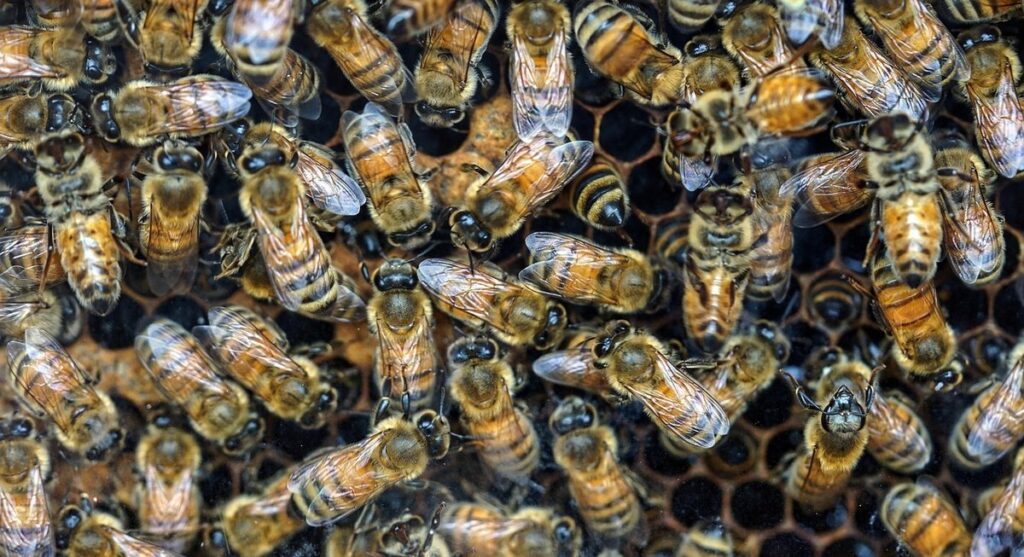
Anatomy of a Hive
Inside the hive, you’ll find a complex social structure that’s essential for its survival. This intricate arrangement is made up of different castes and roles that work together seamlessly.
Honeycomb Structure
Honeycomb cells are hexagonal, allowing for maximum storage capacity while minimizing structural material. Each cell measures about 5 millimeters across and has a volume of roughly 0.5 cubic centimeters. Honeybees produce wax from their own bodies by secreting it as liquid before fusing it into solid sheets.
The hexagonal shape is crucial: it’s the most efficient way to fill space, making the best use of materials. Compare this to square or circular cells – they would leave gaps and require more material overall. Honeybees aren’t just being thrifty; they’re optimizing their storage for long-term survival.
Honeycomb cells are used for storing honey, pollen, brood (bee larvae), and even water. They’re incredibly durable: wax is surprisingly resistant to moisture and decay. When a cell is no longer needed, bees will often melt it down, reusing the wax elsewhere in the hive. This process allows them to maintain their intricate structure while adapting to changing needs.
Bees seal cells with a thin layer of wax, creating an impermeable barrier for food or brood storage. This attention to detail is evident throughout the honeycomb’s design – every aspect serves a specific purpose, working together in harmony to support the colony’s success.
Brood Nest and Queen Cell
Inside the hive, two critical areas are dedicated to the queen’s reproductive cycle and brood development. The brood nest is where worker bees tend to eggs laid by the queen, carefully regulating temperature and humidity to ensure proper incubation. This region of the hive is characterized by its hexagonal cells, often densely packed with brood at different stages of development.
The queen cell, a specialized structure within the brood nest, plays a crucial role in colony reproduction. Here, new queens are raised to replace aging or dying ones. Queen cells are typically larger than regular brood cells and have a distinctive shape, with a narrow neck and a rounded body. They’re usually found near the center of the hive, close to the queen’s main nesting area.
As the queen lays eggs in these cells, worker bees must maintain a delicate balance between nourishing developing brood and preparing for new queens. This intricate dance is essential to the colony’s long-term survival, as it ensures the continuation of the species through the production of new queens.
Social Structure and Roles
Within a bustling beehive, social hierarchy is key to survival. Different castes play distinct roles, working together to ensure the colony’s prosperity and success.
The Queen Bee’s Role
The queen bee is responsible for laying eggs and ensuring the hive’s population grows. She accomplishes this by storing sperm from the drone bees she mates with during her nuptial flight, which typically occurs on her emergence from the honeycomb cell where she was born. This stored sperm allows her to fertilize eggs at will, controlling when and how many young are produced.
The queen bee also plays a crucial role in regulating hive dynamics through pheromone production. She releases chemical signals that influence worker behavior, including foraging patterns, brood care, and even the age at which workers transition from nursing duties to other responsibilities. This pheromonal feedback loop allows her to maintain order and ensure tasks are completed efficiently.
A healthy queen bee can significantly impact hive growth and productivity. Her longevity often determines the colony’s overall performance; some queens may live up to 5 years, while others may only survive for a season or two. Factors such as nutrition, disease, and environmental conditions all affect her lifespan and ability to sustain the hive population.
Worker Bees’ Responsibilities
Worker bees are responsible for maintaining the daily operations of the hive. They collect nectar and pollen from nearby flowers, bringing back an average of 60 milligrams of pollen per trip. This foraging activity is crucial for feeding the brood and producing honey.
In addition to foraging, worker bees care for the young by feeding them a mixture of nectar and pollen. They also help build and maintain the hive’s structure by adding new cells to the honeycomb. These cells are used to store honey and pollen, as well as to house the developing brood.
A single worker bee may perform multiple tasks in a day, depending on the needs of the colony. For example, some worker bees may focus solely on caring for the brood, while others might be responsible for defending the hive against predators or intruders. Worker bees typically live for around 4-6 weeks during the summer months, although some may survive longer if they are tasked with less physically demanding duties.
To ensure a healthy and thriving colony, beekeepers must provide their bees with a balanced diet and sufficient space to store honey and pollen. This can involve installing additional hive boxes or providing supplements to support the colony’s growth.
Life Cycle of a Hive
As you explore the inner workings of a beehive, let’s take a closer look at how a hive grows and thrives from a single queen to a bustling colony.
Colony Founding
A new hive is born when an existing colony produces a swarm. This occurs when the population has outgrown its current home and needs to establish a new nest. The swarm consists of thousands of worker bees, usually led by one or more queens. They leave the parent colony in search of a suitable location to start anew.
As they fly, the swarm forms a cluster around their queen, with bees vibrating their wings to regulate her temperature and maintain her safety. This process is crucial for the queen’s survival and the success of the new colony. Once a site is chosen, the swarm begins constructing their new hive by adhering wax scales to the surrounding structures using saliva.
The first few days are critical in establishing the colony. The initial focus is on creating comb cells, laying eggs, and storing honey and pollen for sustenance. During this period, the colony’s social hierarchy begins to take shape, with the queen at its center. Bees start dividing labor among themselves, taking on distinct roles such as foragers, guard bees, and undertakers.
In ideal conditions, a new hive can establish itself within weeks, with thousands of bees busy tending to their young, gathering food, and expanding their living space.
Seasonal Changes and Adaptation
As the seasons change, so too must the hive. In temperate climates, bees typically thrive in warmer months when nectar-rich flowers are abundant and honey production is at its peak. However, as temperatures drop and winter sets in, bees adapt to conserve energy and resources. They cluster together around the queen, sharing body heat to maintain a stable temperature within the hive.
To prepare for winter, worker bees store away excess honey and pollen, often sealing it with propolis to prevent spoilage. This stored food serves as a vital lifeline during periods of scarcity. In areas where nectar flow is particularly limited, bees may even resort to storing dead flowers or plant material as a supplementary energy source.
In regions with distinct seasonal changes, beekeepers can help their hives adapt by providing supplemental feeding during times of dearth. This involves offering sugar water or other energy-rich substances to bolster the colony’s reserves. Timing is crucial – too early and the bees may become reliant on human intervention; too late and they may starve before spring arrives.
Communication and Cooperation
Inside a bustling beehive, complex communication and cooperation are crucial for survival, allowing bees to work together seamlessly towards a common goal. This remarkable teamwork is orchestrated through intricate dance patterns, pheromones, and even body language.
Pheromones and Scent Marking
Pheromones are chemical signals released by individual bees to convey information within the colony. These scent markings serve multiple purposes, including navigation and danger alerts. For instance, when a forager bee returns to the hive with nectar, it deposits pheromone trails on specific flowers or landmarks. This helps recruit other foragers to follow the same route, optimizing resource collection.
Bees use different types of pheromones for various messages. Alarm pheromones are released by bees in danger, triggering a response from others to defend the colony. The scent marking left behind also warns potential intruders about the colony’s presence and readiness for defense. In contrast, sex pheromones play a role in mate selection.
One fascinating aspect of pheromone communication is its specificity and subtlety. Bees can detect extremely low concentrations of certain pheromones, allowing them to convey complex information without overwhelming each other with sensory input. By understanding these chemical signals, beekeepers can better manage their colonies, recognizing signs of potential threats or issues before they become severe problems.
Dance Patterns and Foraging Information
When foraging bees return to the hive, they perform complex dance patterns on the honeycomb surface to communicate vital information about food sources and threats. These dances are a crucial form of communication, allowing other bees to gather essential data for future foraging expeditions.
There are two primary types of dance patterns: round dances and waggle dances. Round dances indicate the location of nearby food sources, while waggle dances convey more precise information about nectar-rich flowers, their distance from the hive, and the direction to fly. The speed and duration of these dances also provide important cues about the quality and quantity of available resources.
For example, if a bee performs a round dance with rapid movements, it signals that food is plentiful and nearby. In contrast, a waggle dance with slower movements indicates that nectar-rich flowers are farther away, but their location is more precisely known. By observing these dance patterns, other bees can adjust their foraging efforts accordingly, optimizing the hive’s overall resource collection. This intricate communication system ensures the hive’s survival and prosperity by allocating resources effectively.
Challenges to Hive Health
Inside a hive, various challenges can arise that put its inhabitants at risk. From pests and diseases to environmental factors and poor management, these obstacles demand attention and understanding.
Diseases and Pests
Hives are susceptible to various diseases and pests that can significantly impact their populations. One of the most devastating bacterial infections is American Foulbrood (AFB), caused by Paenibacillus larvae. This disease often results from improper honey storage, poor ventilation, or contamination during handling. AFB’s symptoms include a distinctive blue-green mold on infected brood and a strong, unpleasant odor.
Another significant threat is the Varroa mite, a parasitic pest that infests hives worldwide. These tiny arachnids feed on bee hemolymph, weakening their hosts over time. Varroa mites can be introduced through new bees or contaminated equipment. Their presence is often indicated by discolored abdomens and legs in affected bees.
Small hive beetles (Aethina tumida) are another common pest problem. These small insects lay eggs inside the hive, which hatch into larvae that feed on honey and pollen. Beetle infestations can lead to significant damage, including reduced honey production and increased risk of disease transmission. Regular inspections and proper sanitation practices can help mitigate these issues.
Environmental Factors Affecting Hives
Bee colonies face numerous environmental challenges, including climate change, pesticide use, and urbanization. Rising temperatures disrupt the delicate timing of plant-bee interactions, making it harder for bees to find nectar-rich flowers when they need them most. Pesticide residues contaminate pollen, impairing the bees’ ability to produce essential nutrients. Urbanization reduces habitat availability, forcing colonies to adapt to smaller spaces with limited resources.
Climate change also alters flower blooming patterns, further exacerbating the issue. Bees rely on specific plant species for food and shelter; when these plants disappear or bloom out of sync, colony survival is threatened. To mitigate these threats, beekeepers can plant diverse, pesticide-free flowers that provide a steady source of nectar and pollen.
Some effective strategies include:
- Creating bee-friendly gardens in urban areas with a mix of native flowers
- Rotating crops to reduce pesticide use and promote soil health
- Providing supplemental feeding during times of food scarcity
- Establishing apiaries near natural habitats, such as forests or meadows
Frequently Asked Questions
Can I replicate the bee hive structure in my own home?
Yes, you can create your own honeycomb structures using wax or alternative materials, but keep in mind that it’s not a straightforward process and requires careful consideration of temperature, humidity, and ventilation to mimic the natural environment.
How do bees adapt their communication patterns when there are changes in their pheromone signals?
Bees have an incredible capacity for learning and adaptation. When there are disruptions in pheromone signals, they adjust their dance patterns and other forms of communication accordingly, often relying on multiple cues to convey critical information about food sources and threats.
What specific actions can I take to mitigate the impact of pesticides on local bee colonies?
While it’s essential to address pesticide use at a broader policy level, individual actions include planting bee-friendly flowers in your garden, using natural pest control methods, and supporting local initiatives that promote sustainable agriculture practices. These steps can collectively contribute to creating a safer environment for bees.
How do I know if my hive is experiencing a queenless phase or another issue?
Monitor the hive’s overall health by observing changes in brood development, honey production, and worker bee populations. A lack of new eggs laid by the queen can indicate a queenless situation, while other issues might manifest as increased varroa mite infestations or diseases like American Foulbrood.
Can I create a beehive that is more resilient to environmental changes, such as extreme temperatures and droughts?
Yes, incorporating features like double-walled hives with improved ventilation can help regulate internal temperature. Additionally, using local nectar sources and maintaining a diverse range of flowers in your area can enhance the resilience of the colony to environmental stressors.

