
Corn is one of America’s most widely cultivated crops, with millions of acres dedicated to its production each year. Yet, despite its ubiquity, the relationship between corn and pollinators like honey bees often goes unexamined. Honey bees are essential for maintaining the health of corn colonies – they transfer pollen from tassels to ears, enabling kernels to form. However, a growing body of evidence suggests that this symbiotic relationship is under threat. Climate change, pesticide use, and monoculture farming practices are all contributing to declining pollinator populations, threatening not just corn yields but the very foundation of agricultural ecosystems. In this article, we’ll explore the interconnectedness of corn and honey bees in agriculture and discuss strategies for preserving their interdependence. By the end, you’ll understand how supporting pollinators through targeted conservation efforts can mitigate threats to corn crops and ensure a more sustainable food system.
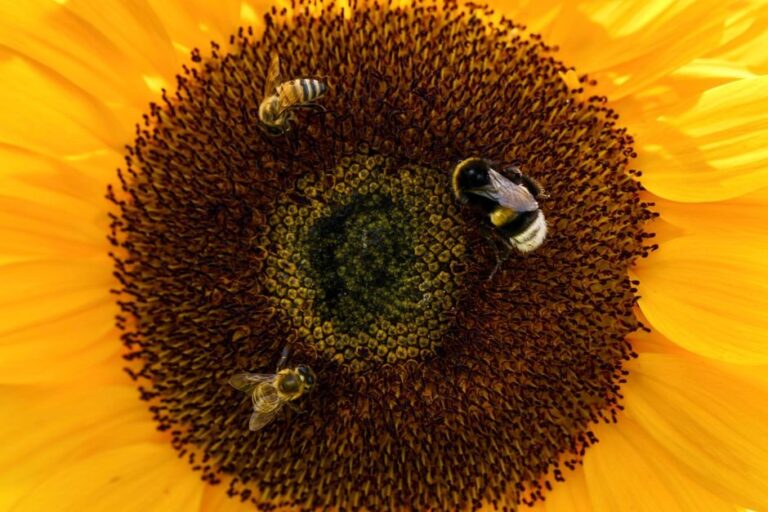
Importance of Corn Pollen for Honey Bees
Corn pollen is a vital protein source for honey bees, particularly during the spring when natural nectar flows are scarce. Without corn pollen, bee colonies might struggle to thrive.
Nutritional Value of Corn Pollen
Corn pollen is a rich source of nutrition for honey bees, providing them with the essential proteins and minerals they need to thrive. With a protein content of around 25-30%, corn pollen far exceeds the protein levels found in nectar, which is typically around 5-10%. This high protein content makes it an ideal supplement for honey bee diets, particularly during periods of rapid growth or when other food sources are scarce.
In addition to its impressive protein profile, corn pollen is also rich in minerals such as magnesium, potassium, and zinc. These essential micronutrients play a crucial role in maintaining the health and function of honey bee colonies. For example, magnesium helps regulate energy production and nerve function, while potassium supports muscle contraction and relaxation.
Honey bees’ dietary needs are particularly well-suited to corn pollen’s nutritional profile. In fact, studies have shown that when given access to corn pollen, honey bees exhibit improved growth rates, enhanced immune function, and increased resistance to disease. By incorporating corn pollen into their diets, beekeepers can help support the health and well-being of their colonies, ultimately contributing to a thriving local pollinator population.
Role in Colony Health and Function
Corn pollen is a vital component of a honey bee colony‘s diet, supporting overall health and function. One key way corn pollen benefits bees is by promoting digestive health. Enzymes present in corn pollen help break down complex proteins and carbohydrates, making it easier for the bees to digest their food. This is particularly important during times of high pollen demand, such as when nectar flows are scarce or colonies are expanding.
In addition to supporting digestion, corn pollen also plays a crucial role in maintaining immune function within the colony. The pollen’s rich nutrient profile and high concentration of antioxidants help protect against oxidative stress and inflammation. This is essential for keeping disease-causing pathogens at bay and ensuring the overall health of the colony.
When bees have access to an adequate supply of corn pollen, they are more resilient to pests and diseases. This, in turn, leads to a healthier and more productive colony. Beekeepers can support their colonies by providing a consistent source of high-quality corn pollen, either through supplemental feeding or by ensuring that nearby cornfields are managed sustainably to promote pollinator health.
The Relationship Between Corn and Honey Bees
Corn pollen is a crucial food source for honey bees, particularly during times of limited nectar flow. Understanding their interdependence is key to preserving both these vital pollinators and our food supply.
History of Cross-Pollination
Corn has been a staple crop for thousands of years, with evidence suggesting its domestication dates back to around 7,000 BCE. The earliest recorded evidence of corn cultivation comes from ancient Mesoamerica, where the Mayans and Aztecs revered it as a sacred crop. As civilizations expanded, corn spread across continents, becoming a vital component of agriculture worldwide.
The relationship between corn and honey bees is rooted in this long history. Corn’s large, showy flowers rely on pollinators to transfer pollen, and honey bees are among the most efficient pollinators for this task. This partnership has been crucial for crop production, particularly in regions with temperate climates. In fact, it’s estimated that a significant portion of global corn yields – upwards of 30% – depend on cross-pollination facilitated by honey bees.
In North America, European settlers relied heavily on native bee populations to pollinate their crops, including corn. As these ecosystems were disrupted and natural habitats destroyed, the health of both pollinators and crops began to decline. Understanding this historical context is essential for appreciating the delicate balance between corn, honey bees, and other vital agricultural players.
Modern Challenges Facing Pollinators
Habitat loss is a significant challenge facing pollinators like honey bees. As natural habitats are converted into agricultural land or urban areas, pollinators are left without essential resources such as food and shelter. This can be seen in the widespread clearing of wildflowers and meadows that previously provided crucial foraging grounds for honey bees.
Pesticide use is another major concern, particularly neonicotinoids which have been linked to bee deaths and colony collapse. These chemicals can contaminate nectar and pollen, making them toxic to pollinators. Some studies suggest that exposure to these pesticides can impair bees’ ability to navigate and communicate, further exacerbating population decline.
Climate change also poses a significant threat to pollinator populations. Changes in temperature and precipitation patterns disrupt the delicate timing of plant-pollinator interactions, making it harder for plants to reproduce and for pollinators to find food. For example, some corn varieties may bloom earlier or later than usual due to warmer temperatures, throwing off the synchrony between pollinators and their primary food source.
In addition, climate change can also lead to droughts that reduce plant growth and nectar production, further straining pollinator populations.
The Science Behind Corn Pollen Collection
Corn pollen collection is a crucial process that relies on the intricate dance of bees and wind, where bees gather pollen while in flight. Let’s take a closer look at this remarkable process.
Bee Behavior During Pollen Collection
Honey bees collect corn pollen through a complex process that involves sophisticated communication methods and foraging strategies. As they approach the cornflower, they use their highly developed sense of smell to detect the presence of pollen. Once they’ve identified a suitable source, they’ll often perform a “waggle dance” on the surface of the flower, which informs other bees about the location of the pollen.
This intricate communication system is crucial for the success of corn pollination. Bees will also use pheromones to mark the locations of particularly rich pollen sources, allowing them to share this information with their colony members. When foraging, honey bees typically visit a series of flowers in quick succession, using their proboscis to extract pollen from the anthers.
In terms of strategy, research has shown that honey bees tend to favor cornflowers with more abundant pollen stores, often returning to these sources repeatedly throughout the day. This behavior not only optimizes pollen collection but also helps to maintain the health and diversity of the colony. By understanding these complex foraging behaviors, we can better appreciate the vital role that honey bees play in pollinating corn crops.
How Corn Pollen is Transported Back to the Hive
When a forager bee returns to the hive with its corbiculae full of corn pollen, it’s not just a matter of dumping the load and calling it a day. The intricate social organization of the hive comes into play as the pollen is carefully transported back to the storage cells. This process begins with a gentle greeting from the bee’s fellow worker bees, who are stationed at the entrance to the hive. They inspect the forager’s pollen baskets, ensuring that no pests or diseases have hitched a ride back to the hive.
The forager then passes on its pollen load to another waiting bee, which takes it deeper into the hive. Along the way, this “pollen receiver” may stop at a special “pollen press,” where other bees are working together to compact the pollen into smaller spaces within the honeycomb cells. This not only helps store the pollen more efficiently but also prevents it from spoiling by keeping it away from oxygen and moisture.
The pollen receivers then seal off these cells with wax, creating a tight barrier that preserves the pollen’s quality until it’s needed for food or other hive purposes.
Economic and Environmental Impact
The connection between corn pollen and honey bees has far-reaching consequences that affect our environment, food systems, and economy. Let’s examine the economic and environmental implications of their interdependence.
Agroecological Significance
Maintaining healthy bee populations is crucial for food security, particularly when it comes to corn crops. Corn pollination services provided by honey bees are essential for global food production, with an estimated one-third of the world’s crop diversity relying on these pollinators. In the United States alone, honey bees contribute approximately $20 billion annually to the economy through their pollination services.
The significance of agroecological pollination services becomes apparent when considering the impact of corn pollen on ecosystem health. Corn is a wind-pollinated crop, but it relies heavily on cross-pollination by honey bees to produce viable seeds and maintain genetic diversity. Without adequate pollinator activity, corn yields would decline significantly, resulting in food shortages and economic losses for farmers.
Farmers who adopt bee-friendly practices, such as planting bee-attracting flowers alongside their crops, can promote healthy bee populations and ensure a stable pollination service. This approach is especially important for organic farming operations, which rely heavily on natural pollinators to maintain soil health and ecosystem services.
Potential Consequences of Pollinator Decline
Pollinator decline can have far-reaching consequences for corn yields and local economies. Reduced pollination efficiency can lead to lower crop yields, impacting food security and economic stability. A 10% decrease in pollination rates has been shown to result in a corresponding reduction in corn yields. This decline can also lead to reduced income for farmers, as they struggle to maintain productivity.
Economic losses will be exacerbated by increased costs associated with using pesticides or other inputs to try and mitigate the effects of pollinator decline. In addition, the loss of biodiversity due to declining pollinator populations can disrupt ecosystems, leading to further economic consequences downstream. The ripple effect of these changes can extend beyond local communities, impacting global food systems.
In areas where corn is a dominant crop, pollinator decline could lead to significant economic losses for farmers and rural communities. For example, in the United States, pollinators contribute over $20 billion annually to agriculture through pollination services. If this support system begins to fail, the consequences will be felt across the food chain.
Mitigating Threats to Corn-Pollen Honey Bee Interdependence
As we work towards preserving the delicate balance between corn pollen and honey bees, it’s crucial to address the threats facing this vital interdependence. We’ll examine some of the key challenges and potential solutions.
Sustainable Agricultural Practices
Reduced tillage and cover cropping are just a couple of sustainable agricultural practices that can promote biodiversity while minimizing chemical use. These methods have been shown to increase soil health, reduce erosion, and support beneficial insects like pollinators. By adopting reduced tillage, farmers can minimize soil disturbance, preserving the complex networks of fungal hyphae that pollinators rely on for food.
Cover cropping is another effective strategy for promoting biodiversity. By planting crops between crop cycles, farmers provide a source of nectar and pollen for bees, as well as habitat for other beneficial insects. This approach also helps to control weeds and retain soil moisture, reducing the need for herbicides and irrigation. In addition to these specific practices, incorporating crop rotation and intercropping into farm management can further support pollinator populations.
When implementing sustainable agricultural practices, it’s essential to consider the unique needs of your local ecosystem. For example, certain cover crops may be more beneficial in warmer climates than in cooler regions. By taking a tailored approach that accounts for regional conditions, farmers can create pollinator-friendly environments that thrive alongside their crops.
Community Engagement and Education
Community engagement and education play a vital role in raising awareness about pollinator conservation and encouraging individual actions. By educating people about the importance of corn-pollen honey bee interdependence, we can foster a sense of responsibility and inspire collective action to protect these vital relationships.
Schools and community groups can integrate pollinator-focused curricula into their programs, teaching children about the interconnectedness of ecosystems and the impact of human activities on pollinators. This education can also be extended to farmers, gardeners, and landowners through workshops and training sessions, equipping them with practical knowledge on how to create bee-friendly habitats and reduce pesticide use.
Community-led initiatives, such as plant-a-tree or adopt-a-hive programs, can engage citizens in hands-on pollinator conservation efforts. Social media campaigns can also help spread awareness about the importance of pollinators, using hashtags to track progress and mobilize communities around specific goals. By combining education with community action, we can build a groundswell of support for pollinator conservation and ensure the long-term health of these vital ecosystems.
Supporting Local Pollinators Through Community Action
As we explore the vital connection between corn pollen and honey bees, let’s take a closer look at how community action can help support local pollinators. By getting involved in your own neighborhood, you can make a real difference for these crucial insects.
Bee-Friendly Gardens and Habitats
When creating bee-friendly gardens and habitats, it’s essential to incorporate native flowers that provide a rich source of nectar and pollen for honey bees. Research suggests that plants like coneflowers, black-eyed Susans, and lavender are particularly attractive to pollinators due to their tubular shapes, which allow easy access to nectar.
Avoid using pesticides in your garden, as they can be toxic to honey bees and other beneficial insects. Instead, adopt integrated pest management (IPM) techniques that promote ecological balance and minimize chemical use. For example, hand-pick pests or encourage natural predators like ladybugs and lacewings to control aphid populations.
Incorporating native grasses and shrubs can also help support local pollinators. Plant species like milkweed and Joe-Pye weed provide essential shelter and nesting sites for solitary bees and other beneficial insects. When selecting plants, prioritize those that bloom at different times throughout the growing season to provide a constant source of nectar and pollen.
When choosing flowers, select varieties with single-petaled blooms, which are easier for honey bees to access than double-petaled varieties.
Collaborative Efforts to Protect and Preserve Local Ecosystems
Collaborative efforts between farmers, researchers, policymakers, and local communities are crucial to preserving and enhancing pollinator health. These partnerships can take many forms, from on-farm trials of integrated pest management techniques to community-led habitat restoration projects.
For instance, the Xerces Society has developed a suite of conservation plans for corn producers that incorporate bee-friendly practices into their operations. These plans often involve planting diverse crop mixes, maintaining undisturbed areas, and timing herbicide applications to minimize harm to pollinators.
In addition to these on-farm initiatives, researchers are working with policymakers to develop and implement effective pollinator protection policies. This can include supporting regulations that restrict the use of neonicotinoid pesticides or establishing pollinator-friendly corridors within agricultural landscapes.
Local communities also play a vital role in protecting pollinators through community-led projects such as bee hotel construction, native plant planting events, and citizen science initiatives. These efforts not only help to enhance local ecosystems but also raise awareness about the importance of pollinators among farmers, policymakers, and residents alike.
In some areas, these partnerships have led to the creation of formal cooperatives or task forces focused on pollinator health. For example, in Iowa, a statewide initiative has brought together farmers, researchers, and government agencies to develop best practices for corn production that prioritize pollinator well-being.
Frequently Asked Questions
Can I use corn pollen from any source for feeding my bees?
Yes. However, it’s essential to ensure the quality and freshness of the pollen by sourcing it from local farms that follow best management practices or harvesting it yourself in moderation. Store-bought options can be convenient but may lack the nutritional benefits of fresh pollen.
How do I know if my bee-friendly garden is attracting enough pollinators?
Observe your garden’s activity levels during peak pollinator seasons, and note the types of flowers that attract bees. Also, consider using a mixture of annuals and perennials with different bloom times to provide a consistent nectar source throughout the growing season.
What if I’m not a commercial farmer; can I still contribute to corn-pollen honey bee conservation?
Absolutely. By creating bee-friendly habitats in your backyard or community garden, you’re supporting local pollinators and contributing to the broader effort. You can also participate in citizen science projects or volunteer with local organizations focused on pollinator conservation.
Can I use pesticides near my bee hotel without harming the pollinators that visit?
No. Pesticides pose a significant threat to pollinator health, even if you’re trying to protect your crops from pests. Instead, adopt integrated pest management techniques that prioritize natural methods of control and minimize chemical use. This will help create a safer environment for both your crops and local pollinators.
How do I balance the needs of my bees with those of other wildlife in my garden?
Prioritize diversity by incorporating plants that cater to different species’ needs, such as nectar-rich flowers for bees and berries for birds. Also, consider the layout of your garden, ensuring there’s a mix of sun and shade areas to accommodate various species’ preferences.
